Damp & Mould Monitoring in Rental Homes: Getting Ahead of Awaab's Law
13th October 2026•By Neil Skoglund
LHT65N Use Case
Damp and mould have moved from a maintenance nuisance to a legal and reputational priority. Since Awaab's Law came into force for social housing in England in October 2025, landlords have fixed deadlines to investigate and fix damp and mould hazards - and the government is now consulting on extending those rules to private landlords.
Waiting for a tenant to report black mould means the problem has already been building for weeks. This guide shows how housing associations, councils, letting agents and private landlords can use the Dragino LHT65N with Trackpac to spot the conditions that cause mould early, prioritise the homes at highest risk, and keep an evidence trail of action taken.
Awaab's Law in Brief
24 hours
To investigate and make safe emergency hazards.
10 working days
To investigate significant damp and mould hazards.
Private rented next
A consultation on extending it to private landlords opened in October 2026.
This is a summary, not legal advice. Check current guidance on gov.uk for the full requirements that apply to you.
How the LHT65N Detects Mould Risk
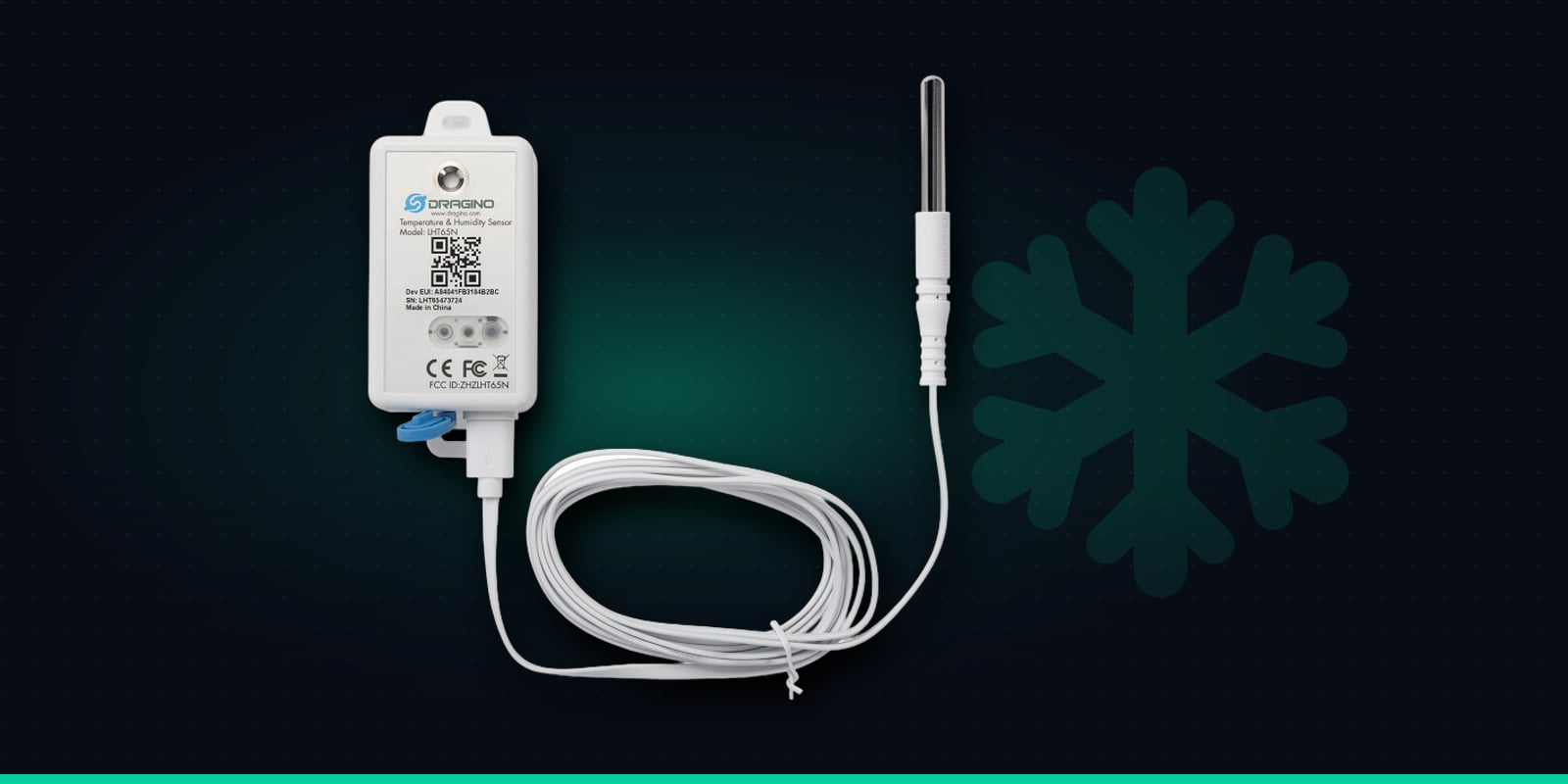
Mould needs moisture, and in most homes that moisture is condensation: warm, humid air from cooking, washing and drying clothes meeting a cold surface. The LHT65N is well suited to catching this because it measures two things at once:
Room air (built-in sensor)
Temperature and relative humidity of the room - telling you how much moisture is in the air and whether the home is being heated adequately.
Cold spot (external probe)
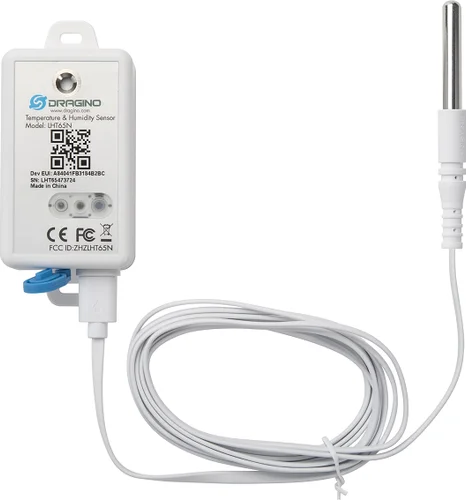
Tape the 2m probe to the coldest surface - an external wall corner, window reveal or behind a wardrobe - to measure the temperature where condensation actually forms.
When the cold-spot temperature falls close to the room air's dew point - the temperature at which its moisture condenses - that surface is getting wet. Seeing that pattern night after night in the Trackpac history is a far earlier warning than a tenant's photo of black mould. It also helps diagnose the cause: persistently high humidity points to ventilation or moisture generation, while low room temperatures point to heating or affordability issues, and a cold surface in a warm room points to insulation or a thermal bridge.
Built-in temperature
-40 to 80°C, typical ±0.3°C accuracy, 0.01°C resolution.
Built-in humidity
0 to 96 %RH, 0.04 %RH resolution.
2m external probe
-55 to 125°C. ±0.5°C from -10 to 85°C, ±2°C across the full range.
2400mAh battery
Replaceable, rated for up to 10 years depending on reporting interval.
Datalog
Stores readings when out of coverage so they can be retrieved later.
LoRaWAN EU868
Works with standard LoRaWAN gateways and the Helium network.
Specifications from the Dragino LHT65N datasheet.
Running a Damp Monitoring Programme
Prioritise your stock
Start with homes that have had previous damp reports, solid walls, or vulnerable occupants. Tag sensors by estate or block to compare buildings on one dashboard.
Alert on persistence
A humidity alert at 75-80% routed by email to your repairs team, with a trigger lock interval so the inevitable shower spikes don't generate a flood of notifications.
Evidence the fix worked
Leave the sensor in after a new extractor fan or insulation upgrade. Before-and-after data shows the intervention actually solved the problem.
Work with tenants
Explain what's measured and why, agree placement, and use the data to fix the building - not to blame the people living in it.
Because the LHT65N is battery-powered and talks LoRaWAN, there's nothing to plug in and no reliance on the tenant's Wi-Fi. In a block of flats, a single gateway can often cover the whole building and its neighbours. For broader indoor air quality in communal areas, see our indoor air quality sensors.
Get Started
Spot damp before it becomes a hazard
Room humidity plus a cold-spot probe from one sensor, reporting to a Trackpac dashboard across your whole housing stock.
€34.30 ex VAT from Hexaspot, our sister company in the Connect IoT group. VAT is added at checkout based on your country.
Choose the Trackpac Ready option and the sensor arrives pre-registered on Trackpac - scan the QR code and it's live on your dashboard.
Trackpac covers connectivity, dashboard, alerts and data storage from £15 / €18 per sensor per year.
Awaab's Law sets legal timescales for social landlords in England to investigate and fix hazards. Its first phase came into force on 27 October 2025 and covers damp, mould and emergency hazards: emergency hazards must be made safe within 24 hours, and significant damp and mould hazards investigated within 10 working days. In October 2026 the government opened a consultation on extending it to the private rented sector.
What humidity level causes mould?↓
Mould growth depends on how long a surface stays damp, not a single reading. As a rule of thumb, indoor relative humidity that stays above about 70% for long periods - or any surface cold enough to collect condensation - is a warning sign worth investigating. Brief spikes from cooking or showers are normal.
Why use the LHT65N's external probe for damp monitoring?↓
Condensation forms on the coldest surfaces - external walls, window reveals and corners. Fixing the probe to a cold spot measures surface temperature while the built-in sensor measures room temperature and humidity. When the surface temperature falls close to the room's dew point, condensation and mould are likely there.
Do sensors in a tenant's home raise privacy concerns?↓
The LHT65N measures only temperature and humidity - no audio, video or motion. Even so, landlords should tell tenants what is being measured and why, agree placement with them, and use the data to fix problems rather than to blame occupants.