Sports Pitch Soil Monitoring: Smarter Irrigation & Turf Care with the SE01-LB
15th October 2026•By Neil Skoglund
SE01-LB Use Case
A pitch can look green and healthy on top while the root zone underneath is drying out - or stay saturated for days after a downpour while the surface seems fine. Irrigating on a fixed schedule puts water down whether the roots need it or not, and a walk with a hand probe only tells you about the spots you checked, on the day you checked them.
This guide is for head groundsmen and grounds managers at football, rugby and cricket clubs, schools, universities, councils and stadiums. It shows how a Dragino SE01-LB buried in the root zone and reporting into Trackpac gives you round-the-clock moisture, soil temperature and conductivity readings, so irrigation, renovation and feeding decisions are based on what the soil is actually doing. For a wider look at soil, leaf and livestock sensors, see our smart agriculture sensors guide.
What the SE01-LB Measures in the Root Zone
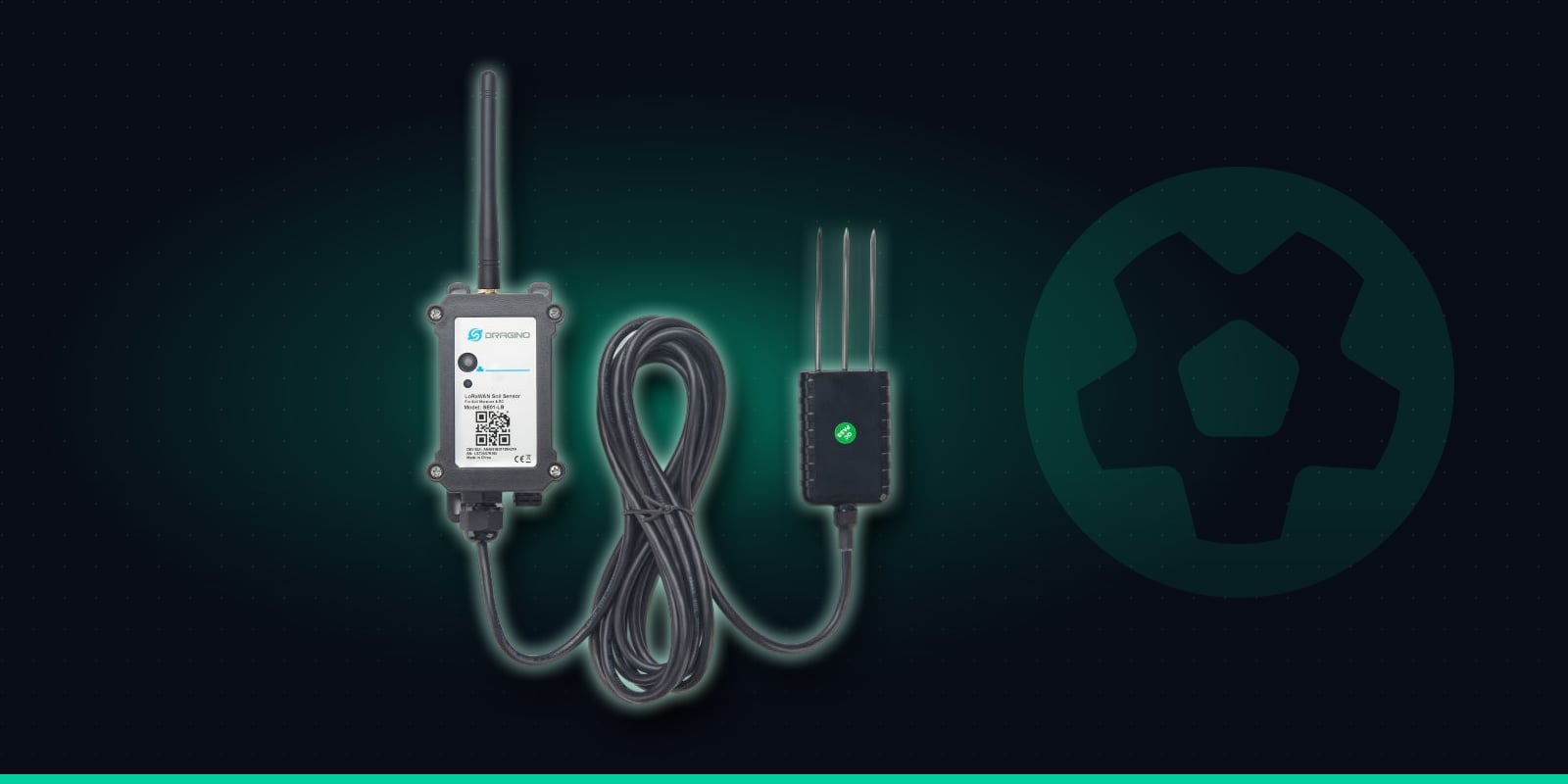
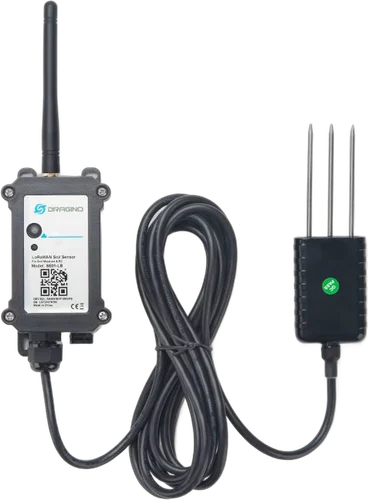
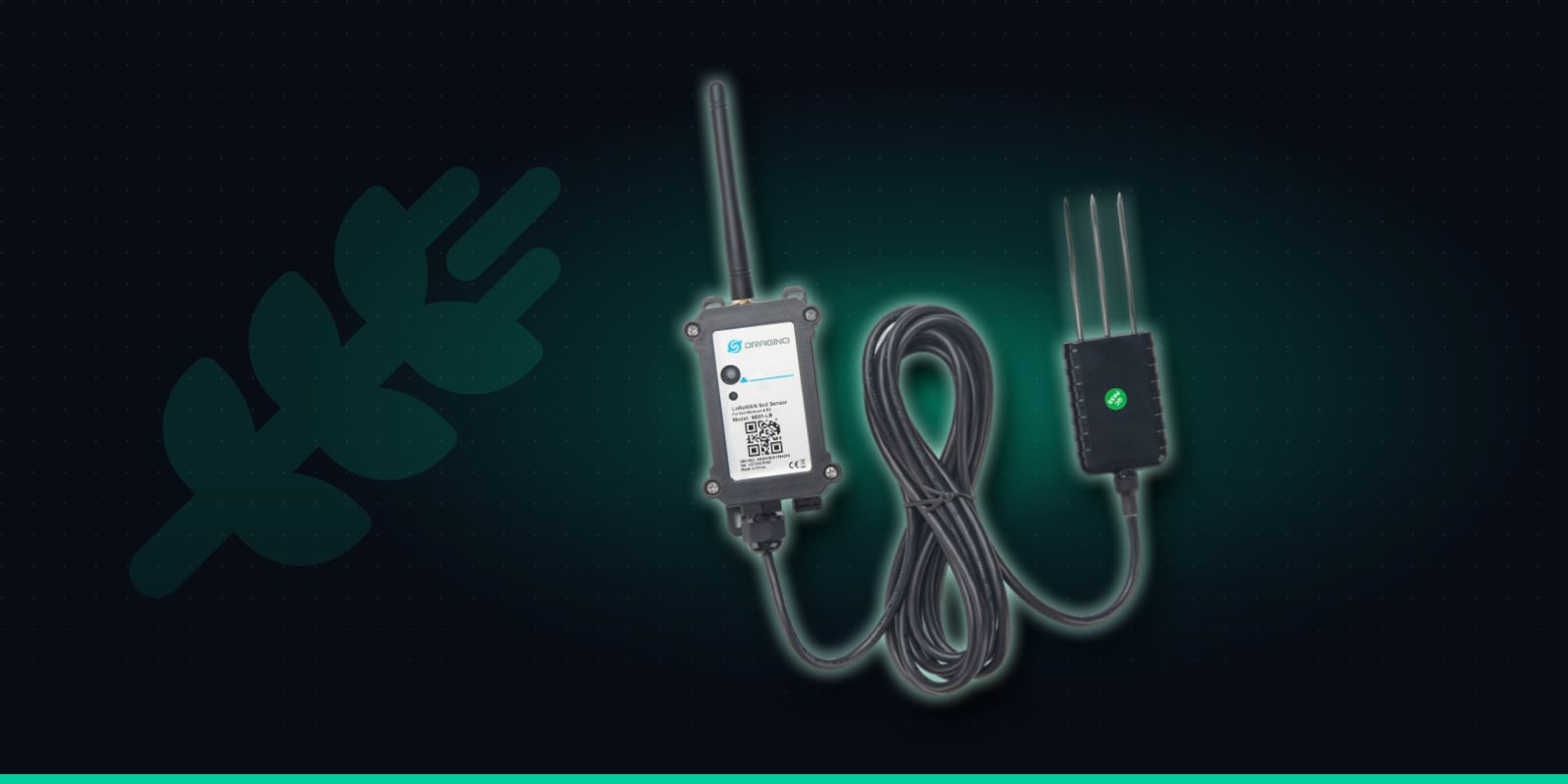
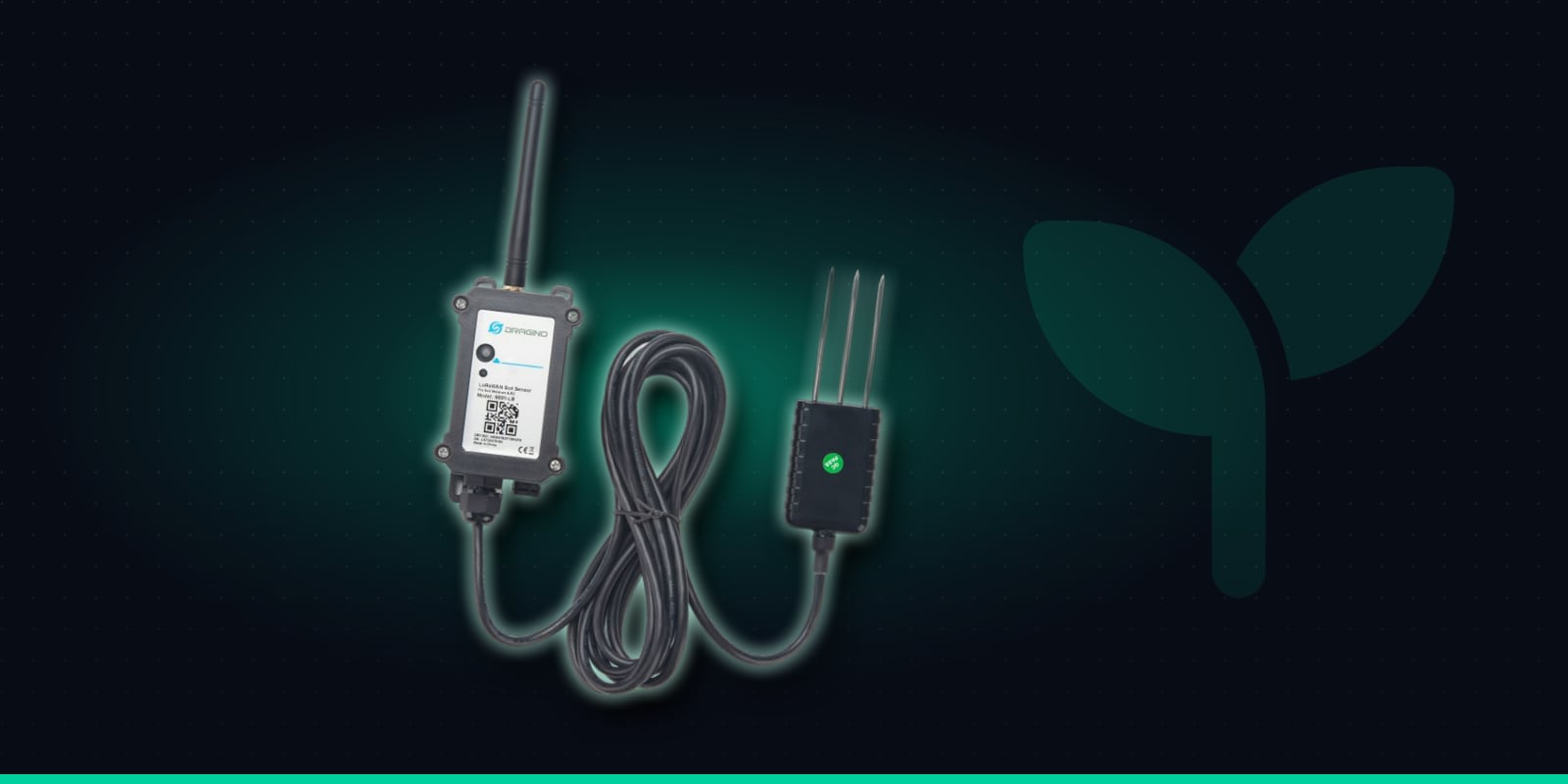
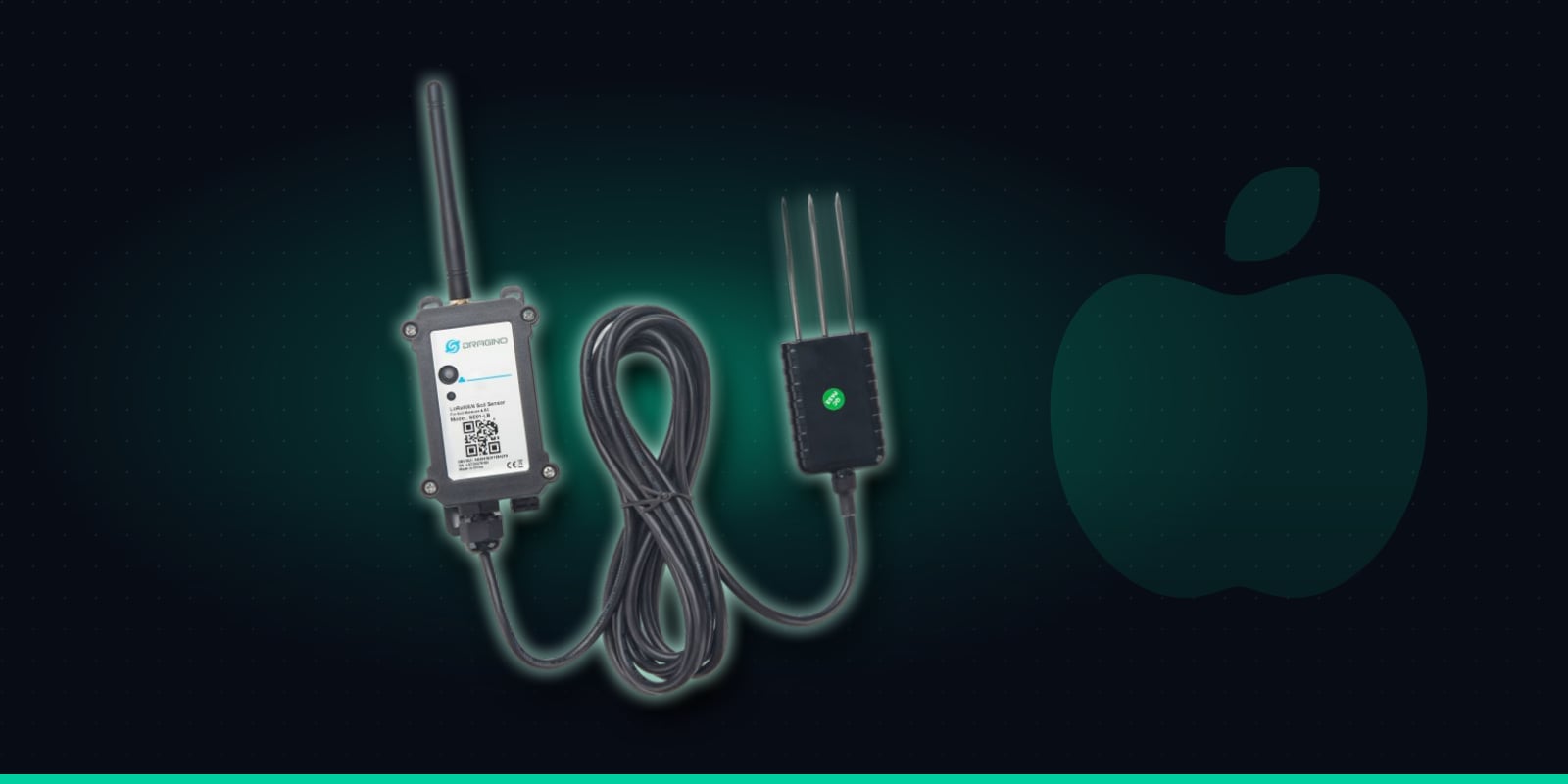
The SE01-LB is a three-pin stainless steel probe on a cable, connected to a weatherproof enclosure that holds the battery and LoRaWAN radio. Buried at root depth, the probe reports soil moisture, soil temperature and conductivity (EC) every 20 minutes by default - three readings that feed directly into irrigation, renovation and feeding decisions.
Soil moisture
0 to 100% volumetric water content. ±3% accuracy up to 53%, ±5% above.
Soil temperature
-40 to 85°C. Better than ±0.3°C between -10 and 50°C.
Soil conductivity (EC)
0 to 20,000 µS/cm, temperature compensated, 2% full-scale accuracy.
Built for outdoors
Weatherproof IP66 enclosure with a buried three-pin probe on a cable.
8500mAh battery
Rated for up to 5 years, depending on reporting interval.
Datalog
Stores readings when out of coverage and sends them once it reconnects.
Specifications from Dragino's SE01-LB documentation. Factory calibrated for mineral soils.
The sensor is factory calibrated for mineral soils, but constructed rootzones vary from pitch to pitch. Treat the first few weeks as a baseline: compare the readings with your own checks, rely on the trend rather than the absolute figure until you're confident they match, and set targets from how your pitch behaves rather than from a textbook number. Once you know what "dry" and "too wet" look like on your graph, the readings drive the decisions.
Irrigate on Measured Moisture, Not the Calendar
Watering every night in a dry spell is simple to manage but not always what the turf needs. Little-and-often irrigation keeps the surface damp and is commonly linked to shallow rooting, while letting the root zone dry down towards a target before watering more deeply tends to encourage roots to follow the water down. A deeper-rooted sward generally copes better with hot spells and a busy fixture list. Newly sown areas are the exception, as seedlings need the surface kept moist, and a free-draining sand rootzone will dry down faster than a native soil pitch - the graph shows you how quickly yours does.
Over-watering has costs too: water you didn't need to use, a surface that stays wet and favours many turf diseases, and very wet soil that compacts and cuts up much more easily under studs and machinery. With root-zone readings you can set a target band for each zone - a lower level where you irrigate and an upper level above which the soil is too wet for heavy work. Check the graph the morning after irrigating, too: if a cycle barely moved the reading, the water may not be getting down to the roots, which is a prompt to look at compaction, thatch or sprinkler coverage.
Soil Temperature & EC: Timing Seed and Feed
Soil temperature for overseeding & renovation
Grass growth and germination follow soil temperature more closely than air temperature, and soil warms and cools more slowly than the air. Seed suppliers typically quote a minimum soil temperature for their mixes to germinate - the probe shows when your root zone has actually reached it, and the weekly trend is a better guide than one warm afternoon. The same reading helps with feeding, which is less likely to pay off while the grass is barely growing.
EC for nutrients in sand-based rootzones
EC rises with dissolved salts in the soil water, and most fertilisers dissolve as salts. Sand-based rootzones drain well but hold relatively few nutrients, so the trend is worth watching: a steady rise over several weeks suggests salts are building up and may need flushing through, while a fall after a feed suggests nutrients have been taken up or washed through. EC also moves with moisture, so compare readings taken at similar moisture levels and use them alongside your soil tests, not instead of them.
Installing Without Getting in the Way of Play
No pitch is uniform. Goalmouths and the centre take the heaviest wear, a side shaded by a stand often stays wetter and cooler than the sunny side, and cricket squares are managed very differently from outfields. Each SE01-LB measures one depth at one spot, so start with a probe in a typical area plus one in each zone you know behaves differently.
1
Order "Trackpac Ready", scan and tag
Buy the SE01-LB from Hexaspot with the Trackpac Ready option, scan its QR code in the Trackpac app and name it - "Pitch 1 - North goalmouth" reads far better in an alert than a serial number. Tag it by pitch and zone.
2
Insert the probe at root-zone depth
Pull a core to see where most of the active roots are, and pick a stone-free spot typical of the zone - on a cricket square, an unused strip at the edge rather than one prepared for matches. Following Dragino's guidance for long-term monitoring, dig a small hole, push the probe horizontally into undisturbed soil at that depth without wiggling it, then backfill, firm and replace the turf. On hybrid or reinforced surfaces, check with your pitch constructor before you dig.
3
Bury the cable, keep the enclosure out of play
The enclosure has to sit within reach of the probe's cable, so check the cable length when you choose spots. Near the margin or behind the goals it can sit just off the playing surface; further in, set it in a flush, lidded in-ground box that drains freely, as IP66 is rated for rain and water jets rather than standing water. Bury the cable so nothing protrudes into play or the mower's path. A sensor at ground level won't reach as far by radio as one mounted higher, so confirm it's reporting before you finish - and record where the probe and cable run, measured from fixed points, so they can be avoided during aeration.
Alert Rules for the Grounds Team
Trackpac can alert on soil moisture, soil temperature, conductivity and battery level, by email, SMS or push notification. Rules can target tags, so a new sensor tagged "Pitch 2" picks up that pitch's rules automatically. A handful of well-chosen rules turns readings into jobs on the list:
Moisture below target: irrigate
A below-threshold rule per zone tells you when the root zone has dried to your lower limit - and which zone got there first.
Very wet after rain: hold off
An above-threshold rule warns that the root zone is very wet - a cue to postpone heavy machinery and maintenance that could damage the surface.
Soil warming up: overseeding window
Alert when soil temperature rises past the minimum your seed supplier quotes, then check the trend graph to confirm it's holding before you sow.
EC outside your band: check before you feed or flush
A range rule alerts when conductivity leaves the band set from your own baseline. Low may mean nutrients are running down, high may mean salts are building up - check the moisture reading and trend before acting.
Use time windows so routine alerts arrive during working hours, and a trigger-lock interval so a dry zone sends one alert rather than one every reading. A "resolved" message confirms when it's back in range, and a low-battery rule stops a flat sensor going unnoticed in the middle of a dry spell.
Sharing the Data and Planning Coverage
A read-only dashboard link lets the committee, bursar or head of PE follow pitch conditions without being able to change anything. History graphs, reports and exports back up decisions - showing why a match moved to the training pitch, or how the root zone held up through a dry summer. The Trackpac mobile app puts every zone on your phone, and webhooks can forward readings and alerts into your existing irrigation workflow or system. Trackpac doesn't switch valves itself - it tells you, or your system, when to.
There is no Wi-Fi or SIM card per sensor: one LoRaWAN gateway at the clubhouse can typically cover a large site, though real range depends on terrain, stands and buildings. If a sensor drops out of coverage, its datalog stores readings and sends them once it reconnects. Read what to check about LoRaWAN coverage and see Trackpac pricing before you plan.
Get Started
Put a probe in your pitch's root zone
One SE01-LB per zone, probe buried at root depth and nothing protruding into play - reporting moisture, soil temperature and EC to a Trackpac dashboard with alerts to your phone.
€123.14 ex VAT from Hexaspot, our sister company in the Connect IoT group. VAT is added at checkout based on your country.
Choose the Trackpac Ready option and the sensor arrives pre-registered on Trackpac - scan the QR code and it's live on your dashboard.
Trackpac covers connectivity, dashboard, alerts and data storage from £15 / €18 per sensor per year.
Where should a soil moisture sensor go on a sports pitch?↓
Put the SE01-LB probe in a representative, stone-free spot at the depth where most of your active roots are. Dig a small hole, push the probe horizontally into undisturbed soil at that depth, backfill and replace the turf. The probe is connected to the sensor enclosure by its cable, so the enclosure has to sit within cable reach: just off the playing surface for a probe near the margin or behind the goals, or in a flush, free-draining in-ground box for a probe further in. Bury the cable so nothing protrudes into play or the mower's path.
Can Trackpac switch my pitch irrigation on automatically?↓
Trackpac doesn't control irrigation valves or controllers directly. It tells you when the root zone needs water: an alert fires by email, SMS or push notification when soil moisture drops below your target. If your irrigation system or workflow can accept data from other systems, Trackpac webhooks can forward the readings and alerts to it.
How many soil sensors does a sports pitch need?↓
It depends on how differently the parts of your pitch behave. Goalmouths, the centre and a shaded side next to a stand often dry out and warm up at different rates, so a sensible starting point is one probe in a typical area plus one in each zone you already know behaves differently. Each SE01-LB measures one depth at one spot, and you can add more sensors later and tag them by pitch and zone.
Will aeration or renovation damage a buried soil probe?↓
It can if a deep tine or renovation machine passes straight through it, so record exactly where each probe and its cable run are, measured from fixed points, and steer clear of them during aeration and renovation work. If an area is due for heavy work such as a full renovation, it is simpler to lift the probe beforehand and reinstall it once the work is finished.
Where can I buy the SE01-LB for use with Trackpac?↓
The Dragino SE01-LB is sold by Hexaspot, Trackpac's sister company in the Connect IoT group, for €123.14 ex VAT, with VAT added at checkout based on your country. Choose the 'Trackpac Ready' option and the sensor is pre-registered on Trackpac, so you only need to scan its QR code. A Trackpac subscription from £15 / €18 per sensor per year covers connectivity, the dashboard, alerts and data storage.