Vineyard & Orchard Monitoring: Root-Zone Moisture and EC with the SE01-LB
15th October 2026•By Neil Skoglund
SE01-LB Use Case
A vine or a fruit tree stays in the ground for decades, but the water it gets in a single season shapes that year's crop - how much there is, and how good it is. Plenty of irrigation decisions are still made from the forecast, a spade in one corner of one block, and experience. Experience matters. It's just easier to apply when you can see what's happening at root depth, in every block, every day.
This guide shows how vineyard managers and fruit growers can use the Dragino SE01-LB with Trackpac to monitor root-zone moisture, soil temperature and conductivity (EC) block by block, and get alerted when a block needs water or its EC starts to drift. For the other sensor types used on farms, see our smart agriculture sensors guide.
Why Root-Zone Data Matters for Vines and Fruit Trees
Vines and fruit trees are perennial, high-value crops, and when water arrives matters as well as how much. In irrigated vineyards, vines are often held under deliberate, controlled water stress at certain stages of the season - widely known as deficit irrigation - to restrain vigour and steer fruit quality. Whether you're holding vines in a planned band or keeping an orchard out of stress, the decision rests on how much water is actually in the root zone, not just how long the drippers ran.
Vineyards
Holding a block in a chosen moisture band is very different from letting it dry out. Continuous readings help you spot when planned stress is tipping into too much.
Orchards
In apples, pears and cherries, water stress while the fruit is developing - especially early on - can hold back fruit size. The dry spell to catch is the one that arrives when everyone is busy elsewhere.
Every block differs
Soil, slope, aspect and rootstock all change how a block holds and uses water. A light soil on a sunny slope can need water days before a heavier block in a dip.
Even where blocks rely mostly on rainfall, the same data shows how a dry spell is playing out across the site, and whether young vines or newly planted trees - usually the first to suffer, with their small root systems - need a hand.
One Probe, Three Readings
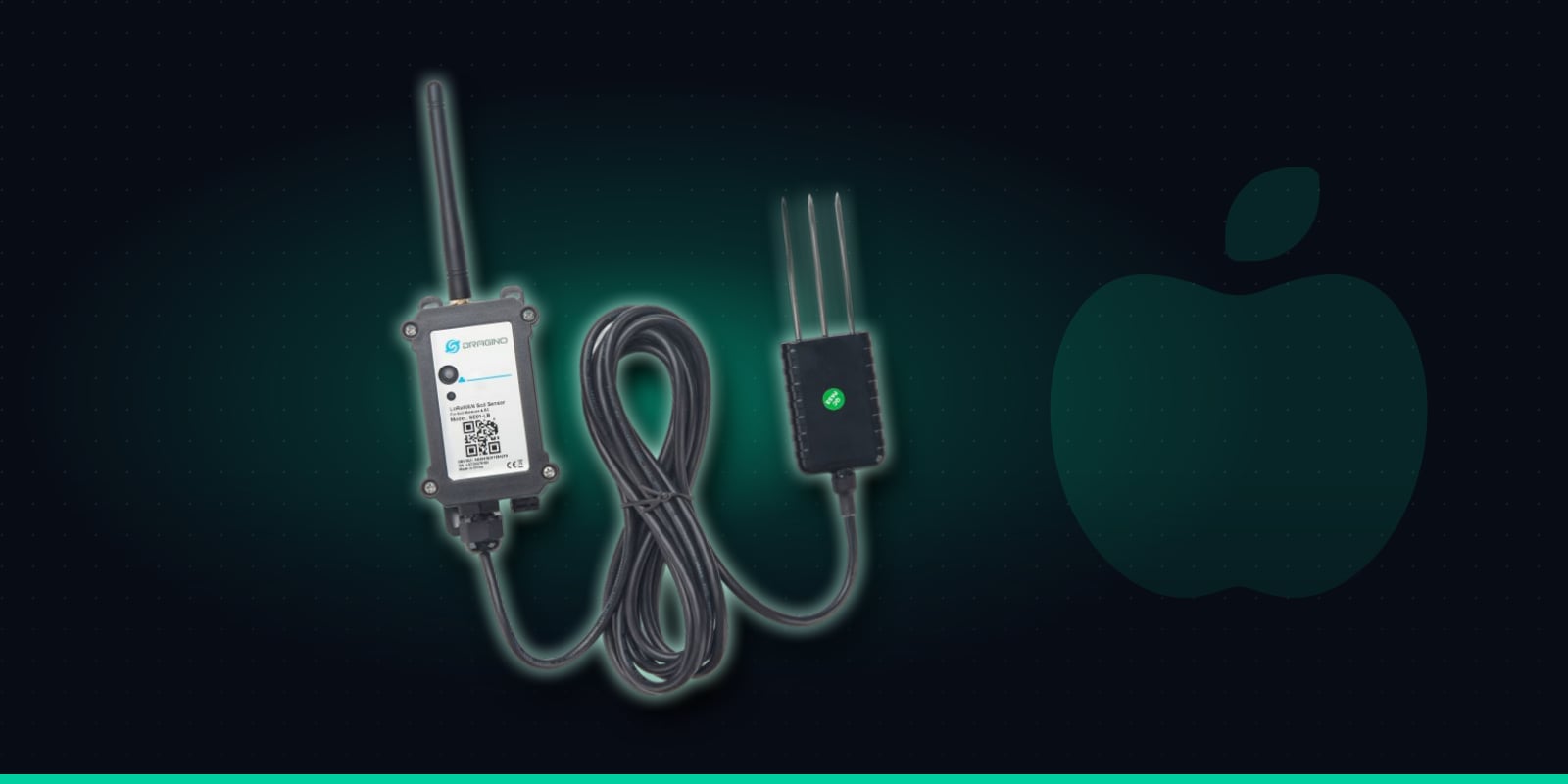
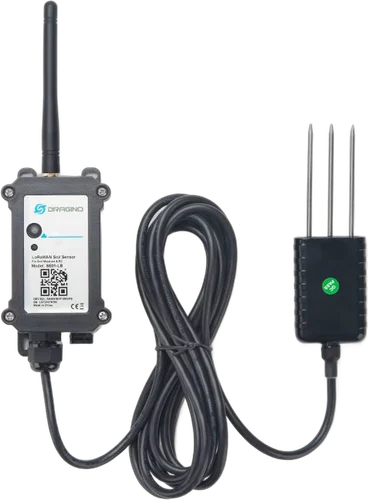
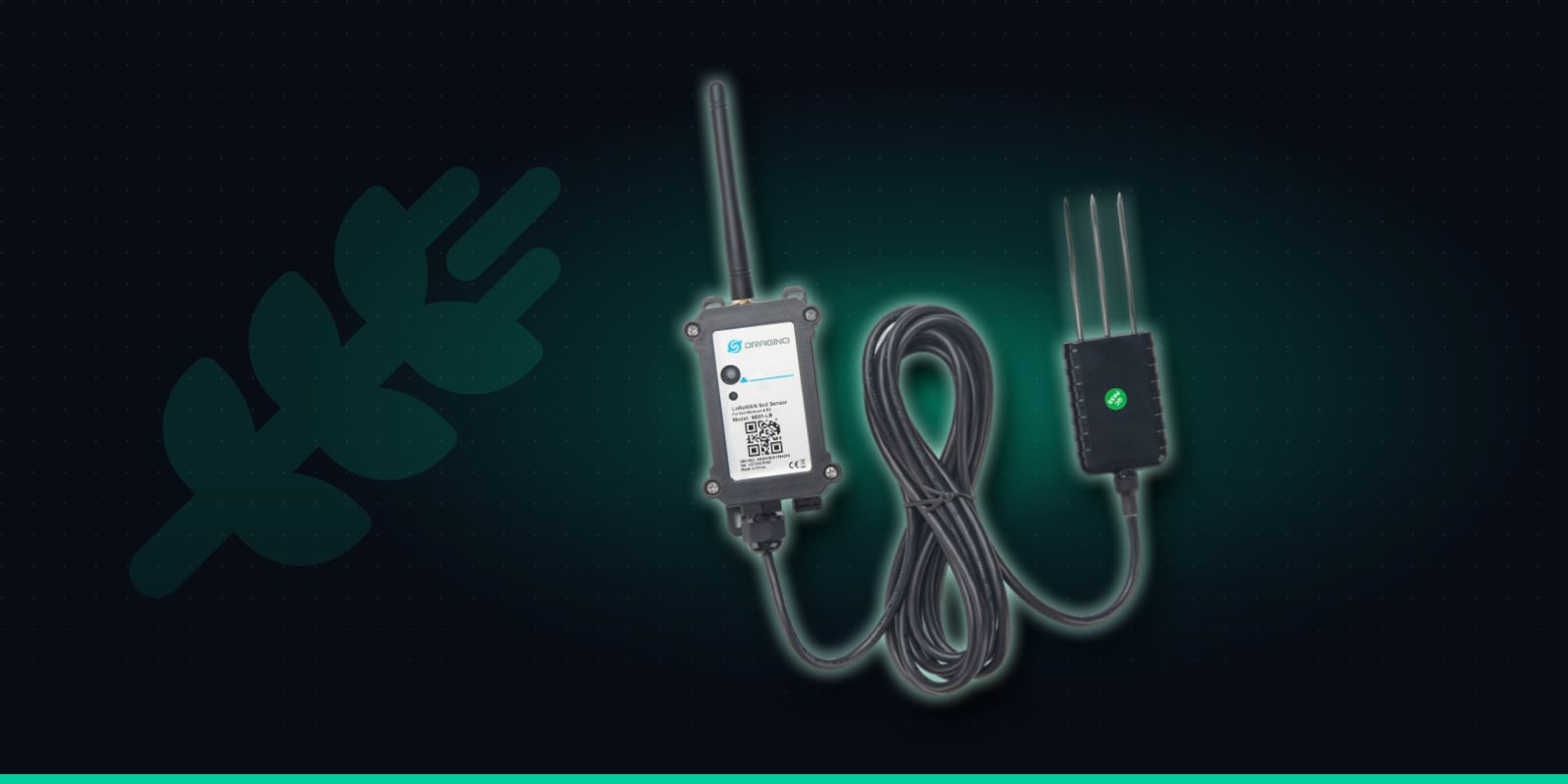
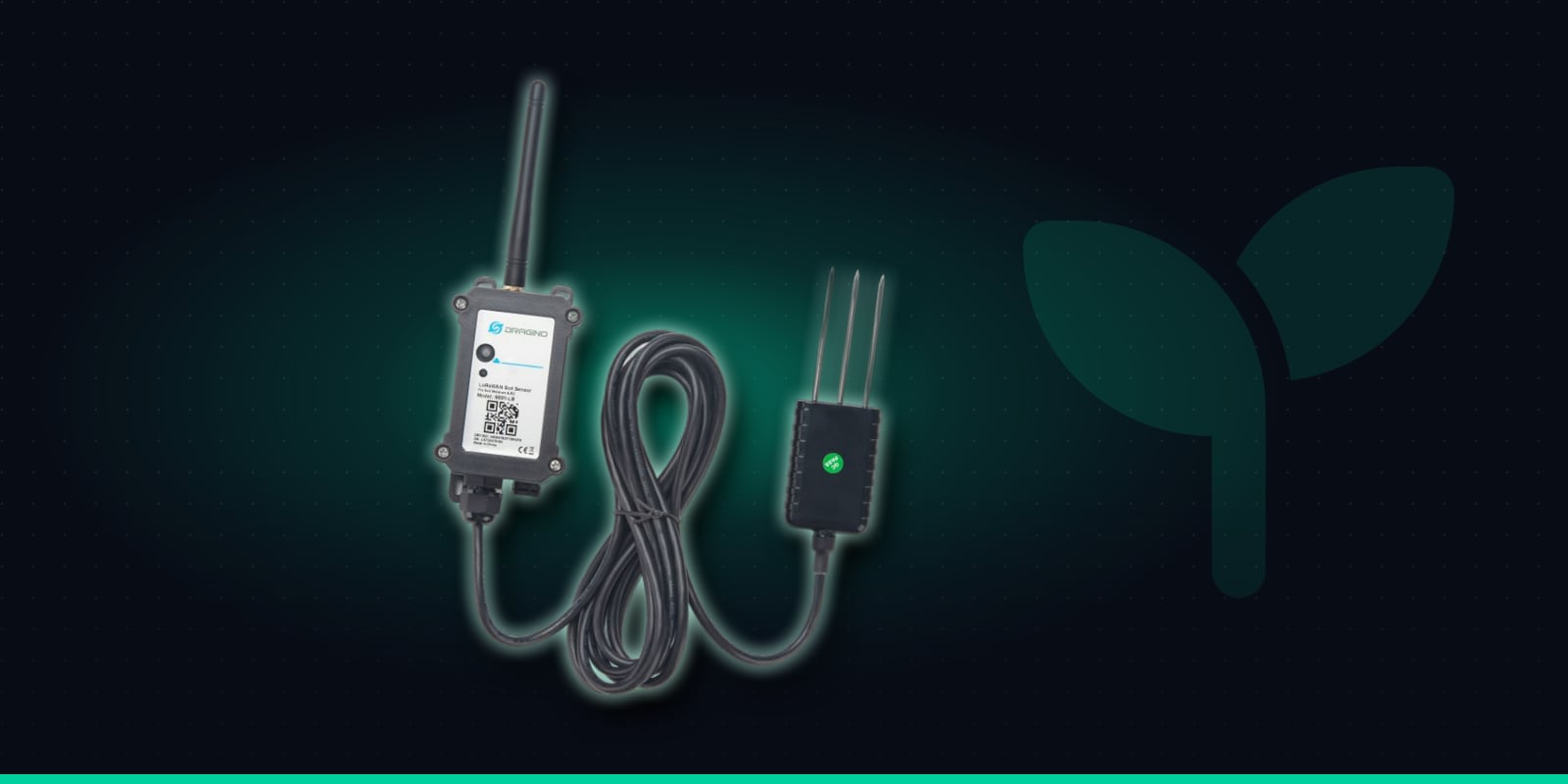
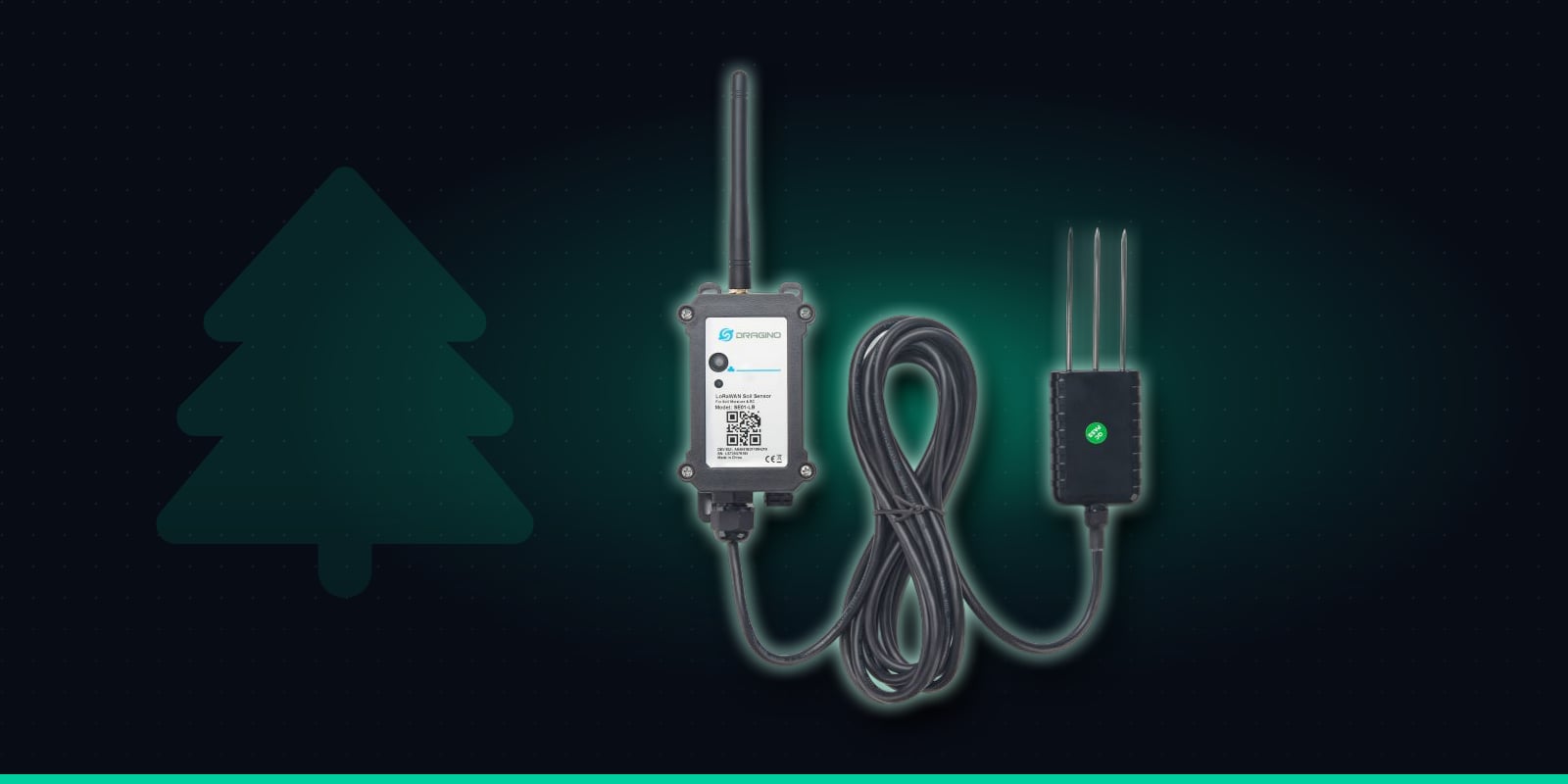
The SE01-LB connects a three-pin stainless probe, buried at the depth you want to measure, by cable to a weatherproof IP66 enclosure that holds the battery and LoRaWAN radio. Alongside moisture, EC can indicate whether fertigation is building up nutrients in the root zone, or salts are accumulating in a dry season with little rain to flush them through. Soil temperature shows when the ground warms in spring, which is generally when roots become more active and the season's demand for water and nutrients starts to build.
It is factory calibrated for mineral soils, which most vineyard and orchard blocks are on. On unusually organic or peaty ground, treat the readings as relative trends or calibrate them against your own measurements.
Soil moisture
0 to 100% volumetric water content. ±3% accuracy up to 53%, ±5% above.
Soil temperature
-40 to 85°C. Better than ±0.3°C between -10 and 50°C.
Soil conductivity (EC)
0 to 20,000 µS/cm, temperature compensated, 2% full-scale accuracy.
Built for outdoors
Weatherproof IP66 enclosure with a buried three-pin probe on a cable.
8500mAh battery
Rated for up to 5 years, depending on reporting interval.
Datalog
Stores readings when out of coverage and sends them once it reconnects.
Specifications from Dragino's SE01-LB documentation. Factory calibrated for mineral soils.
Placing Probes in the Active Root Zone
Vine and tree roots go much deeper than turf, so a probe just under the surface tends to reflect the last shower more than what the roots are getting. Put it in the active root zone instead, where the fine roots doing the work are. That depth depends on rootstock, soil, plant age and irrigation method, so look at the roots as you dig. In drip-irrigated blocks, place the probe in the row, within the wetted area of an emitter, rather than in the alley.
Consider two depths in your key blocks. Each SE01-LB measures one depth, so install two side by side - one in the main root zone and one deeper. If the deeper sensor barely moves after an irrigation, water probably isn't reaching that depth. If it jumps every time, you may be pushing water past the roots.
Setting It Up: From Box to Dashboard
1
Order "Trackpac Ready" sensors
Buy one SE01-LB per monitoring point from Hexaspot and pick the Trackpac Ready option. Each arrives pre-registered, so there are no LoRaWAN keys to copy around.
2
Scan the QR code and name it by block and depth
Use the Trackpac app and pick names you'll recognise in an alert - "Block 4 Pinot Noir - shallow", "Top orchard Gala - deep".
3
Install the probe horizontally and backfill
Pick a typical, stone-free spot - not the wettest hollow or the headland. Dig to the measurement depth, push the probe straight into the undisturbed side wall without wiggling it, and backfill. (Vertical insertion is for quick spot checks.) Keep the enclosure clear of mowers, sprayers and harvesters.
4
Tag by block and variety, then add alert rules
Build alert rules per tag rather than per device - sensors you add to a block later inherit its rules automatically.
Covering a Large Site with LoRaWAN
Vineyards and orchards often have no Wi-Fi beyond the farmhouse. LoRaWAN suits that: a gateway at the farmhouse, winery or packhouse can typically cover a large site, there's no Wi-Fi or SIM card in each sensor, and the 8500mAh battery is rated for up to 5 years depending on reporting interval. Real range depends on terrain, slopes, buildings and tree rows, so read what to check before you deploy. If a sensor in a far corner drops out for a while, its datalog stores readings and sends them once it reconnects, so the history fills back in.
Alert Rules for Irrigation and Fertigation
The SE01-LB reports every 20 minutes by default (configurable), and Trackpac can alert on soil moisture, soil temperature, conductivity and battery. The aim is a short list of alerts that each mean "go and do something":
Block drying past your refill point
A below-threshold rule on the block's tag flags when it is due for water. The right refill point varies with soil texture - a sandy block holds less water than a clay one - so set each threshold from that block's own data, watching how it dries after a thorough watering or heavy rain.
A band for controlled stress
For vines under deficit irrigation, a range rule alerts when a block leaves the band you've chosen - too dry or too wet. Adjust the band as the season moves on.
EC creeping up
An above-threshold rule on conductivity is your prompt to review the fertigation programme or check for salt build-up. EC moves with moisture, so leave some margin.
The right person, without the noise
Email, SMS or push to whoever runs irrigation, out-of-hours rules for evenings, and a trigger-lock interval so a dry block sends one alert, not one per reading - then a "resolved" message.
Trackpac doesn't open valves itself. Alerts go to the people who do, and webhooks can forward readings and alerts to other systems, so the data can feed your existing irrigation workflow or farm software.
Beyond Alarms: Learning How Each Block Behaves
Season-by-season history
History graphs show how each block responds to irrigation and rain, how fast it dries and which blocks warm first in spring - useful when planning next season. Reports and exports take the data into your own records.
Shared with your adviser
A read-only dashboard link lets your agronomist see the same graphs, and the Trackpac mobile app puts every block in your pocket.
Get Started
Monitor your blocks with the SE01-LB
One SE01-LB per monitoring point, probe in the root zone, reporting moisture, soil temperature and EC into a Trackpac dashboard with alerts to your phone.
€123.14 ex VAT from Hexaspot, our sister company in the Connect IoT group. VAT is added at checkout based on your country.
Choose the Trackpac Ready option and the sensor arrives pre-registered on Trackpac - scan the QR code and it's live on your dashboard.
Trackpac covers connectivity, dashboard, alerts and data storage from £15 / €18 per sensor per year.
How deep should a soil moisture probe go in a vineyard or orchard?↓
Place the probe in the active root zone - where most of the fine feeder roots are - rather than just under the surface. That depth varies with rootstock, soil, plant age and irrigation method, so check the roots as you dig, and in drip-irrigated blocks keep the probe in the row within an emitter's wetted area. Each SE01-LB measures one depth, so in key blocks it is worth installing two sensors side by side, one in the main root zone and one deeper, to see how far irrigation and rain are actually getting.
Can the SE01-LB help with deficit irrigation in vines?↓
Yes, as the measurement side of it. Deficit irrigation means holding vines under deliberate, controlled water stress at certain stages, which is far easier to keep under control when you can see how dry the root zone actually is. The SE01-LB reports root-zone soil moisture to Trackpac every 20 minutes by default (the interval is configurable), and a range alert tells you when a block moves outside the band you and your adviser have chosen. When to stress, and by how much, stays the grower's decision.
What does soil EC tell me in a vineyard or orchard?↓
Soil electrical conductivity (EC) rises as dissolved salts, including fertiliser, build up in the soil water. A steady upward trend across a block can mean fertigation is supplying more than the plants take up, or that salts are accumulating because the root zone isn't being flushed. EC also moves with soil moisture, so compare readings at similar moisture levels or watch the trend over weeks rather than reacting to a single value.
Will one LoRaWAN gateway cover a whole vineyard or orchard?↓
Often, yes. A LoRaWAN gateway at the farmhouse, winery or packhouse can typically cover a large site, with no Wi-Fi or SIM card needed in each sensor. Real range depends on terrain, slopes, buildings and tree rows, so check coverage before you deploy. If a sensor drops out of coverage for a while, the SE01-LB's datalog stores its readings and sends them once it reconnects.
Does the SE01-LB need calibrating for vineyard and orchard soils?↓
Dragino factory calibrates the SE01-LB for mineral soils (loamy and saline-alkaline soils) and specifies ±3% volumetric water content accuracy up to 53% and ±5% above that. Most vineyard and orchard blocks are on mineral soils, but soils still vary from block to block, so set each block's alert thresholds from its own history rather than a generic figure. On unusually organic or peaty ground, treat the readings as relative trends or calibrate them against your own measurements.
Where can I buy the SE01-LB for use with Trackpac?↓
The SE01-LB is available from Hexaspot, Trackpac's sister company in the Connect IoT group, at €123.14 ex VAT, with VAT added at checkout by country. Choose the 'Trackpac Ready' option and the sensor arrives pre-registered on Trackpac, so you only need to scan its QR code to add it. A Trackpac subscription covering connectivity, dashboard, alerts and data storage starts from £15 / €18 per sensor per year.