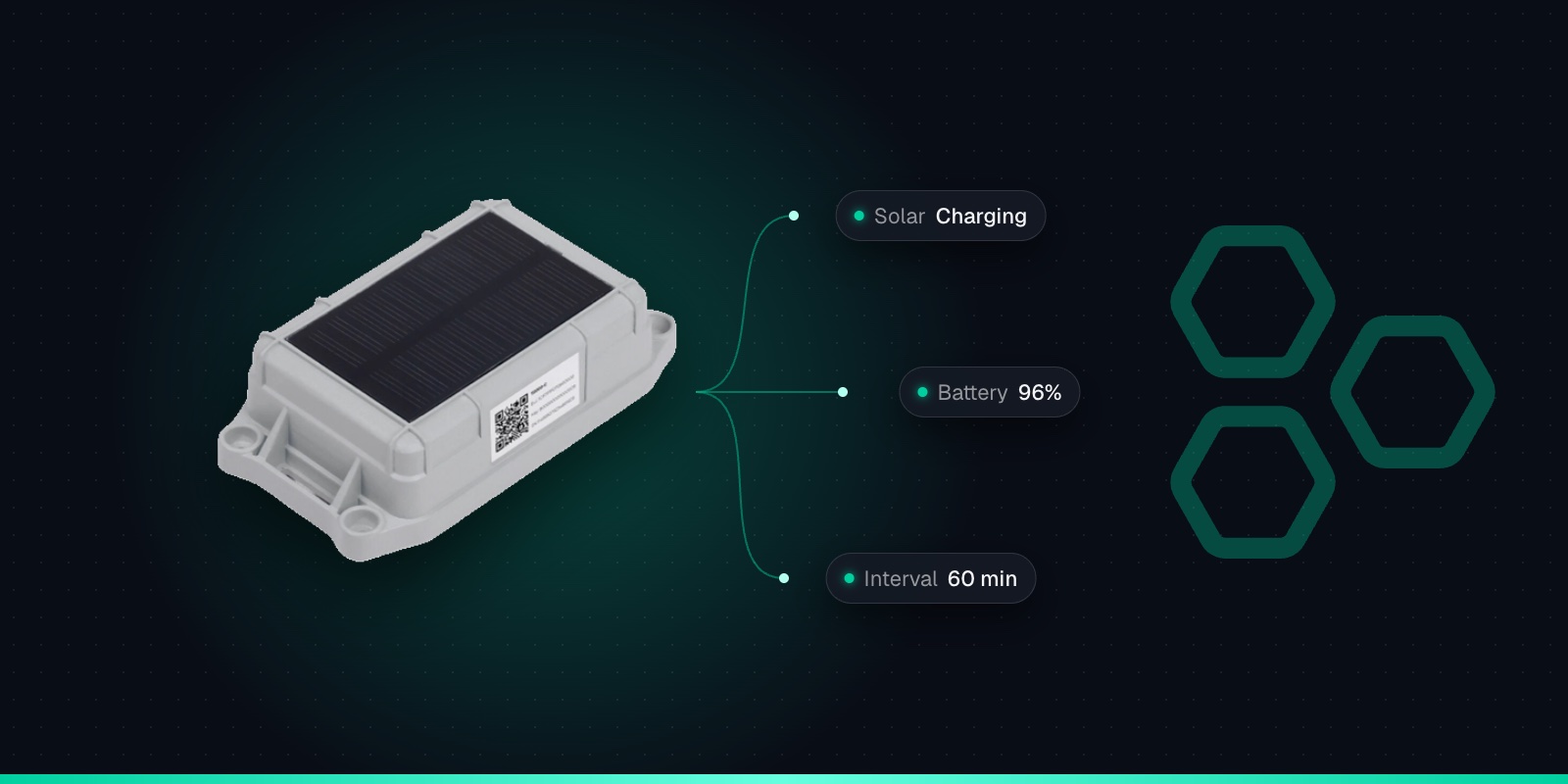
Livestock & Farm Machinery Tracking with the SenseCAP T2000
26th October 2026•By Neil Skoglund
T2000 Use Case
A farm is spread over fields, tracks and outlying buildings, often miles apart. Stock gets through a broken fence, a horse goes missing from a paddock, a quad is left at the far end of the farm, or a tractor disappears from a yard overnight. Knowing where everything is, without driving round to look, saves time and worry.
This guide is for farmers, estate managers, livery yards and contractors. It shows how a SenseCAP T2000 tracker, strapped to cattle or horses or screwed to farm machinery and reporting into Trackpac, puts everything on one map, with geofence alerts for stock that strays and movement alerts for machinery. It is also honest about the limits, especially coverage on rural land.
Why the T2000 Suits the Farm
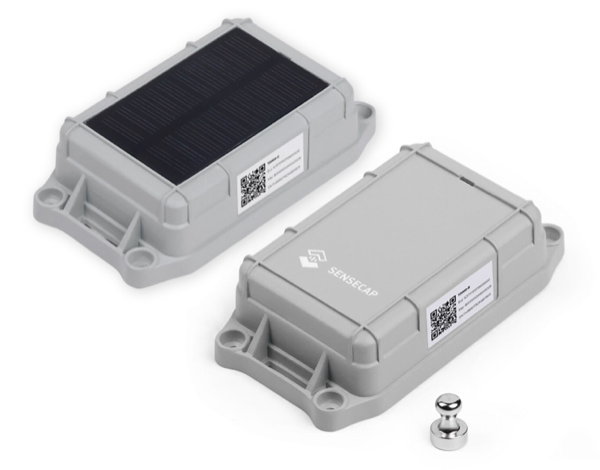
Agriculture is one of the jobs Seeed built the T2000 for. Its list includes tractors and harvesters, theft protection, and cattle and horses. It is a sealed IP67 box, 117 × 65 × 30mm and 180g, with three ways to mount it: screws for machinery, a strap for livestock, or 3M adhesive tape. There's no wiring and no SIM card. It sends its position over LoRaWAN, a long-range, low-power radio network.
There are three versions. The T2000-A (GPS and Bluetooth) runs on an 8000mAh battery that Seeed rates at over a year with an hourly GPS position, and up to 7 to 9 years with longer intervals. The T2000-B adds Wi-Fi scanning, handy if kit spends time in and around farm buildings. The T2000-C adds a solar panel and a rechargeable battery for things that live outdoors. Our T2000-A vs T2000-B vs T2000-C comparison covers the differences. Buy from Seeed Studio, or the T2000-A from The Pi Hut in the UK.
GPS + Bluetooth (+ Wi-Fi)
GPS, GLONASS and BeiDou outdoors, Bluetooth beacon scans, and Wi-Fi scans on the T2000-B.
Anti-tamper alarm
A button on the back raises a top-priority alarm the moment the tracker is removed.
8000mAh battery
Over a year at hourly GPS updates on the T2000-A/B, and years longer at longer intervals.
Solar option
The T2000-C pairs a 0.5W solar panel with a 4000mAh rechargeable battery.
IP67, ATEX on A/B
Waterproof and dustproof. The T2000-A/B run from -40 to +85°C.
117 × 65 × 30mm
180g, in a glass-fibre reinforced case.
1,000-record cache
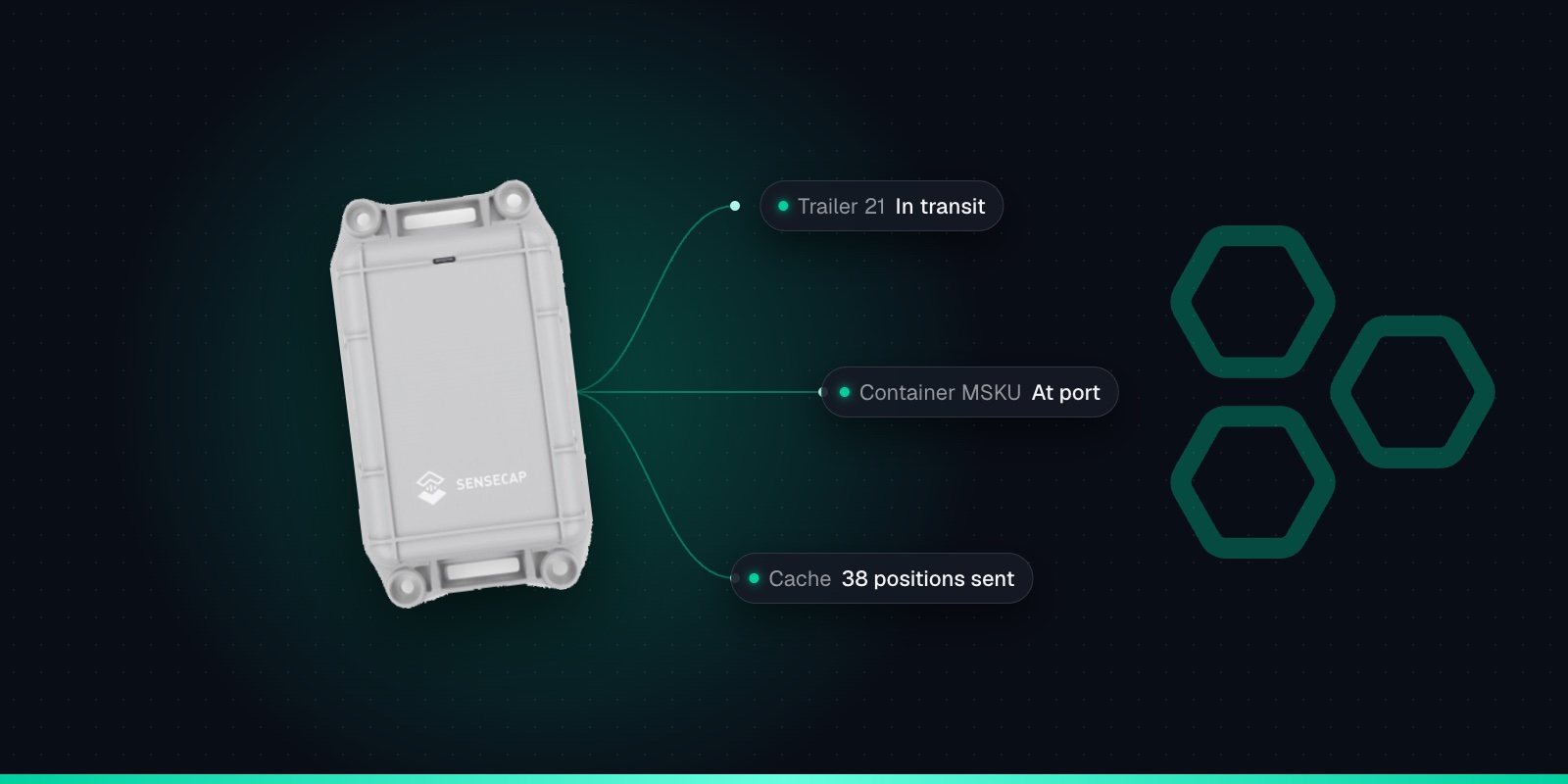
Optional: stores positions out of coverage and sends them when it reconnects.
Screw, strap or stick
Screw it to containers and trucks, strap it to livestock, or use 3M tape.
At 180g, the T2000 is suited to large animals such as cattle and horses, the ones Seeed lists. It is not a tracker for sheep, goats or poultry. Seeed's mounting option for livestock is a strap. We won't give animal welfare or veterinary advice: fit straps so they don't rub or snag, check them as part of your normal stock checks, and follow your own animal welfare practice.
Cattle
See where a herd is across a large holding or on rented grazing, find an animal that has wandered off on its own, and get an alert if stock leaves the field. You don't need to tag every animal to know where a group is.
Horses
Keep an eye on horses turned out in paddocks or on open grazing, with an alert if one gets out onto a lane or into a neighbour's land.
Seeed recommends periodic mode, the default, for livestock monitoring. The tracker sends a GPS position at a fixed interval, 60 minutes out of the box. Match the interval to what you need: hourly is plenty to know which field a group is in, while a shorter interval gives a more detailed track at the cost of battery. Seeed quotes 5 to 10 metre accuracy outdoors.
One thing to check: the T2000's tamper alarm is on by default and expects the button on the back to be held in. On a strap, look at the SenseCraft app's Measure screen after fitting. If it doesn't show "Pressed" reliably, turn the tamper alarm off for that tracker, or you'll get false alarms.
Tracking Farm Machinery
For machinery, screw the T2000 down so the tamper button is held in. Choose a spot out of casual sight that still has a view of the sky: steel blocks both GPS and the LoRaWAN radio, so a tracker buried in a chassis may never get a fix.
Tractors & harvesters
On or near the cab roof, behind trim or a bracket, facing up. Movement history shows when a machine moved and where it went. It isn't engine-hour metering, so keep using the hour meter for servicing.
Quads & UTVs
Small, valuable and easy to load into a van. A sheltered spot under a plastic panel or rack, with a view of the sky, plus an out-of-hours movement alert.
Trailers & bowsers
Livestock trailers, flatbeds and fuel or water bowsers often sit in a field or at an outlying yard for weeks. Screw the tracker to the frame or front of the body, clear of wheel spray. These are good candidates for the solar T2000-C.
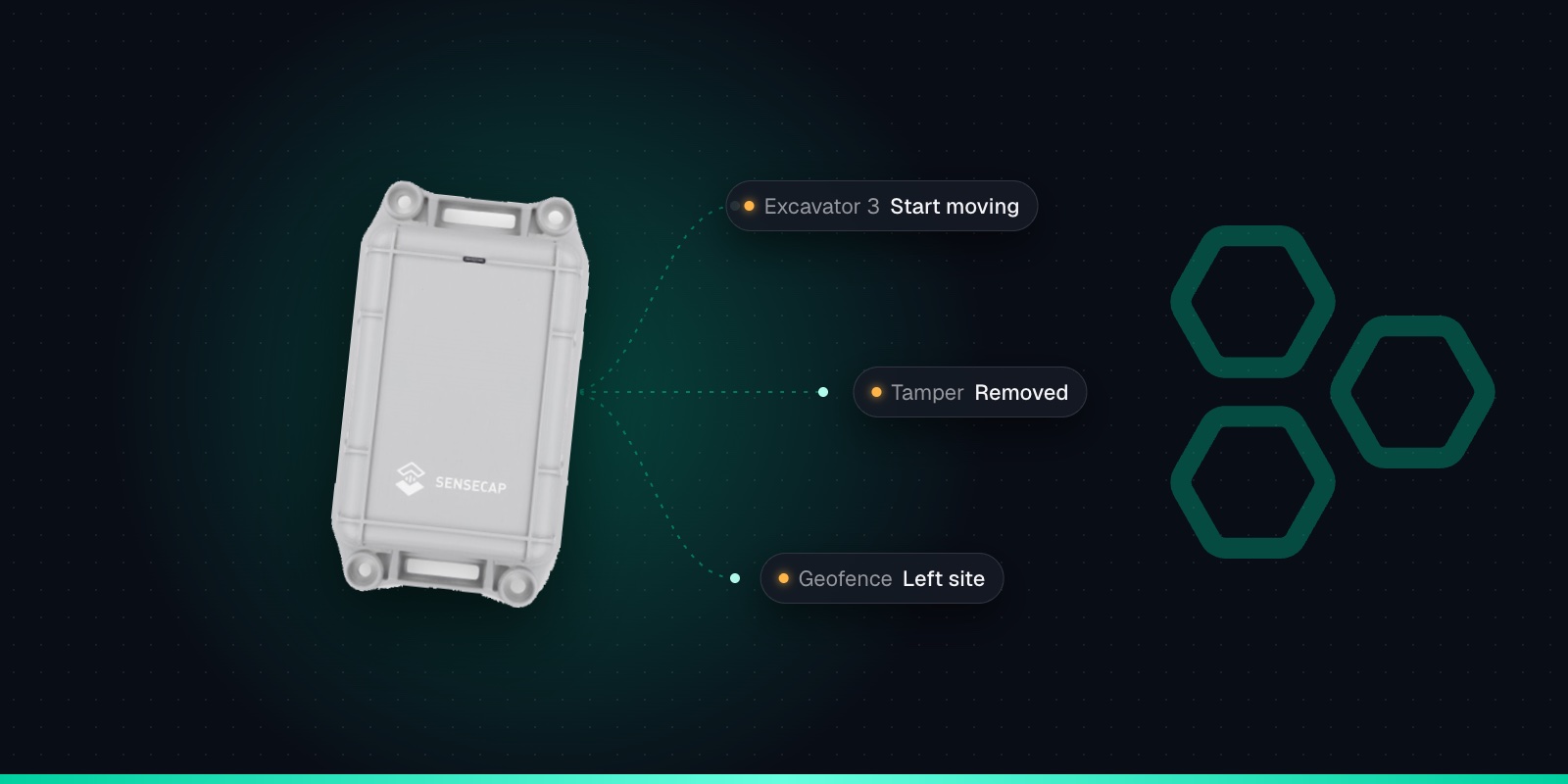
For an alert the moment a machine moves, turn on "Enable 3-axis sensor" in the SenseCraft app (it is off by default), switch to event mode and turn on the motion event. Trackpac can then alert on start moving, limited to nights and weekends. Seeed notes the accelerometer increases power use, so only turn it on where you want movement alerts. The tamper alarm, on by default, raises what Seeed calls a top-priority alarm and sends a position every minute for 3 minutes if the tracker is unscrewed. A thief who knows it's there can still take it off, but removing it is what triggers the alert. Don't confront anyone: give the police the location and history.
Solar Power for Kit That Lives Outdoors
The T2000-C
A 0.5W solar panel and a 4000mAh rechargeable battery. Seeed rates it for multi-year, low-maintenance use in regular sunlight with moderate reporting intervals.
It suits trailers, bowsers and machinery parked outside, where the panel gets daylight. Mount it panel-up, away from shade. It is a poor fit for anything kept in a shed or under a canopy, and it has a narrower temperature range than the A and B: -20°C to +60°C, and it only charges between 0°C and 45°C, so on frosty days it won't top up from the panel. Our T2000 battery and solar guide goes into more detail.
Geofences & Alerts Across the Farm
Fields & the farm boundary
Draw polygon geofences around fields and paddocks for stock, and one around the whole holding or yard for machinery, with an out-of-hours window so you're only alerted when nobody should be moving it.
Motionless alerts
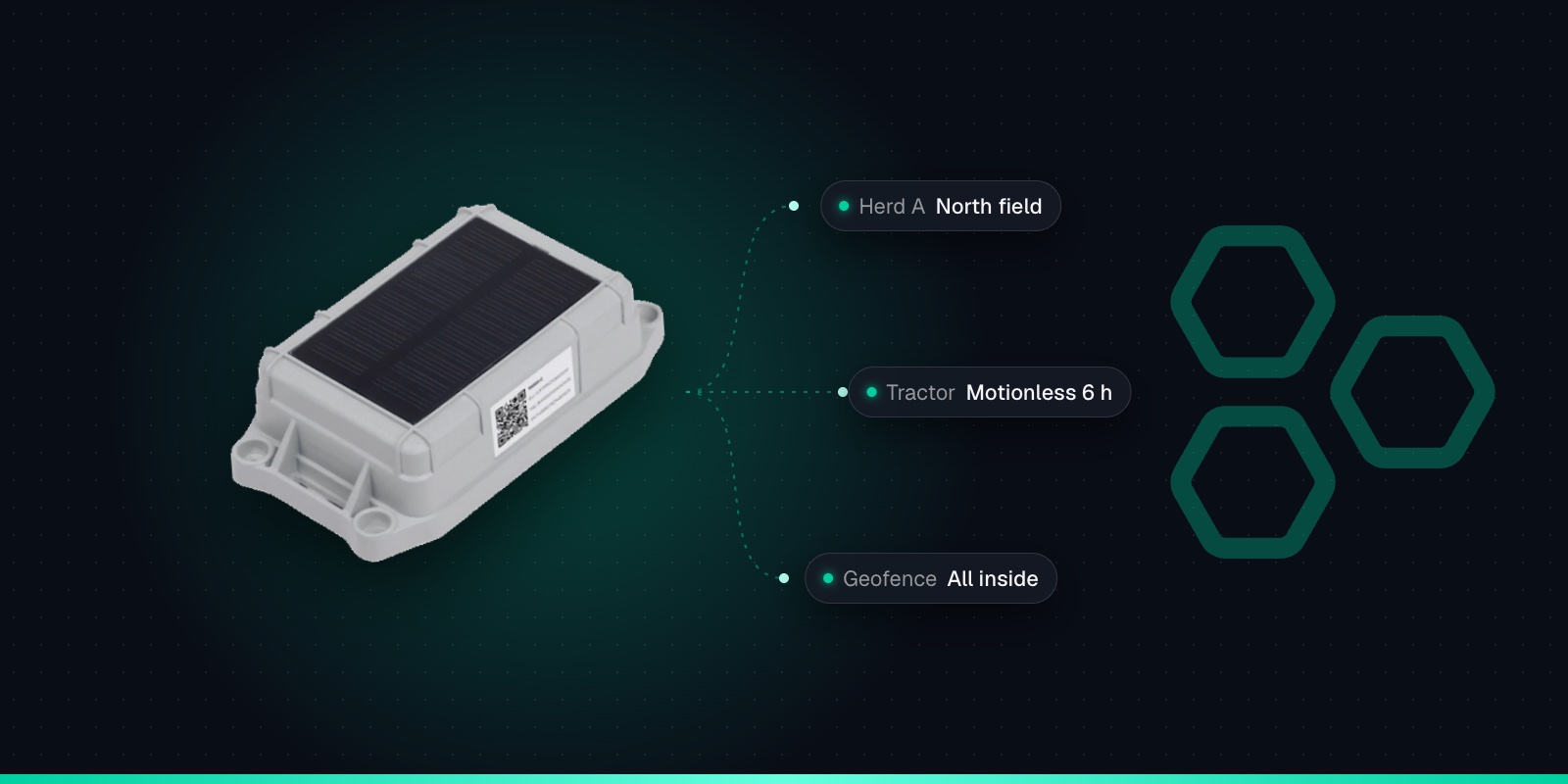
With the accelerometer on, the T2000 can report when it hasn't moved for a set time (Seeed's default is 6 hours). An animal or machine that hasn't moved for hours may be worth a look. It's a prompt to check, not a diagnosis.
A geofence exit alert fires when a position arrives from outside the boundary, so it is only as quick as the reporting interval. On hourly reporting, stock could have been out for up to an hour before you hear. Make field geofences a little larger than the field itself, so a cow grazing along the hedge doesn't trip an alert through normal GPS drift.
Alerts go by SMS, email or push notification in the Trackpac mobile app, to whoever is on duty. Rules can target a tag ("Dairy herd", "Machinery") so every tracker in the group shares them, a trigger-lock interval stops repeat alerts, and a "resolved" message tells you when the stock is back inside. For gates left open, see farm and yard gate monitoring with the LDS03A.
Coverage on Rural Land
Many farms need their own gateway
Trackpac roams onto Helium and other public LoRaWAN networks, which can reach farms near towns and villages. Out in open countryside, coverage is patchy. A gateway on a farm building gives you reliable coverage across your own land.
Set a Trackpac battery percentage alert on every tracker. The T2000-A and T2000-B battery is not rechargeable, so plan replacements around times you handle stock or service machinery anyway.
Seeed's figures for the A and B run from over one year at an hourly GPS position to 7 to 9 years with longer intervals. Real life depends on the interval, positioning mode and conditions, and the accelerometer adds to the draw. For machinery laid up for the winter, Seeed recommends powering the tracker off when it's not in use (four quick taps with the supplied magnet). Leave it on if the machine is somewhere it could be stolen.
Adding a T2000 to Trackpac
Each tracker takes a couple of minutes, and stock and machinery sit on the same map.
1
Switch it on with the magnet
The T2000 has no button. Hold the supplied magnet near the sensor area and tap 4 times quickly: the green LED lights and it goes straight into Bluetooth pairing.
2
Connect with the SenseCraft app
In Seeed's SenseCraft app, open Device Bluetooth Configuration, choose SenseCAP Asset Tracker T2000 and select the tracker by its serial number. Set the frequency plan for your region: EU868 in the UK and Europe.
3
Choose Other Platform and copy the keys
Change Platform to "Other Platform" and set the APP EUI to 545241434B504143. Copy the Device EUI, APP EUI and APP Key, then tap Send.
4
Add it in Trackpac
In Trackpac, go to Devices, tap +, choose "Enter Keys Manually", paste the three keys and pick SenseCAP T2000 as the device type. Trackpac's network roams onto Helium, so you don't need your own network server.
5
Test outdoors, then mount it
Give it its first GPS fix outside so it can set its clock from the satellites. Then mount it so the tamper button on the back is held in, or the tamper alarm will fire.
Name each tracker after the animal or machine, tag them by group, draw your field and yard geofences, then set the alerts. Trackpac is £15 / €18 per tracker per year, covering connectivity, the dashboard, alerts and data storage, with no setup fee: see pricing or start with one tracker today.
Get Started
See your stock and machinery on one map
Strap a T2000 to cattle or horses, fix one to each machine, and Trackpac alerts you when stock strays or kit moves out of hours.
Works with the T2000-A, T2000-B and T2000-C. Add one with its keys in a couple of minutes.
Connectivity through the Trackpac network, which roams onto Helium, so there's no network server to run.
Dashboard, alerts and data storage from £15 / €18 per tracker per year.
Can you GPS track cattle and horses with LoRaWAN?↓
Yes. Seeed lists cattle and horses as uses for the SenseCAP T2000, mounted with a strap. It sends a GPS position over LoRaWAN, a long-range, low-power radio network, so there is no SIM card, and the battery versions are rated for over a year at an hourly position. Trackpac shows each animal on a map with its history and can alert you when it leaves a field geofence. Fit straps so they don't rub or snag, and follow your own animal welfare practice.
Is the SenseCAP T2000 suitable for sheep or smaller animals?↓
Probably not. The T2000 is a rugged 117 × 65 × 30mm box weighing 180g, so it is suited to large animals such as cattle and horses, which are the animals Seeed lists. For sheep, goats or poultry, look for a tracker designed for that animal, and take advice from your vet or adviser on anything you attach to stock.
Do I need my own gateway to track livestock on a farm?↓
Often, yes. The Trackpac network roams onto Helium and other public LoRaWAN networks, which can cover farms near towns, but coverage in open countryside is patchy. A single gateway on a farm building with power and an internet connection can cover a large area, depending on terrain. Seeed quotes up to 9.6 km for the T2000 in open country, but hills, woods and buildings cut that down. Trackpac's LoRaWAN consultancy can help you plan coverage.
How do I get an alert if livestock get out of a field?↓
Draw a geofence around the field in Trackpac and set an exit alert to the right contacts, by SMS, email or push. The alert fires when a position arrives from outside the geofence, so it can only be as quick as the tracker's reporting interval: on the default hourly setting, an animal could have been out for up to an hour. Make the geofence slightly larger than the field so normal GPS drift near a hedge doesn't cause false alarms.
Can I track a tractor or quad bike without wiring a tracker in?↓
Yes. The SenseCAP T2000 runs on its own internal battery (or battery and solar panel on the T2000-C), so you screw it to the machine and there is nothing to wire. Turn on its accelerometer and motion event and Trackpac can alert you when a tractor or quad moves out of hours. Its anti-tamper button also raises an alarm if someone unscrews it. It doesn't immobilise anything, so keep keys and machinery locked away.