AC Drip Tray & Condensate Overflow Alerts with the LWL02
22nd October 2026•By Neil Skoglund
LWL02 Use Case
Every air-conditioning unit that cools also makes water. Moisture condenses on the cold coil, drips into a tray and is carried away by a gravity drain or a small condensate pump. Most of the time nobody thinks about it. Then a drain blocks, a pump stops or the tray silts up, the water has nowhere to go, and the first sign is a brown stain spreading across a ceiling tile above someone's desk or a display.
This guide is for HVAC and air-conditioning maintenance contractors and for facilities managers looking after ceiling cassettes, fan coil units, split systems and air handling units. It shows how a Dragino LWL02 water leak sensor, with its probe set just below the overflow point of a drip tray and reporting into Trackpac, warns you that a drain or pump has failed before the water comes through the ceiling, and builds a record of which units keep blocking. For the general case for leak sensors, see our overview of real-time water leak detection for businesses.
Why Condensate Overflows Catch People Out
Condensate problems tend to build slowly and then show up all at once. Dust, debris and algae collect in the tray and the drain line over a season. A condensate pump wears out or loses power. A drain run that was only just falling gets knocked during other works. None of this is visible from the room below, because the unit sits in a ceiling void, behind a fan coil casing or high on a wall.
By the time water reaches the ceiling, the tray has already overflowed and the void has been taking water for a while. The cost is rarely the drain itself, which is often a quick clear. It's the stained or sagging tiles, wet stock or equipment underneath, a disrupted office or shop floor, and an urgent call-out instead of a planned visit. An LWL02 in the tray moves the warning to the point where the water is rising but still inside the unit.
Two-probe detection
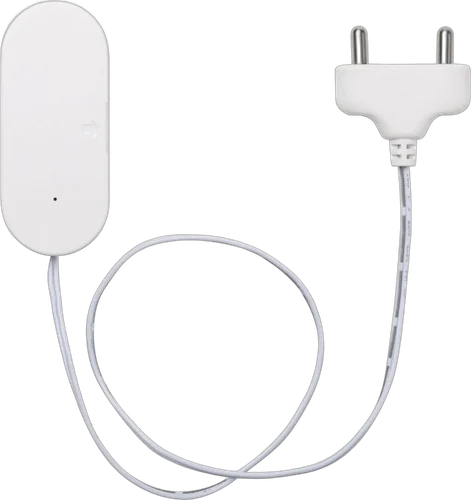
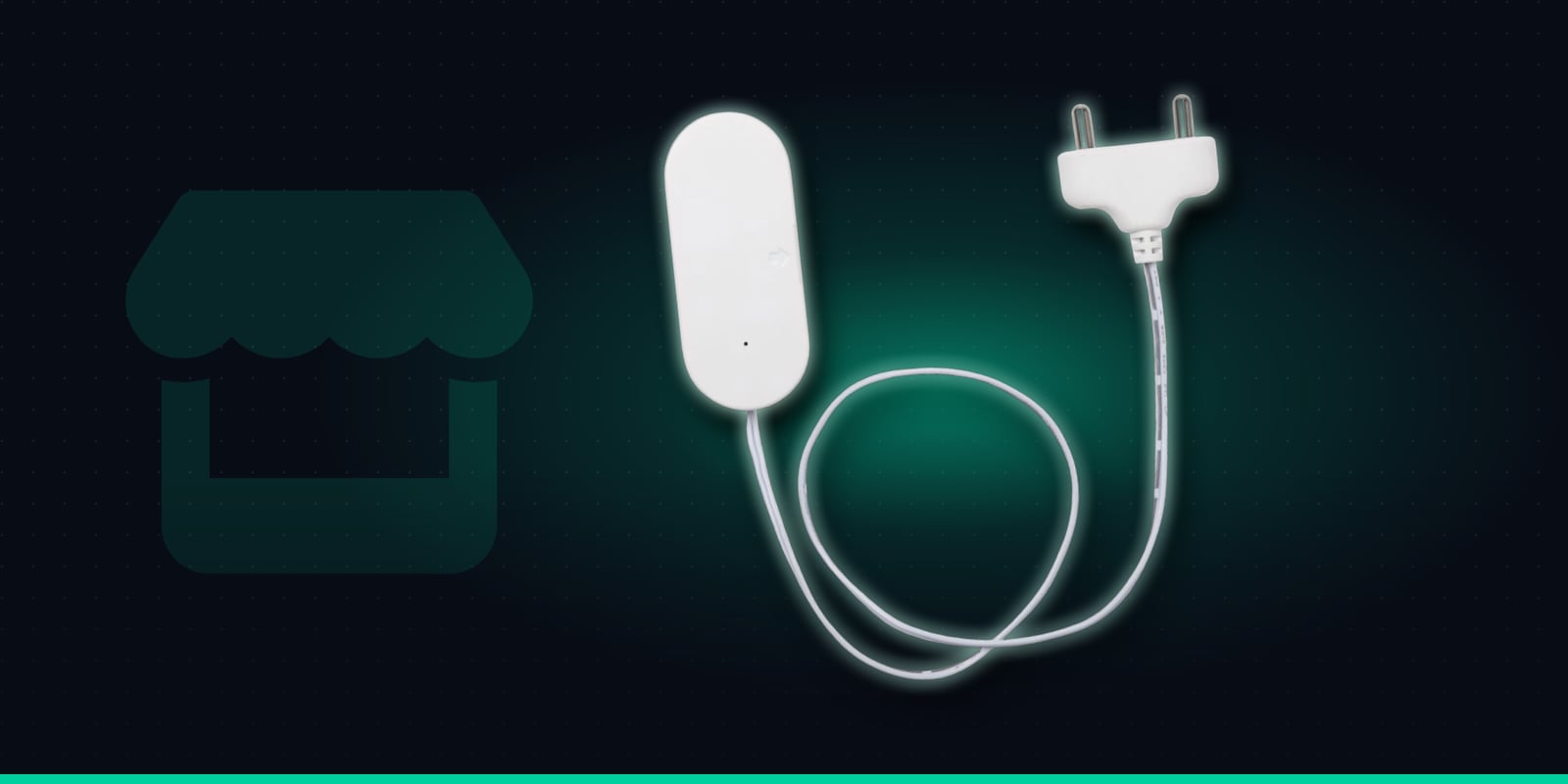
Stainless-steel probes on a lead. Water bridging the probes triggers a leak alert.
Instant leak alerts
Reports the moment a leak starts, every 10 minutes while it continues, and when it clears.
Daily check-in
Sends a status report once a day, so you know the sensor is still working.
Counts & durations
Keeps a count of leak events and how long the last one lasted.
Replaceable AAA batteries
2 x AAA, roughly 2 to 10 years depending on how often it reports.
Indoor sensor
The body isn't waterproof - mount it above the floor with only the probe in the wet zone. -10 to 50°C.
Specifications from Dragino's LWL02 documentation.
Units Worth Watching
The idea is the same on every type of unit: the probe goes where water will collect first when the drainage fails, and the body stays dry. One LWL02 has one probe, so fit one sensor per unit you want to protect.
Ceiling cassettes
Common in offices, shops and restaurants, and usually relying on a small built-in or add-on pump. If the pump stops, the water comes straight down through the grille or the tiles around it.
Fan coil units
Dozens to a floor in many office buildings, each with its own tray and drain connection. A sensor per unit shows exactly which one needs attention instead of a hunt across the floor.
Split & wall-mounted units
Often fitted with a pump hidden in trunking or a void. The probe can sit beneath the indoor unit or the pump, where a drip would land first.
Air handling units
Larger cooling coils produce a lot of condensate, and an AHU in a ceiling void or on a floor above an occupied space can put a lot of water somewhere unhelpful if its drain blocks.
Installing the LWL02 on a Drip Tray
The LWL02 runs on two AAA batteries and talks over LoRaWAN, so there is no wiring into the unit, no mains supply and no building Wi-Fi to join. The detail that matters most is probe height. Follow the unit manufacturer's guidance and your own site practice; the steps below are a starting point rather than an installation standard.
1
Order "Trackpac Ready", scan and name it
Buy the LWL02 from Hexaspot with the Trackpac Ready option, scan its QR code in the Trackpac app and give it a name an engineer can act on, such as "Block B - Floor 3 - FCU 12". Tag it by building and floor so it picks up the right alert rules.
2
Set the probe just above the normal water level
A working tray often holds a little standing condensate. The probe must not touch it, or the sensor will report a leak all summer. Position the pins slightly above the usual level and below the overflow lip, so they only get wet when the tray is about to spill. Keep the probe clear of the drain outlet, the pump inlet and any float switch the unit already has.
3
Or place it in the void beneath the unit
Where the tray is hard to reach, put the probe flat on the ceiling void floor or the top of the ceiling tile directly under the unit or its pump, at the spot where an overflow would land first. You hear about it slightly later than with a tray probe, but still before it shows on the ceiling below.
4
Mount the body high and dry
The sensor body isn't waterproof. Fix it above any likely water, on the unit casing, a hanger or nearby structure, using the adhesive pad or screws, and secure the lead so it can't drop into the tray or snag on the filter when the unit is serviced.
5
Test it with the ceiling closed
Bridge the pins with a damp cloth or a little water, check the leak and the resolved message arrive on the dashboard, then refit the tiles and confirm the daily check-in still comes through. A sensor tucked above a ceiling needs to get its signal out.
Alert Rules for a Rising Drip Tray
A wet probe in a drip tray means one thing: the drain or pump isn't keeping up. Trackpac rules alert on water leak detected and battery level, by email, SMS or push through the Trackpac mobile app. Rules can target a tag, so every sensor added to a building or floor inherits them. A few rules cover most estates:
Tray about to overflow: clear the drain
An SMS and push alert to the on-call engineer or site team, naming the building, floor and unit, while the water is still in the tray.
Probe dry again: resolved
When the level drops, a resolved message follows, so everyone knows the drain has been cleared or the pump is running again.
One alert, not one every 10 minutes
The sensor reports every 10 minutes while the probe stays wet. A trigger-lock interval keeps that to a single alert until the cool down passes.
Low battery: swap at the next service
The AAA cells last years, and a low-battery rule means they get changed on a routine visit rather than leaving a unit unwatched.
Time windows let you route alerts differently in and out of hours, for example to the on-site team during the day and to the contractor's on-call number overnight and at weekends. Trackpac tells people; it doesn't switch off the unit or clear the drain.
Spotting the Units That Keep Blocking
Every LWL02 report includes a running count of leak events and how long the last one lasted, and Trackpac keeps the history on the dashboard. Over a cooling season that turns into useful maintenance evidence. A unit that trips once after a dusty refurbishment is a one-off. A unit that trips every few weeks, or stays wet for longer each time, points to a drain run with poor fall, a pump on its way out or a tray that needs more regular cleaning.
That gives contractors something concrete to bring to a client: which units need more frequent drain cleaning, which pumps to replace, and which ones are fine on the standard schedule. The count can be reset remotely, for instance at the start of each season or after a pump is replaced, so you can see whether the fix worked. If you only want to count brief, intermittent overflows on a unit without alerting on each one, the LWL02 also has a count-only mode, but for overflow warnings leave event reporting on.
Reports and exports pull the history together for a contract review or a planned maintenance proposal, so the case for extra visits rests on recorded events rather than memory.
Fitting Into a Contractor's Workflow
For contractors running many client sites, organisation matters as much as the sensor. Tag each LWL02 by client, building, floor and unit so the dashboard groups them and each alert says exactly where to go. Webhooks forward leak alerts into your job management, helpdesk or ticketing system, so a rising tray can raise a job without anyone copying details across from an email.
Clients usually want to see what they are paying for. A read-only dashboard link lets a facilities manager or building owner see the status and leak history of their units without being able to change sensors or alert rules. If you also look after server rooms, where a cooling unit overflowing is a particular worry, see server room water leak detection, and for boilers, cylinders and tanks in the same buildings, read about plant room and water heater leak monitoring.
LoRaWAN signals generally travel well through buildings, but a sensor above a ceiling in a dense block is worth checking. Read what to check about LoRaWAN coverage before a large roll-out, and see Trackpac pricing for the per-sensor subscription.
Get Started
Hear about a blocked condensate drain before the ceiling does
One LWL02 per unit, with the probe set just below the overflow point and no wiring into the unit - sending an alert when a drain or pump fails and logging which units keep blocking.
€18.17 ex VAT from Hexaspot, our sister company in the Connect IoT group. VAT is added at checkout based on your country.
Choose the Trackpac Ready option and the sensor arrives pre-registered on Trackpac - scan the QR code and it's live on your dashboard.
Trackpac covers connectivity, dashboard, alerts and data storage from £15 / €18 per sensor per year.
Won't the LWL02 go off all the time if the drip tray always holds some water?↓
Not if the probe is placed correctly. The LWL02 registers a leak when water bridges its two stainless-steel pins, so the probe needs to sit just above the level the tray normally holds and below the point where it would overflow. That way normal condensate doesn't touch it, and it only triggers when the water is rising because the drain or pump isn't keeping up. Watch the tray during a busy cooling day after fitting, and adjust the height if the probe is too close to the normal level.
Can I put the whole sensor inside the drip tray?↓
No. Only the probe goes in the tray. The LWL02's white sensor body holds the batteries and radio and isn't waterproof, so mount it somewhere dry nearby, such as on the unit casing above the tray, a bracket or the structure in the ceiling void, using the adhesive pad or screws. The thin lead carries the signal from the probe to the body. Keep the probe and lead clear of the drain outlet, the pump inlet and any moving parts.
How quickly will I know a condensate drain has blocked?↓
The LWL02 sends a message as soon as water reaches the probe, then every 10 minutes while it stays wet, and another when the probe dries. Trackpac turns that into an email, SMS or push alert, usually within moments, subject to LoRaWAN coverage at the building. A trigger-lock interval stops the 10-minute updates becoming a message every 10 minutes, and a resolved message tells you when the water has gone.
Can the alerts go straight into our maintenance job system?↓
Yes. Trackpac webhooks can forward a leak alert to another system, such as a contractor's job management, helpdesk or ticketing platform, so a blocked drain can open a job automatically. Tag each sensor by building, floor and unit so the alert carries enough detail for the engineer to find the right unit. Trackpac passes the alert on; it doesn't dispatch anyone or fix the drain itself.
Where can I buy the LWL02 for use with Trackpac?↓
The Dragino LWL02 is sold by Hexaspot, Trackpac's sister company in the Connect IoT group, for €18.17 ex VAT, with VAT added at checkout based on your country. Choose the 'Trackpac Ready' option and the sensor is pre-registered on Trackpac, so you only need to scan its QR code. A Trackpac subscription from £15 / €18 per sensor per year covers connectivity, the dashboard, alerts and data storage.