Plant Room & Water Heater Leak Monitoring with the LWL02
22nd October 2026•By Neil Skoglund
LWL02 Use Case
Every commercial building has a room full of water under pressure: boilers, hot water cylinders, calorifiers, pump sets, pressure vessels, water softeners and break tanks, all joined by valves, seals and fittings. Most of the time nobody is in there. A plant room might get a planned maintenance visit once a month and a glance from the caretaker now and then. So when a joint starts weeping or a valve starts to let by on a Friday evening, the first sign is often a stain on the ceiling of the floor below on Monday morning.
This guide is for facilities managers and building services contractors looking after offices, schools, hotels, gyms and other commercial buildings. It shows how a Dragino LWL02 water leak sensor beside each item of plant, reporting into Trackpac, alerts your helpdesk or on-call engineer when water reaches the floor, keeps a history of every leak, and does it without a single cable back to the BMS. For the wider case for leak detection, see our overview of real-time water leak detection for businesses.
Why Plant Room Leaks Go Unnoticed
Plant doesn't usually fail all at once. A gland on a pump starts to drip, a fitting on a cylinder weeps after a pressure change, a softener overflows during regeneration, or a relief valve discharges more than the drain can take. Each one might be a trickle, but a trickle that runs all weekend in an unvisited room finds its way across the floor, under the door and through to the ceilings, lights and finishes below.
Plant rooms are also often on roofs, in basements or at the back of a building, well away from anyone who might hear or see water. Out of hours, the building may be empty altogether. A BMS might be watching temperatures and pressures, but adding hard-wired leak detection to every item of plant is rarely done, and rarely cheap. A small, battery-powered sensor at each risk point fills that gap.
Why the LWL02 Suits Plant Rooms
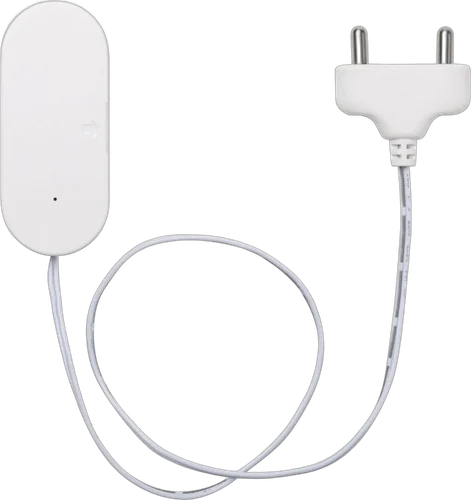
The LWL02 is a small indoor LoRaWAN leak sensor. A white sensor body holds the batteries and radio, and a thin lead runs to a probe with two 316 stainless-steel pins. When water bridges the pins, the sensor reports a leak straight away, then every 10 minutes while the probe stays wet, and again when it dries. A daily status report confirms it is still alive, so a sensor tucked behind a calorifier doesn't go quietly silent.
It runs on 2 x AAA batteries for roughly 2 to 10 years depending on how often it reports, and needs no mains, no Wi-Fi and no SIM. That means no containment runs, no BMS points and no electrician. At €18.17 ex VAT, it's cheap enough to put one at every point that could leak, rather than one in the middle of the room hoping the water finds it.
Two-probe detection
Stainless-steel probes on a lead. Water bridging the probes triggers a leak alert.
Instant leak alerts
Reports the moment a leak starts, every 10 minutes while it continues, and when it clears.
Daily check-in
Sends a status report once a day, so you know the sensor is still working.
Counts & durations
Keeps a count of leak events and how long the last one lasted.
Replaceable AAA batteries
2 x AAA, roughly 2 to 10 years depending on how often it reports.
Indoor sensor
The body isn't waterproof - mount it above the floor with only the probe in the wet zone. -10 to 50°C.
Specifications from Dragino's LWL02 documentation.
Who Uses Plant Room Leak Alerts
The setup is the same in any building: one sensor at each item of plant you want to protect, tagged by building and plant room in Trackpac. What changes is who gets the alert and when.
Offices & multi-let buildings
Rooftop and basement plant serving tenants on every floor. A leak alert goes to the FM helpdesk in the day and the on-call engineer at night, before it reaches a tenant's ceiling.
Schools & colleges
Boiler houses and hot water plant spread across several blocks, empty at weekends and through the holidays. Tags by site and block send each alert to the right premises team.
Hotels
Large hot water cylinders and calorifiers working hard around the clock, often above or beside guest areas. Early warning means a repair, not a run of closed rooms.
Gyms & leisure sites
High hot water demand from showers, plus water softeners and tanks. Sensors at each unit show which one is leaking, and how often.
Installing LWL02s Around Your Plant
No cabling, no containment and no plant shutdown. The thinking is all about where water would land first, and keeping the sensor body out of it.
1
Walk the room and list the risk points
Note every boiler, water heater, cylinder, calorifier, pump set, pressure vessel, softener and tank, plus any tundish or floor drain that could back up or spill. Each LWL02 has one probe, so plan one sensor per location you want to protect.
2
Order "Trackpac Ready", scan and name each sensor
Buy the LWL02 from Hexaspot with the Trackpac Ready option, scan each QR code in the Trackpac app and name it after the plant it protects, such as "Block B plant room - calorifier 2". Tag it by building and plant room so it picks up the right alert rules.
3
Probe at the low point, body up high
Lay the probe flat on the floor beside or under the item of plant, where water would gather first. Fix the sensor body by screws or adhesive pad to the wall or the side of a unit, above any likely water level, because the body isn't waterproof.
4
Keep the body away from heat
Plant rooms run warm. The LWL02 is rated to 50°C on standard AAA cells and 60°C on lithium AAA cells, so mount the body clear of flues, hot pipework and boiler casings, and use lithium cells in a particularly warm room.
5
Test each one with the door shut
Bridge the pins with a damp cloth and check the leak appears on the dashboard, then dry it and look for the clear. Basement and rooftop plant rooms can be hard places for radio, so test with the plant room door closed, as it will be at 2am.
Alert Rules for Helpdesk & On-Call
Trackpac rules can alert on water leak detected and battery level, by email, SMS or push, with time windows so the right person hears about it at the right time. Rules target tags, so a new sensor added to a plant room inherits that room's rules automatically. A few rules cover most estates:
Working hours: to the helpdesk
An email to the FM helpdesk inbox, or a webhook straight into your CAFM or ticketing system, so a leak becomes a job without anyone retyping it.
Out of hours: to the on-call engineer
Evenings, nights, weekends and holidays, an SMS and push alert goes to whoever is on call, naming the building, plant room and the item of plant.
Dry again: all clear
When the probe dries, a "resolved" message follows, so the helpdesk knows the water has stopped reaching the floor.
Low battery: add it to the PPM round
A low-battery rule flags sensors due a battery swap, so it can be done on the next planned visit instead of a special trip.
While a leak continues the sensor reports every 10 minutes, so set a trigger-lock interval on the rule and the on-call engineer gets one alert, not a stream of them. Trackpac passes the alert on to people and systems; it doesn't isolate the water or dispatch anyone itself.
Using Leak History to Fix Recurring Drips
Every LWL02 report carries a running count of leak events and how long the last one lasted, and Trackpac keeps the full history on the dashboard. That changes the conversation about intermittent leaks. A relief valve that discharges for a few minutes every afternoon, a softener that overflows at the same point in each regeneration, or a pump that only drips when it starts up all leave a pattern you can see, even when the floor is dry by the time anyone arrives.
For contractors, the counts and durations are evidence: something to attach to a quote for a replacement valve, or to show a client that a repair has worked because the events have stopped. You can reset the count remotely after a repair to start a clean record.
Tag sensors by building, plant room and client, and the dashboard groups them for you. A read-only dashboard link lets a client, landlord or managing agent see status and history without being able to change sensors or alert rules, and reports and exports give you a record for maintenance reviews.
Coverage & Rolling Out Across an Estate
Because the LWL02 uses LoRaWAN, there's no building Wi-Fi to negotiate with IT and no SIM per sensor. Coverage still matters, and plant rooms below ground or behind thick walls are the places to check first. Before a wider rollout, read what to check about LoRaWAN coverage, and if any of the terms are new, our LoRaWAN glossary explains them.
Start with the plant room that worries you most, then add buildings as you go: new sensors pick up their tag's rules the moment they are added. Costs are simple, see Trackpac pricing for the subscription. The same buildings often have air conditioning units worth watching too - see AC drip tray and condensate overflow alerts, and for comms rooms sharing a riser with plant, read about server room water leak detection.
Get Started
Know when plant starts leaking, day or night
One LWL02 beside each boiler, water heater, pump or tank, with no wiring into the BMS - sending an alert to your helpdesk or on-call engineer the moment water reaches the floor.
€18.17 ex VAT from Hexaspot, our sister company in the Connect IoT group. VAT is added at checkout based on your country.
Choose the Trackpac Ready option and the sensor arrives pre-registered on Trackpac - scan the QR code and it's live on your dashboard.
Trackpac covers connectivity, dashboard, alerts and data storage from £15 / €18 per sensor per year.
Where should I put LWL02 sensors in a plant room?↓
One sensor per item of plant you want to protect: on the floor beside each boiler, under or beside each water heater, hot water cylinder or calorifier, next to pump sets, pressure vessels, water softeners and tanks, and near a tundish or floor drain where water could back up or spill. The probe goes at the lowest point where water would collect first, and the sensor body is fixed to a wall or the side of a unit above any likely water level, because the body itself isn't waterproof.
Does the LWL02 need wiring into our BMS?↓
No. The LWL02 runs on 2 x AAA batteries and sends its reports over LoRaWAN, so there is no cabling, no mains supply, no Wi-Fi and no BMS points to add. Alerts come from Trackpac by email, SMS or push, and if you want leak events in another system, Trackpac webhooks can forward them to your CAFM, helpdesk or BMS platform.
Will a continuing leak send an alert every 10 minutes?↓
The sensor reports every 10 minutes while the probe stays wet, but you don't have to get a message each time. Trackpac alert rules have a trigger-lock (cool-down) interval, so a continuing leak raises one alert and then waits before sending another. When the probe dries out, a 'resolved' message tells everyone on the rule that the water has gone.
Can the LWL02 cope with a warm plant room?↓
The LWL02 is rated for -10 to 50°C with standard AAA batteries, and -40 to 60°C with lithium AAA cells. Most plant rooms sit within that, but mount the sensor body away from hot pipework, flues and the casing of a boiler or calorifier, and consider lithium cells for a room that runs particularly warm. Only the probe needs to be down where the water would collect.
Where can I buy the LWL02 for use with Trackpac?↓
The Dragino LWL02 is sold by Hexaspot, Trackpac's sister company in the Connect IoT group, for €18.17 ex VAT, with VAT added at checkout based on your country. Choose the 'Trackpac Ready' option and the sensor is pre-registered on Trackpac, so you only need to scan its QR code. A Trackpac subscription from £15 / €18 per sensor per year covers connectivity, the dashboard, alerts and data storage.