Retail & Warehouse Stock Leak Protection with the LWL02
22nd October 2026•By Neil Skoglund
LWL02 Use Case
Stock doesn't need to be underwater to be lost. A carton that has sat in a puddle overnight, a pallet of packaging that has wicked water up from the floor, a box of shoes with a stained lid: most of it can't be sold at full price, and some of it can't be sold at all. In a stockroom or warehouse, the water usually comes from above or from the side - a roof valley, a skylight, a blocked gutter, a pipe run, a staff toilet or a drinks chiller - and it tends to arrive when nobody is there to see it.
This guide is for retailers, stockrooms, warehouses, distribution sites and self-storage operators. It shows how a Dragino LWL02 water leak sensor at each of your problem spots, reporting into Trackpac, alerts the right person out of hours, lets you watch every store from one dashboard, and builds a history that shows which leaks keep coming back. For the general case for leak detection, see our overview of real-time water leak detection for businesses.
Why the LWL02 Suits Stockrooms & Warehouses
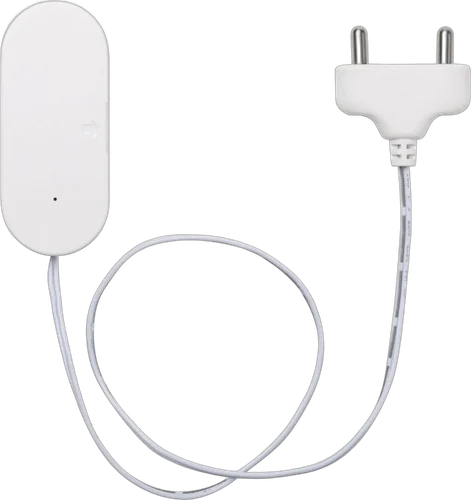
A large building has a lot of places water can get in, and you rarely know in advance which one will let go next. That makes cost per point the deciding factor. The LWL02 is a small, battery-powered LoRaWAN sensor: a white body holding two AAA batteries and the radio, and a thin lead to a probe with two stainless-steel pins. When water bridges the pins, it reports a leak. There is no mains power to run, no Wi-Fi to join and no SIM card per sensor, so you can put one at every spot that worries you rather than just the obvious one.
Two things to know before you plan. The sensor body isn't waterproof, so it goes on a wall or racking upright with only the probe down at floor level. And it is rated for -10 to 50°C on standard AAA cells; for an unheated warehouse or loading area that gets colder than that in winter, lithium AAA cells take it down to -40°C.
Two-probe detection
Stainless-steel probes on a lead. Water bridging the probes triggers a leak alert.
Instant leak alerts
Reports the moment a leak starts, every 10 minutes while it continues, and when it clears.
Daily check-in
Sends a status report once a day, so you know the sensor is still working.
Counts & durations
Keeps a count of leak events and how long the last one lasted.
Replaceable AAA batteries
2 x AAA, roughly 2 to 10 years depending on how often it reports.
Indoor sensor
The body isn't waterproof - mount it above the floor with only the probe in the wet zone. -10 to 50°C.
Specifications from Dragino's LWL02 documentation.
Where Water Gets to Your Stock
The LWL02 detects water that reaches its probe, so placement is everything. Walk the building after heavy rain if you can, look for stains on the floor and ceiling, and ask the team where buckets have gone in the past. These are the usual suspects:
Roof valleys, skylights & gutters
Put the probe on the floor directly below where the drips land, or where that water runs to and pools. A known wet patch after heavy rain is the best clue you'll get.
Pipe runs & low points
Beneath pipework that crosses the stockroom, by risers and stop taps, and at the lowest corner of the floor, where water from anywhere in the room ends up first.
Drinks chillers & fridges
Beside or behind chillers, where a blocked drain or overflowing tray sends water across the floor towards stock and shelving on the shop floor or in the back room.
Staff kitchens & toilets
Under the sink, beside the dishwasher and by toilets, especially where they sit on the floor above or next to a stockroom.
Who Uses Stock Leak Alerts
The setup is the same everywhere: one sensor per spot you want to protect, tagged by site in Trackpac. What changes is the scale and who needs to hear about it.
Shops & multi-site retailers
Back-of-house stockrooms, chillers and staff areas in stores that close at night. Alerts go to the store manager, and head office sees every store on one dashboard.
Warehouses
Large roofs, long gutter runs and pallets on the floor. Sensors under the known weak spots alert security or facilities while the building is empty.
Distribution sites
Busy in the week, quiet at weekends. Leak alerts feed straight into the facilities helpdesk by webhook, so a ticket is raised without anyone retyping it.
Self-storage
Corridors of units where customers' belongings sit at floor level and you can't see inside. Sensors in corridors, by roof lights and at low points flag water before it spreads under the doors.
Installing the LWL02 in a Stockroom or Warehouse
No electrician and no wiring. Each sensor takes a few minutes to fit; the time goes into choosing where the probe sits.
1
Order "Trackpac Ready", scan and name it
Buy the LWL02 from Hexaspot with the Trackpac Ready option, scan its QR code in the Trackpac app and give it a name someone can find in the dark, such as "Store 12 - stockroom, under skylight 3". Tag it by store or site so it picks up that site's alert rules.
2
Probe where the water lands or pools
Lay the probe flat on the floor at the spot water reaches first: under the drip, at the low point, beside the chiller. Both pins need to be wetted, so a slight dip or the edge of a known wet patch is better than a spot water runs straight past.
3
Body up high and out of harm's way
Fix the sensor body above the likely water level on a wall, racking upright or the side of a unit, with screws or the adhesive pad. Keep it and the lead clear of pallet trucks, forklift paths and anywhere stock gets dropped or dragged.
4
Wet test, then dry
Touch the probe pins with a damp cloth or put them in a little water, check the leak appears on the dashboard and the alert arrives, then dry them and confirm the all-clear comes through. Do this at every point, especially at the far end of a big building.
5
Tell the team what it is
A small sensor with a lead looks like something to tidy away. A quick word with whoever cleans and moves stock stops probes being lifted onto a shelf or swept under a pallet.
Alert Rules for Nights & Weekends
During trading hours, someone will usually spot water on the floor. The real risk is the hours when the building is locked. Trackpac rules alert on leak detected and battery level, by email, SMS or push through the Trackpac mobile app, and each rule can have a time window. Because rules can target a tag, every sensor in a store shares that store's rules. A few cover most sites:
Out of hours: wake someone up
SMS and push to the store manager, keyholder or security contact for any leak in the evening, overnight or at the weekend.
Trading hours: tell the shift
Push or email to the duty manager on site, so someone can move stock and put a bucket down while the building is open.
Dry again: all clear
When the probe dries, a "resolved" message follows the alert, so whoever got the first message knows the water has stopped reaching it.
Low battery: plan a swap
With dozens of sensors across a site or estate, a low-battery rule tells facilities which ones need fresh AAA cells before any go quiet.
The LWL02 keeps reporting every 10 minutes while a leak continues, so set a trigger-lock interval on the rule to stop a slow roof leak sending a message every 10 minutes all night. To log leaks alongside other maintenance jobs, a webhook can forward each alert into your facilities helpdesk, ticketing or BMS. Trackpac passes the alert on; it doesn't dispatch a contractor or stop the water itself.
Every Store on One Dashboard
For a multi-site retailer or a logistics operator, the value is in seeing the whole estate at once. Tag sensors by store, region or building and the Trackpac dashboard groups them, so head office or the facilities team can see which sites are dry and which have an open leak without ringing round. When a new store opens, tag its sensors and they inherit the rules already in place.
Area managers don't need a full login to keep an eye on their patch. A read-only dashboard link shows the status and history of their stores' sensors without letting them change sensors or alert rules. The same kind of link works for a landlord or a roofing contractor you want to show the problem to.
Using the History to Justify Repairs
Most stock-damaging leaks aren't one-offs. The same roof valley lets in water every time it rains hard, the same chiller drain blocks every few months. Each LWL02 report includes a running count of leak events and how long the last leak lasted, and Trackpac keeps the full history. Over a season, that turns "the roof leaks sometimes" into a dated record of every time water reached the floor under skylight 3, and for how long.
That record is useful when you're asking for budget, chasing a landlord or contractor about a repair, or checking whether a fix has actually worked. Reports and exports give you something to attach to the request. Once the repair is done, the count can be reset remotely so you can see whether the leak comes back.
Coverage & Cost Across a Large Site
LoRaWAN is designed for long range and low power, which suits big buildings and many small sensors. Coverage still varies by site, and a stockroom deep inside a large steel-framed building can be harder to reach than a high-street back room. Before rolling out, read what to check about LoRaWAN coverage, and do the wet test at each point once fitted. New to the terms? Our LoRaWAN glossary covers the basics.
Costs are simple and scale per point: the sensor, plus a Trackpac subscription per sensor per year. Batteries last roughly 2 to 10 years depending on how often the sensor reports, so a dry spot that only sends its daily check-in sits at the long end. If your warehouse has wall-mounted or ceiling air conditioning, see our guide to AC drip tray and condensate overflow alerts, and for chilled stores and dock doors, read about cold room and loading dock door monitoring. For the full range, see water leak monitoring.
Get Started
Protect floor-level stock from leaks out of hours
One LWL02 at each roof valley, skylight, pipe run and chiller - no wiring, no Wi-Fi - sending an alert to the right person when water reaches the floor, wherever the store is.
€18.17 ex VAT from Hexaspot, our sister company in the Connect IoT group. VAT is added at checkout based on your country.
Choose the Trackpac Ready option and the sensor arrives pre-registered on Trackpac - scan the QR code and it's live on your dashboard.
Trackpac covers connectivity, dashboard, alerts and data storage from £15 / €18 per sensor per year.
It detects water that reaches its probe, not water in the roof itself. The LWL02 registers a leak when water bridges the two stainless-steel pins on its probe. So for a roof leak, put the probe on the floor where the drips land or where the water runs to and pools, such as beneath a roof valley, a skylight or a known wet patch. A few scattered drips that never reach the pins won't trigger it, which is why placement is the most important part of the job.
How quickly will I hear about a leak in the stockroom overnight?↓
Usually within moments of water reaching the probe. The LWL02 sends a message as soon as a leak starts rather than waiting for a scheduled report, and Trackpac turns it into an email, SMS or push alert to whoever is on your out-of-hours rule, such as the store manager, security or facilities. Timing depends on LoRaWAN coverage at the site. While the leak continues the sensor reports every 10 minutes, and it sends another message when the probe is dry again.
Can I mount the sensor on the floor under racking?↓
Put only the probe on the floor. The LWL02's sensor body holds the battery and radio and is not waterproof, so fix it above the likely water level, on a wall, a racking upright or the side of a unit, using screws or an adhesive pad. Lay the probe at the lowest point nearby, where water would collect first. Keep the body and lead clear of pallet trucks, forklift paths and the bottom beam, where they could be knocked.
We have dozens of stores. Can we manage them all in one place?↓
Yes. Tag each sensor by store, region or site and Trackpac groups them on one dashboard. Alert rules can target a tag, so a new sensor in a store picks up that store's rules as soon as it is tagged. Area managers can be given a read-only dashboard link for their stores, and webhooks can forward leak alerts into a facilities helpdesk or ticketing system so they are logged alongside other maintenance jobs.
Where can I buy the LWL02 for use with Trackpac?↓
The Dragino LWL02 is sold by Hexaspot, Trackpac's sister company in the Connect IoT group, for €18.17 ex VAT, with VAT added at checkout based on your country. Choose the 'Trackpac Ready' option and the sensor is pre-registered on Trackpac, so you only need to scan its QR code. A Trackpac subscription from £15 / €18 per sensor per year covers connectivity, the dashboard, alerts and data storage.