Leak Detection for Museums, Archives & Libraries with the LWL02
22nd October 2026•By Neil Skoglund
LWL02 Use Case
Ask anyone who looks after a collection what keeps them up at night, and water is usually near the top of the list. Paper, bound volumes, photographs, textiles and many objects can be marked or ruined by water in a matter of hours. And the stores that hold them are often the quietest rooms in the building: basements, back-of-house strongrooms and upper floors that nobody walks through between retrievals.
This guide is for collections managers, archivists, librarians and the people who run heritage buildings. It shows how a Dragino LWL02 water leak sensor at floor level in each store, reporting into Trackpac, can alert your collections and estates staff the moment water appears, out of hours included, and keep a record of every incident. For the general case for leak monitoring, see our overview of real-time water leak detection.
Why Time Matters So Much for Collections
With most leaks, the damage is to the building and the repair bill. In a collections store, the thing at risk often can't be replaced. Wet paper cockles and sticks together, inks and dyes can run, photographic material can be damaged quickly, and damp boxes and textiles left standing can go on to develop mould. Conservators generally agree that the sooner wet material is found and dealt with, the more of it can be saved.
The problem is that stores are, by design, left alone. A pipe can weep onto a store floor on Friday evening and not be found until someone comes for a box on Monday. Water spreading under a run of shelving or a rolling stack reaches the bottom shelf first. An alert at the first sign of water turns a weekend-long soak into a response measured in hours.
Where the Water Usually Comes From
Collections buildings are rarely purpose-built from scratch. Stores end up in basements, converted rooms and old wings, often sharing space with services that were there first. These are the usual suspects:
Pipework through or above stores
Heating pipes, water mains and waste runs that pass through a store, or sit in the floor above it. A failed joint or a radiator valve can leak for hours unnoticed.
Plant rooms & water heaters
Boilers, tanks, cylinders and pumps next door to, or above, a store. When they leak, the water goes wherever the floor slopes.
Roofs, gutters & basements
Blocked gutters and hoppers in heavy rain, slipped roof coverings, and water finding its way into basement archives through walls, floors or drains.
Condensate from air handling
The air conditioning and dehumidifiers that keep a store stable produce water of their own. A blocked drain or full tray can overflow straight onto the store floor.
Why the LWL02 Suits Stores & Historic Buildings
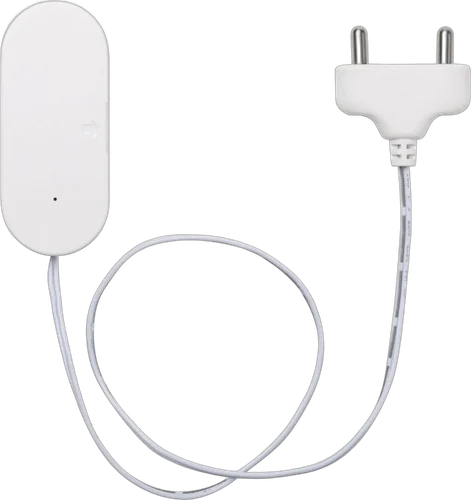
The LWL02 is a small indoor LoRaWAN sensor. A white body holds the batteries and radio, and a thin lead runs from it to a probe with two 316 stainless-steel pins. When water bridges the pins, the sensor reports a leak straight away, keeps reporting every 10 minutes while the water is there, and sends another message when the probe is dry again. A daily status report confirms each sensor is still working, which matters for a store that might go weeks without a visit.
It also needs nothing from the building. Two AAA batteries last roughly 2 to 10 years depending on how often it reports, and there is no mains supply, data cable, Wi-Fi or SIM to install. In a historic building, where running new cabling can be awkward, disruptive or need approval, that can make floor-level leak detection far simpler to add. Each sensor has one probe, so plan on one sensor per location you want to watch.
Two-probe detection
Stainless-steel probes on a lead. Water bridging the probes triggers a leak alert.
Instant leak alerts
Reports the moment a leak starts, every 10 minutes while it continues, and when it clears.
Daily check-in
Sends a status report once a day, so you know the sensor is still working.
Counts & durations
Keeps a count of leak events and how long the last one lasted.
Replaceable AAA batteries
2 x AAA, roughly 2 to 10 years depending on how often it reports.
Indoor sensor
The body isn't waterproof - mount it above the floor with only the probe in the wet zone. -10 to 50°C.
Specifications from Dragino's LWL02 documentation.
Fitting LWL02 Sensors in Your Stores
No electrician needed. The important decisions are where each probe sits and where the sensor body is fixed, because the body isn't waterproof.
1
Walk the stores and find the low points
Look for where water would collect first: under pipe runs and radiators, beside risers, next to plant and air handling, along the wall nearest a gutter or downpipe, and the lowest corner of a basement store. Water runs to the lowest spot, which isn't always directly below the source.
2
Order "Trackpac Ready", scan and name each sensor
Buy the LWL02 from Hexaspot with the Trackpac Ready option, scan its QR code in the Trackpac app and name it by location, such as "Basement strongroom - under heating pipe". Tag it by building and room so it picks up the right alert rules.
3
Body up high, probe on the floor
Fix the sensor body above any likely water level, for example on a shelving upright, the side of a cabinet or a wall, using screws or the adhesive pad. In historic spaces, agree fixings with your estates or conservation team first. Place the probe at the low point, where water would reach it first.
4
Keep the probe clear of moving shelving
Route the lead tight to a fixed upright or the wall and keep it out of the path of rolling stacks, trolleys and boxes being moved, so it isn't crushed or knocked out of place.
5
Test each one with a little water
Touch the pins with a damp cloth, check the leak appears on the dashboard and the alert reaches the right people, then dry the probe and wait for the all-clear. Stores with thick walls or below ground are worth testing before you rely on them.
Be clear about what this covers. The LWL02 detects water that reaches its probe. It won't find a slow leak inside a wall, ceiling void or roof space until the water comes down to floor level, and it can only watch the spot where its probe sits. Sensible placement at the low points, with one sensor per location, is what makes it useful.
Alert Rules for Collections & Estates Teams
Leak alerts need to reach someone who can act, at any hour. Trackpac rules can alert on water leak detected and battery level, by email, SMS or push through the Trackpac mobile app, and each rule can have a time window. Rules can target a tag, so every sensor in a building or store shares the same rules and new sensors inherit them. A typical setup looks like this:
Working hours: collections & estates
During the day, a leak alert goes to the collections manager or archivist and the estates team, so both the building and the material get attention at once.
Out of hours: the duty contact
Evenings, nights, weekends and closure periods, an SMS and push alert go to the duty contact or estates on-call, with collections staff copied by email.
Dry again: all clear
A trigger-lock interval stops a continuing leak sending a message every 10 minutes, and a "resolved" message follows when the probe dries out.
Low battery: swap it on the next visit
Batteries last years, so a low-battery rule makes sure a sensor in a rarely visited store doesn't quietly go silent.
If leaks should also raise a job in your facilities or helpdesk system, webhooks can forward each alert to it. Trackpac passes the event on; it doesn't shut off water or call anyone out itself. Your emergency plan, and the people on it, still do the responding.
A Record of Every Incident
Every leak is kept in the Trackpac history: when water reached the probe, when it cleared and how long it lasted. Each report also carries a running count of leak events, which can be reset remotely once an incident is closed.
That history is useful long after the floor has dried. It gives you times and durations for an incident report or a conversation with your insurer, shows whether a store keeps getting wet after heavy rain, and helps make the case for a repair or for moving material away from a problem pipe. Reports and exports let you attach the record to your own files.
Tag sensors by building, floor and room, and the dashboard shows every store at a glance. A read-only dashboard link lets an estates contractor, a partner organisation or a lender of material see the status of the stores that matter to them without being able to change sensors or alert rules.
Leak Alerts Alongside Environmental Monitoring
Most collections teams already watch temperature and relative humidity. Leak detection fills a different gap: an environmental logger may show humidity rising after water has been sitting for a while, whereas a probe on the floor tells you the moment water arrives. The two work well together. Trackpac also supports LoRaWAN temperature and humidity sensors such as the Dragino LHT65N, so leak alerts and environmental readings for the same stores can sit on one dashboard, under the same building and room tags.
Because the LWL02 uses LoRaWAN, it reaches the network without your building Wi-Fi. Thick masonry walls and basements can still limit signal, so read what to check about LoRaWAN coverage before you deploy. If your stores sit next to boilers and cylinders, our guide to plant room and water heater leak monitoring covers that side in more detail. Costs are simple: see Trackpac pricing for the subscription.
Get Started
Know the moment water reaches a store floor
One LWL02 at each low point in your stores, with no wiring to install - alerting your collections and estates staff, day or night, as soon as water reaches the probe.
€18.17 ex VAT from Hexaspot, our sister company in the Connect IoT group. VAT is added at checkout based on your country.
Choose the Trackpac Ready option and the sensor arrives pre-registered on Trackpac - scan the QR code and it's live on your dashboard.
Trackpac covers connectivity, dashboard, alerts and data storage from £15 / €18 per sensor per year.
Can the LWL02 detect a leak inside a wall or ceiling above a store?↓
No. The LWL02 detects water that reaches its probe, where two stainless-steel pins sit at floor level or in a tray. It won't see a slow leak inside a wall, ceiling void or roof space until that water finds its way down to the probe. That's why placement matters: put probes at the low points where water would collect first, such as the floor under a pipe run, beside a riser or at the lowest corner of a basement store.
Does fitting the LWL02 need wiring in a historic building?↓
No wiring is needed. The LWL02 runs on 2 x AAA batteries and sends its reports over LoRaWAN, so there is no mains supply, data cable, Wi-Fi or SIM to install. That can make it much easier to add leak detection in listed or historic buildings where running new cabling is difficult or needs approval. The sensor body can be fixed with screws or an adhesive pad, so check with your estates or conservation team before fixing anything to historic fabric; a shelving upright or existing fixture is often a better mount.
Who gets the alert if a store floods at night?↓
Whoever you choose. Trackpac alert rules send email, SMS and push alerts, and can use time windows, so out-of-hours alerts can go to a duty contact or estates on-call while collections staff get them during the day. Rules can target tags, so every sensor tagged with a building or store follows the same rules. A trigger-lock interval stops a continuing leak sending a message every 10 minutes, and a resolved message follows when the probe is dry again.
Can leak events go into our facilities helpdesk system?↓
Yes, through webhooks. Trackpac can forward leak alerts to another system, such as a facilities, helpdesk or building management system, so a leak in a store can raise a job alongside the alert to your phone. Trackpac passes the event on; it doesn't shut off water or call anyone out itself.
Where can I buy the LWL02 for use with Trackpac?↓
The Dragino LWL02 is sold by Hexaspot, Trackpac's sister company in the Connect IoT group, for €18.17 ex VAT, with VAT added at checkout based on your country. Choose the 'Trackpac Ready' option and the sensor is pre-registered on Trackpac, so you only need to scan its QR code. A Trackpac subscription from £15 / €18 per sensor per year covers connectivity, the dashboard, alerts and data storage.