Curing & Drying Room Monitoring with the LSN50v2-S31
22nd October 2026•By Neil Skoglund
LSN50v2-S31 Use Case
Curing and drying are slow. A wheel of cheese, a hanging leg of ham, a stack of timber or a rack of herbs can spend weeks or months in a room that has to stay within a fairly narrow band of temperature and humidity. Most of that time nobody is watching, and a humidifier that stops, a cooling unit that trips or a dehumidifier that fills up can undo a lot of patient work before anyone opens the door.
This guide is for cheesemakers, charcuterie and meat producers, timber and firewood merchants, herb, hop and seed growers, and anyone drying leather or textiles. It shows how a Dragino LSN50v2-S31 with its probe in the room and its main unit outside the door, reporting into Trackpac, keeps a continuous record of each room and alerts you when it drifts out of its band. For the wider case for temperature sensors, see our overview of real-time temperature monitoring.
Why Curing & Drying Rooms Drift
Every curing or drying process is a balance between how fast moisture leaves the product and how fast it can move from the inside to the surface. Get the room too dry or too warm and the outside can dry faster than the inside, which is often blamed for cracked cheese rinds, a hard outer layer on cured meat that slows drying inside, or checks and splits in timber. Get it too humid and drying stalls, batches take longer, and unwanted surface growth becomes more likely.
The equipment that holds the balance runs around the clock: cooling units, humidifiers, dehumidifiers, heaters and fans. When one of them fails or a setting gets changed, the room starts to drift, usually slowly enough that nobody notices on a quick walk past. Doors left open, a full room after a new batch goes in, and changes in the weather outside all push conditions around too.
The result is rarely a single disaster. It's a batch that takes longer, comes out uneven, or doesn't match the last good one, and without a record of the room it's hard to say why. Continuous temperature and humidity readings give you both the early warning and the history.
Why the LSN50v2-S31 Suits Curing & Drying Rooms
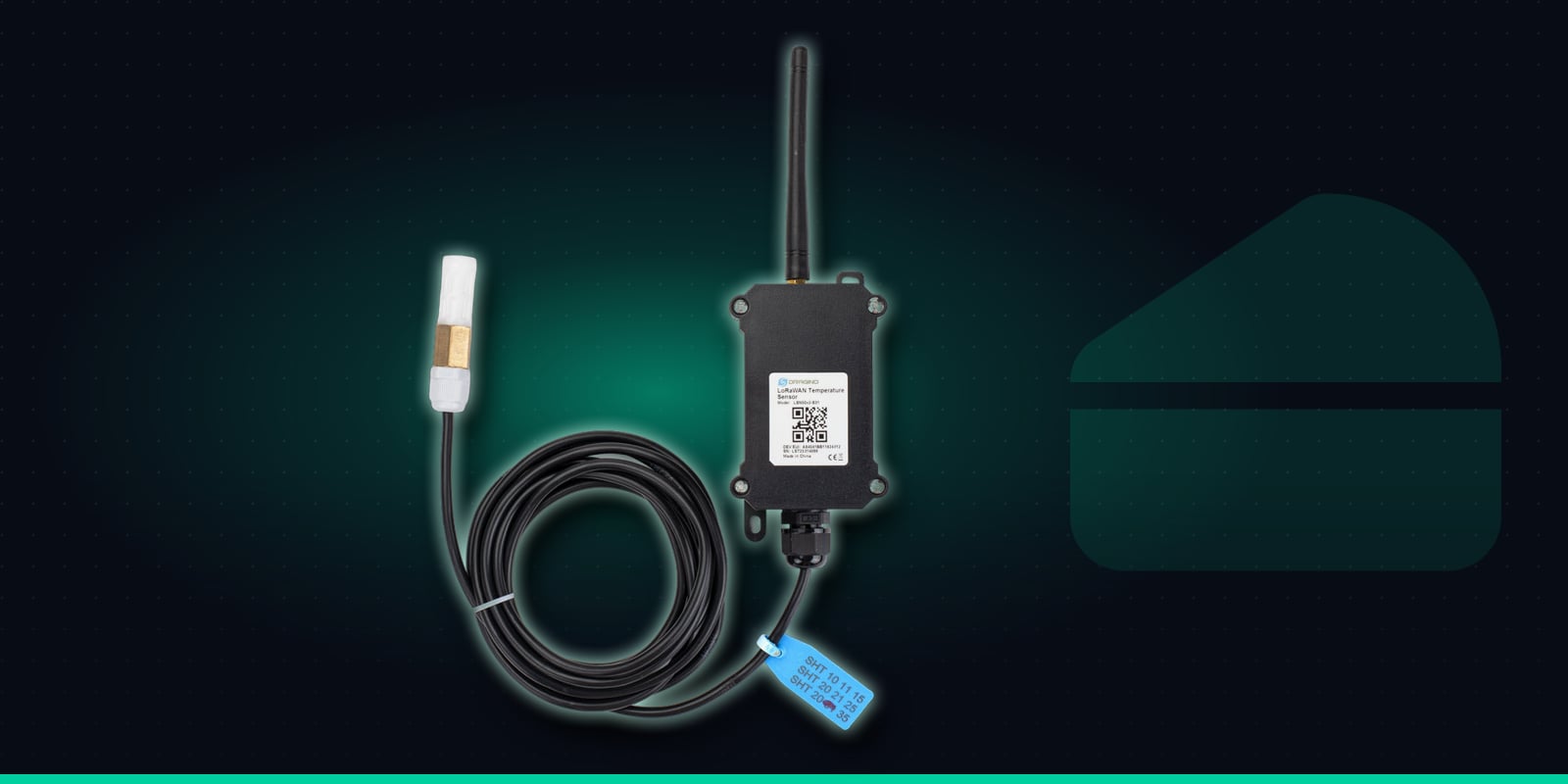
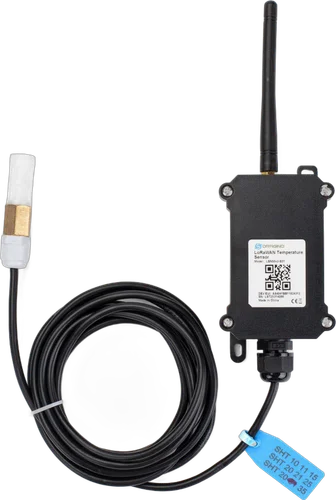
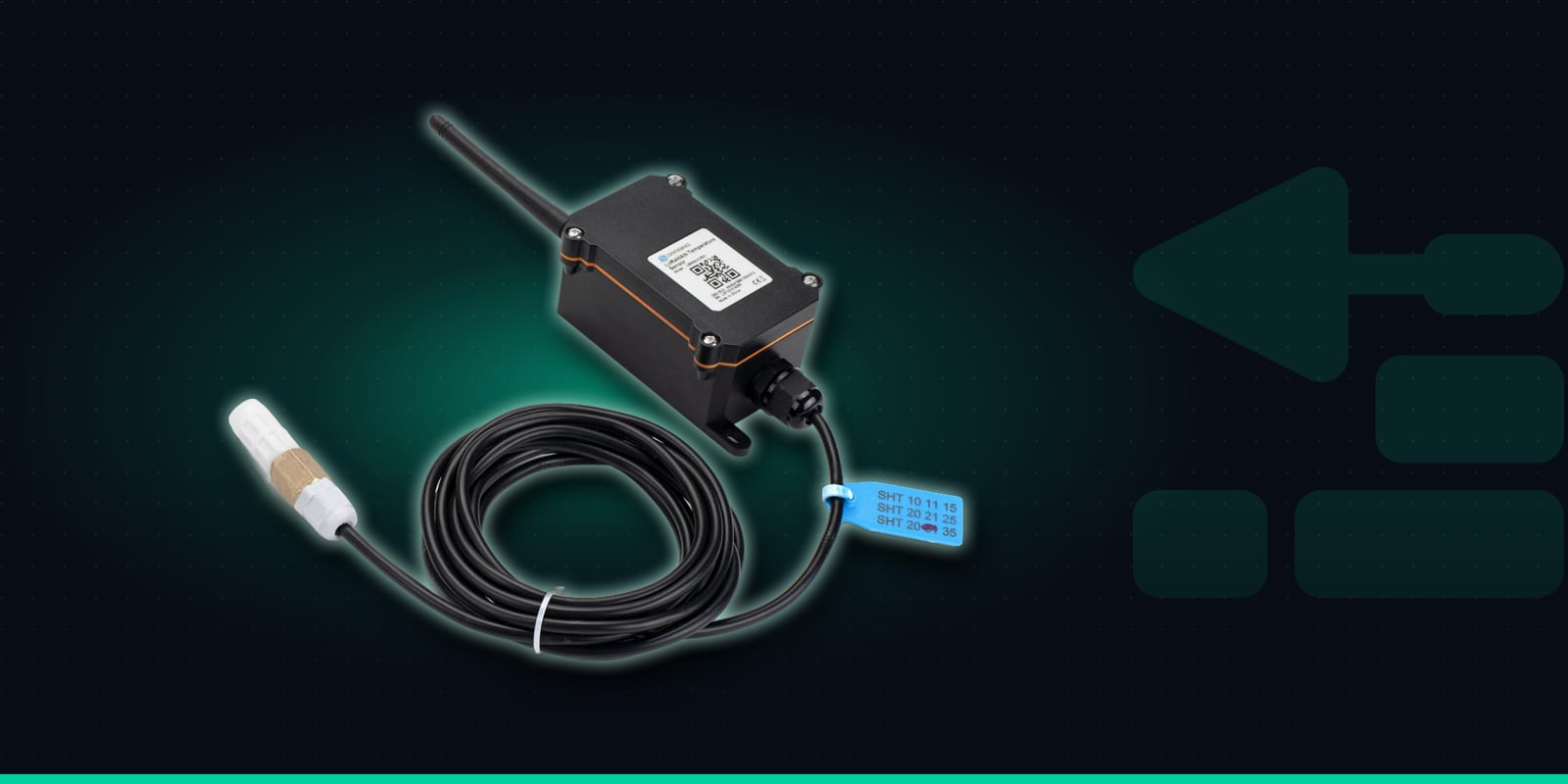
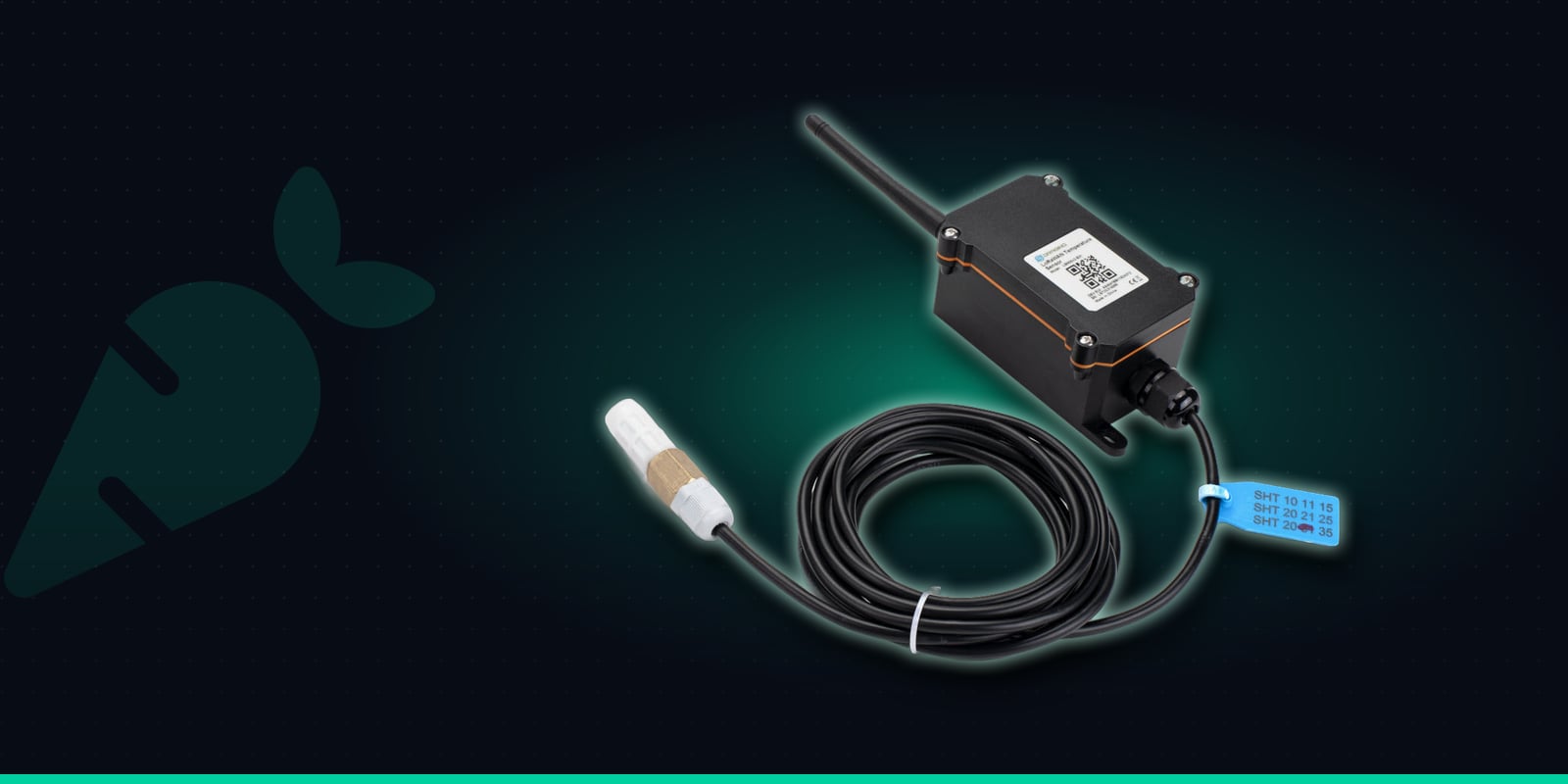
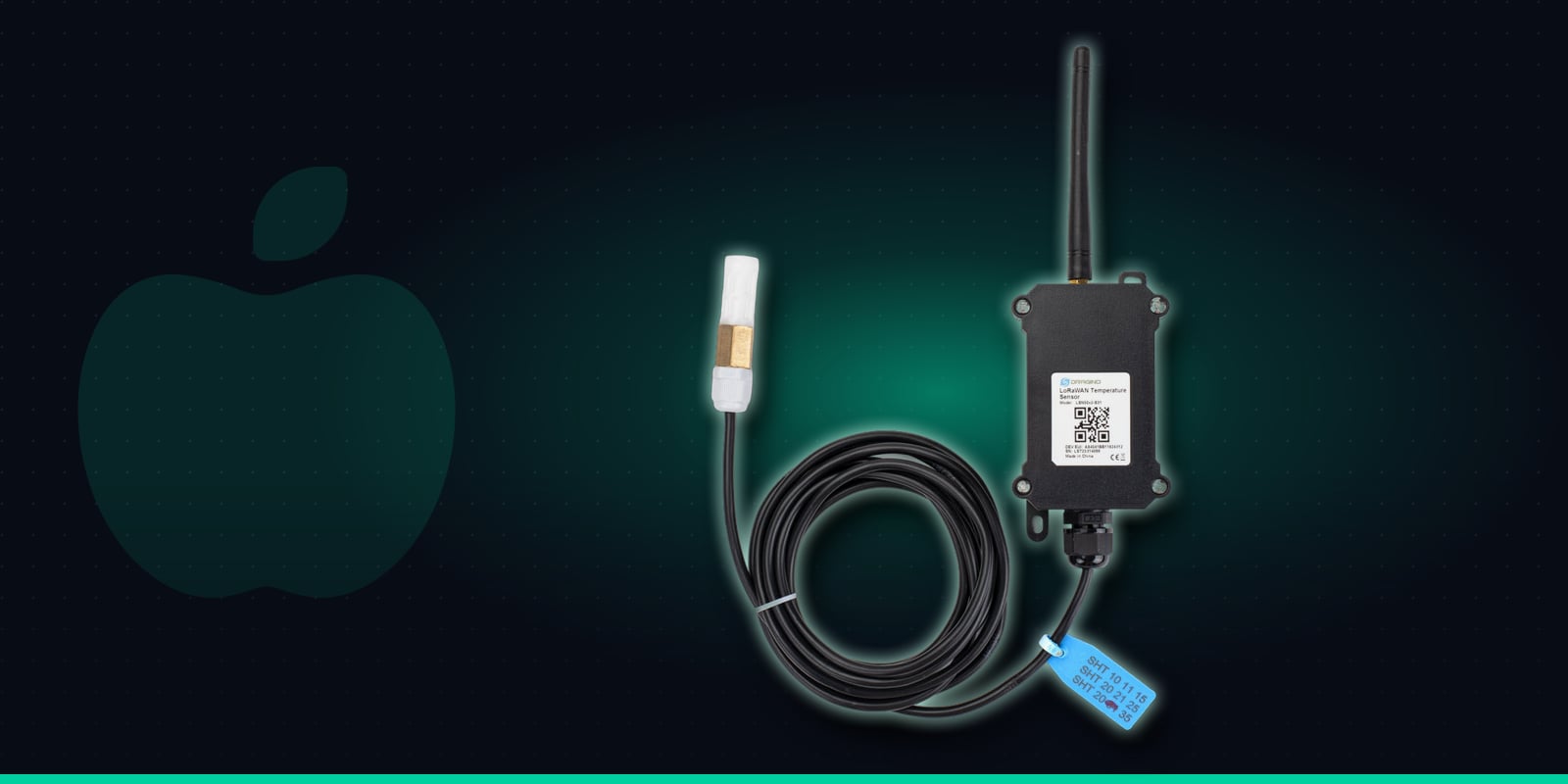
The LSN50v2-S31 splits the sensor in two. A Sensirion SHT31 temperature and humidity probe sits on a 3 metre cable, in a waterproof, anti-condensation casing with a vented cap, and measures the air around it. The rugged main enclosure, with the battery, radio and antenna, can sit up to 3 metres away. In practice that means the probe goes among the racks or hanging product, and the box goes on the wall outside the door, where it's out of the way and easy to reach.
The probe reads temperature to ±0.2°C and humidity to ±2% RH, which is well suited to spotting a room moving out of its band. It reports every 20 minutes by default, runs on a battery rated for up to 10 years depending on how often it reports, and uses LoRaWAN, so there's no mains, no Wi-Fi and no SIM to arrange in a cold store, a cave or a timber yard. If coverage drops, readings are stored and sent once it returns, so the batch record doesn't have gaps.
Temperature & humidity
Sensirion SHT31 probe: -40 to 80°C (±0.2°C) and 0 to 99.9% RH (±2% RH).
3m probe cable
The probe sits in a waterproof, anti-condensation casing on a 3 metre cable.
High/low alarms
Checks every minute and reports straight away when temperature or humidity goes outside the limits you set.
Datalog
Stores readings if coverage drops and sends them once it reconnects. Reports every 20 minutes by default.
8500mAh battery
Rated for up to 10 years, depending on how often it reports.
Outdoor enclosure
Rugged main unit rated -40 to 85°C, with the probe placed where the reading matters.
Specifications from Dragino's LSN50v2-S31 documentation.
Rooms Worth Monitoring
Each LSN50v2-S31 has one probe, so it watches one room or chamber. Use one sensor per room, and add a second in large rooms where conditions may differ from one end to the other. These are the places it suits:
Cheese maturing rooms & caves
Cool, humid rooms where cheeses spend weeks or months. A failed humidifier or cooling unit shows up on the rinds long before it shows up anywhere else.
Charcuterie & meat curing chambers
Hams, salami and other whole-muscle and fermented products drying slowly, where too dry or too warm can leave the outside hard while the inside is still wet.
Timber & firewood drying
Air-drying stores, firewood sheds and lower-temperature kilns that stay within the probe's 80°C limit. Humidity in the store shows whether wood is still drying or just sitting in damp air.
Herb, hop & seed drying
Drying floors, barns and cabinets where warm, moving air takes moisture out of the crop. Too humid and drying slows; too hot and colour and aroma can suffer.
Leather & textile drying
Drying rooms for hides, leather goods and dyed or washed textiles, where even, steady drying helps keep finish and shape consistent from batch to batch.
Small dryers & converted spaces
Converted fridges, cabinets, shipping containers and cellars used as curing or drying spaces, where the controls are basic and a fault is easy to miss.
Installing the LSN50v2-S31 in a Curing or Drying Room
Fitting takes a few minutes per room, and it's best done between batches so you don't disturb product. The probe goes in the room; the main enclosure stays within 3 metres of it, outside the door.
1
Order pre-onboarded, scan and name it
Buy the LSN50v2-S31 from Hexaspot with the Pre-onboard to Trackpac option, scan its QR code in the Trackpac app and give it a clear name such as "Maturing room 2" or "Kiln A". Tag it by site and by room type so it picks up the right alert rules.
2
Choose where the probe goes
Place it at product height, among the shelves, racks or hanging rails, rather than right beside a humidifier outlet, a cooling coil or a heater, where it would read the equipment rather than the room.
3
Run the cable through and seal it
Bring the cable out through an existing gland, a small drilled hole or the door seal, and seal around it so the room keeps its conditions. Keep the probe clear of drips and anything that gets moved during turning or loading.
4
Fix the main unit outside
Mount the enclosure on the wall outside the room, within reach of the 3 metre cable. Outside a thick-walled cave or cold room, the unit's radio usually has a clearer path to the network too.
5
Watch a full cycle before setting limits
Confirm readings are arriving, then watch the graph through a few days of normal running: humidifier and cooling cycles, door openings, a new batch going in. That shows you what "normal" looks like before you set thresholds.
Setting Alert Rules for Each Room
Start from the band you already aim for in each room, then set alert thresholds a little outside it, so normal equipment cycling doesn't trigger messages but a genuine drift does. Rooms doing different jobs need different limits, so tag them by type, for example "cheese", "charcuterie" or "timber", and point each rule at the right tag.
Trackpac rules can alert on temperature or humidity above or below a threshold and on low battery, by email, SMS or push through the Trackpac mobile app, and any new sensor you add to a tag inherits its rules. A few rules cover most rooms:
Humidity out of band: check the equipment
A low-humidity rule often points to a humidifier that has stopped or run dry; a high-humidity rule to a dehumidifier that's full, off or struggling with a fresh load.
Temperature out of band: cooling or heating
A high-temperature rule catches a cooling unit that has tripped or a door left open; a low one catches a drying-room heater that has stopped.
Out of band for hours: no message flood
A trigger-lock interval stops every 20-minute report becoming a new text while someone is already on the way, and the graph keeps the full picture.
Back in band: all clear
When the room returns to normal, a "resolved" message follows, so everyone knows the refilled humidifier or reset cooling unit has done its job.
Low battery: plan it between batches
The battery is rated for years, and a low-battery alert gives you time to deal with it when the room is empty, rather than in the middle of a long cure.
Most rooms drift gradually, so the regular reports are usually enough for a Trackpac rule to catch it in good time. For a small cabinet or chamber that can change quickly, the sensor's on-device alarms add a faster layer: separate high and low limits for temperature and humidity, checked every minute, with an alarm sent straight away when a reading crosses one. Those limits are configured on the device itself, and Hexaspot or Trackpac support can help you set them.
Trackpac also shows a Mould Risk indicator, derived from temperature and humidity, that you can alert on. In a cheese cave, where surface moulds may be part of the process and the room is meant to be humid, plain temperature and humidity rules will usually be more useful. In a timber store, herb drying room or leather store, a Mould Risk alert can be a helpful extra signal that the air isn't drying things as it should.
Time windows let you route alerts differently out of hours, for example to whoever is on call at weekends. If you already log jobs in another system, webhooks can forward alerts to it. Trackpac passes the alert on; it doesn't adjust humidifiers, fans, cooling or heating itself.
Batch Records & Repeating Good Batches
Alerts protect the batch in front of you; the history helps with the next one. Every reading is kept, so you can look back at exactly what a room did during a particular batch: how long it took to settle after loading, how tightly the humidity held, and whether there were any excursions. When a batch turns out especially well, or disappointingly, the graph is often the first place to look for the difference.
CSV exports let you attach a room's conditions to your own batch records, compare rooms side by side, or share them with a buyer who wants to know how a product was matured or dried. A read-only dashboard link lets a business partner, consultant or equipment engineer see the rooms without being able to change anything, which helps when you're diagnosing a unit that keeps drifting.
With several rooms, tag each sensor by site and by room type and the dashboard groups them for you. If a probe is damaged or disconnected, the sensor reports an obviously invalid reading, so a fault is easy to spot rather than being mistaken for a room problem.
One LSN50v2-S31 per room, with the probe among the product and the unit outside the door - recording every batch and alerting you when temperature or humidity drifts.
€57.02 ex VAT from Hexaspot, our sister company in the Connect IoT group. VAT is added at checkout based on your country.
Choose Pre-onboard to Trackpac and the sensor arrives registered on Trackpac - scan the QR code and it's live on your dashboard.
Trackpac covers connectivity, dashboard, alerts and data storage from £15 / €18 per sensor per year.
What temperature and humidity should a curing or drying room run at?↓
It depends entirely on what you're making. Cheese maturing rooms and charcuterie chambers are usually kept cool and quite humid, while herb, hop and timber drying needs drier, often warmer air. Your recipe, your supplier or your own records are the best guide. The LSN50v2-S31 doesn't decide the band for you: it measures temperature and humidity in the room so you can see whether you're holding the band you've chosen, and get an alert when you're not.
Why keep the main unit outside the room?↓
The probe is what needs to be in the room, because it measures the air around it. The LSN50v2-S31's probe sits on a 3 metre cable in a waterproof, anti-condensation casing, so you can place it among the cheeses, hanging meat or drying racks and keep the main enclosure on the wall outside the door. That keeps the box out of a crowded or very humid space, makes it easy to reach, and means opening the room less often.
Can the LSN50v2-S31 be used in a kiln or hot drying room?↓
Only where the air stays within the probe's range. The probe is rated from -40°C to 80°C and the main unit from -40°C to 85°C, so it suits lower-temperature drying stores, solar or dehumidifier kilns and warm drying rooms. If your kiln runs hotter than 80°C at any point in its cycle, this isn't the right sensor for inside it. Check the highest temperature your process reaches before you fit one.
Does Trackpac control the humidifier, fans or cooling?↓
No. Trackpac sends alerts by email, SMS or push to the people you choose, and can forward them to other systems by webhook, but it doesn't switch humidifiers, dehumidifiers, fans or cooling units on or off. Its job is to tell you quickly when the room drifts out of its band, so someone can check the equipment before a batch is affected.
Where can I buy the LSN50v2-S31 for use with Trackpac?↓
The Dragino LSN50v2-S31 is sold by Hexaspot, Trackpac's sister company in the Connect IoT group, for €57.02 ex VAT, with VAT added at checkout based on your country. Choose 'Pre-onboard to Trackpac' when ordering and Hexaspot registers the sensor on Trackpac before dispatch, so you only need to scan its QR code. A Trackpac subscription from £15 / €18 per sensor per year covers connectivity, the dashboard, alerts and data storage.