Crop & Produce Store Humidity Monitoring with the LSN50v2-S31
22nd October 2026•By Neil Skoglund
LSN50v2-S31 Use Case
A store full of potatoes, onions, carrots or apples represents a whole season's work, and it sits there for months. Most of the time nothing goes wrong. But a store that runs too dry quietly costs weight, a damp spell puts water on the crop, and a refrigeration or ventilation fault on a Saturday night can go unnoticed until someone walks in on Monday.
This guide is for growers, store managers and packhouse teams looking after ambient and refrigerated fruit and vegetable stores. It shows how a Dragino LSN50v2-S31, with its temperature and humidity probe hanging in the store air and its main unit fixed outside, reports into Trackpac so you can see how each store is behaving, get alerts when it drifts, and keep a record of conditions through the storage season. For the wider case for temperature sensors, see our overview of real-time temperature monitoring.
Why Store Air Matters for Stored Produce
Fresh produce is still alive in store. It keeps losing moisture to the air around it, and how fast depends on temperature and humidity. If the air is too dry, the crop tends to lose weight and can shrivel or soften, which matters when it's sold by weight and judged on appearance. If the air is too damp, or water condenses on the crop, rots tend to get a foothold more easily, and some crops are more prone to sprouting or rooting.
Different crops want different conditions. Many root vegetables and top fruit are usually stored cool and fairly humid to limit moisture loss, while onions are generally kept drier. The right targets for your crop and variety are best taken from your own agronomist, store adviser or buyer's specification. What the sensor does is tell you whether the store is actually holding those conditions, day and night.
Condensation deserves a special mention. When warmer, moist air meets a colder crop or a cold surface, water can form on it. That tends to happen when ventilating with outside air that is warmer than the crop, when a store door is left open on a mild, damp day, or when a crop is warmed before grading. Watching store air temperature and humidity alongside crop temperature helps you spot those moments.
Why the LSN50v2-S31 Suits Crop Stores
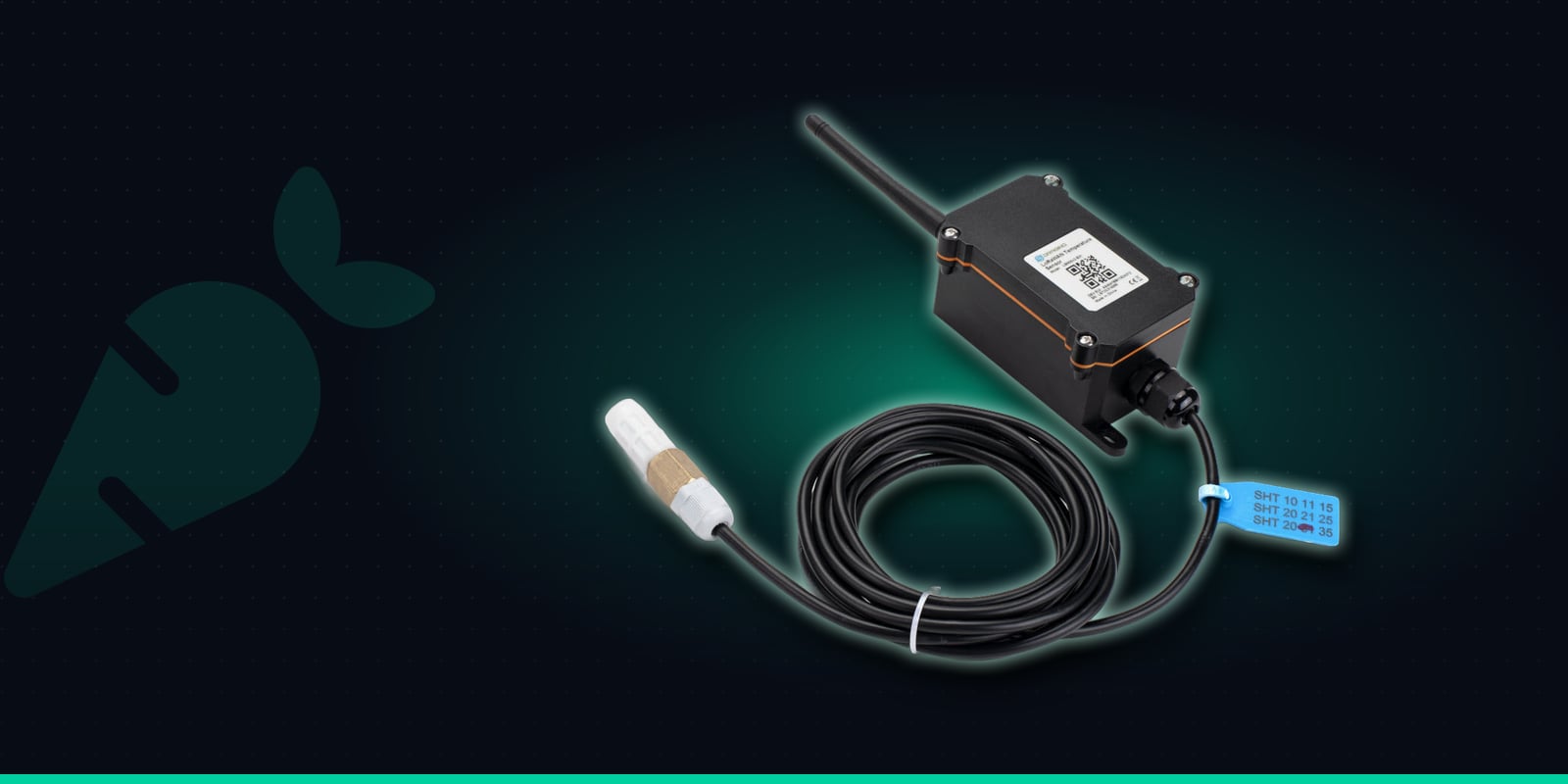
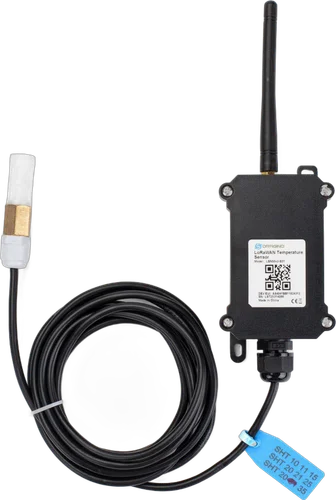
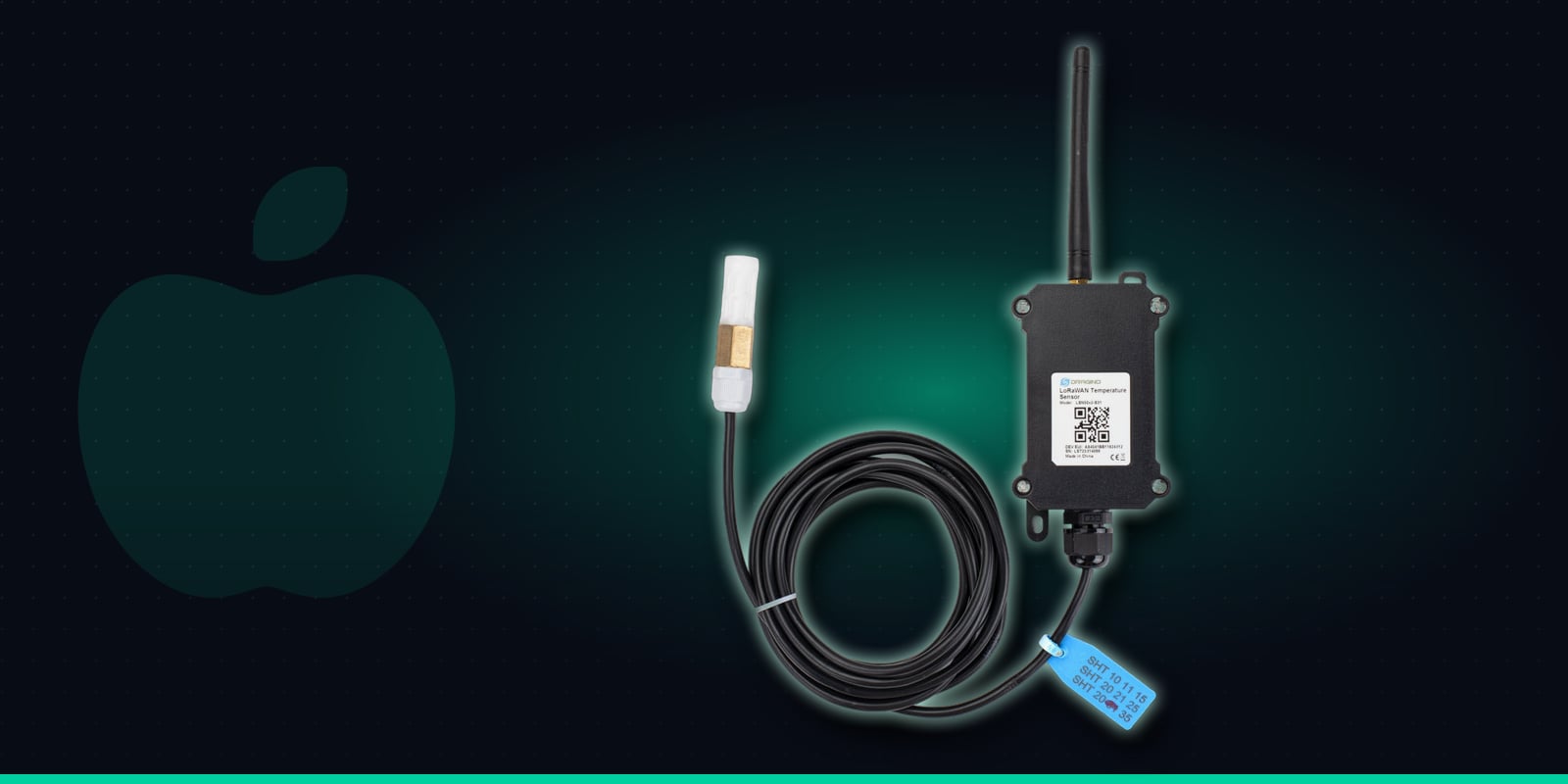
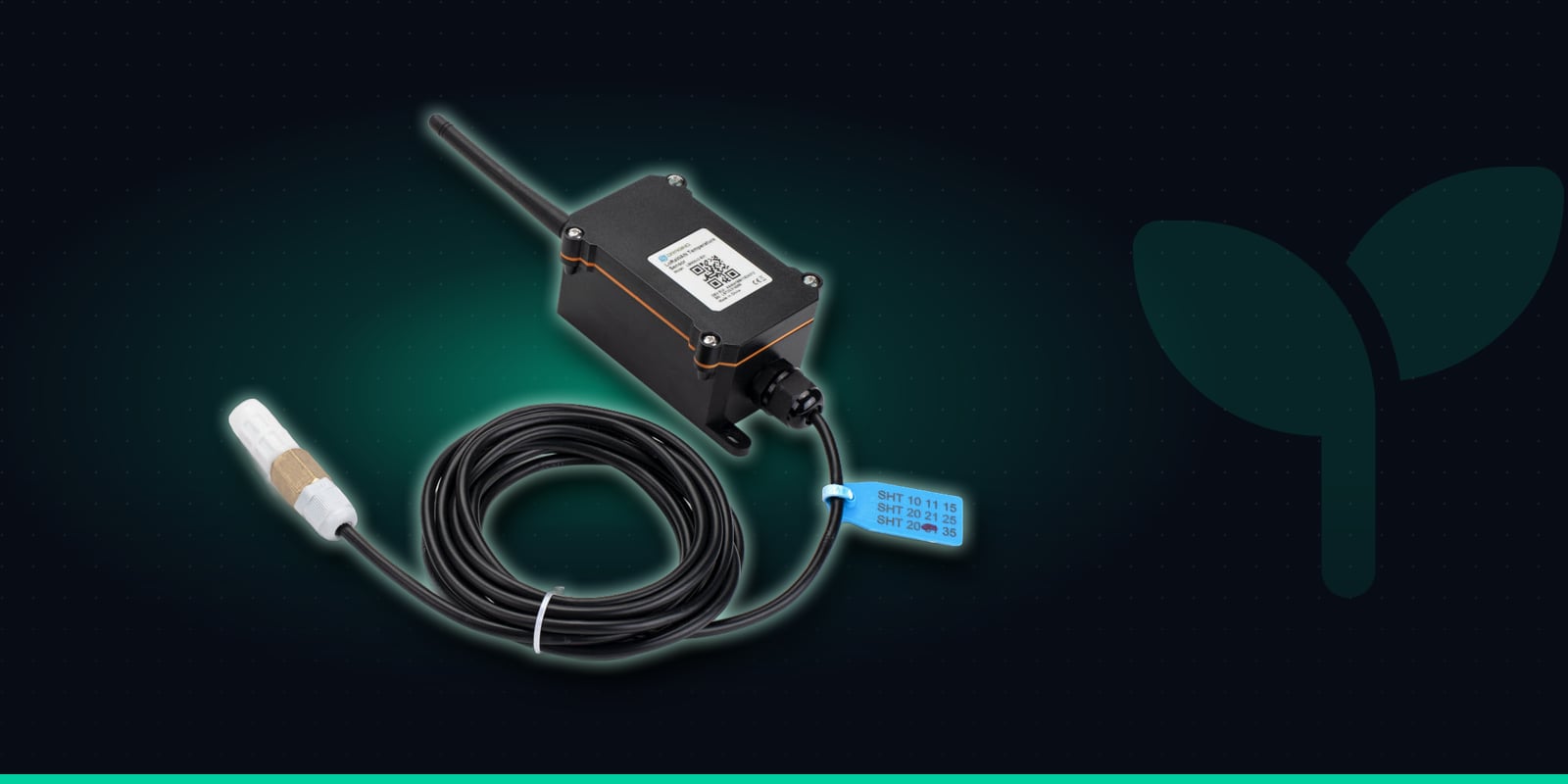
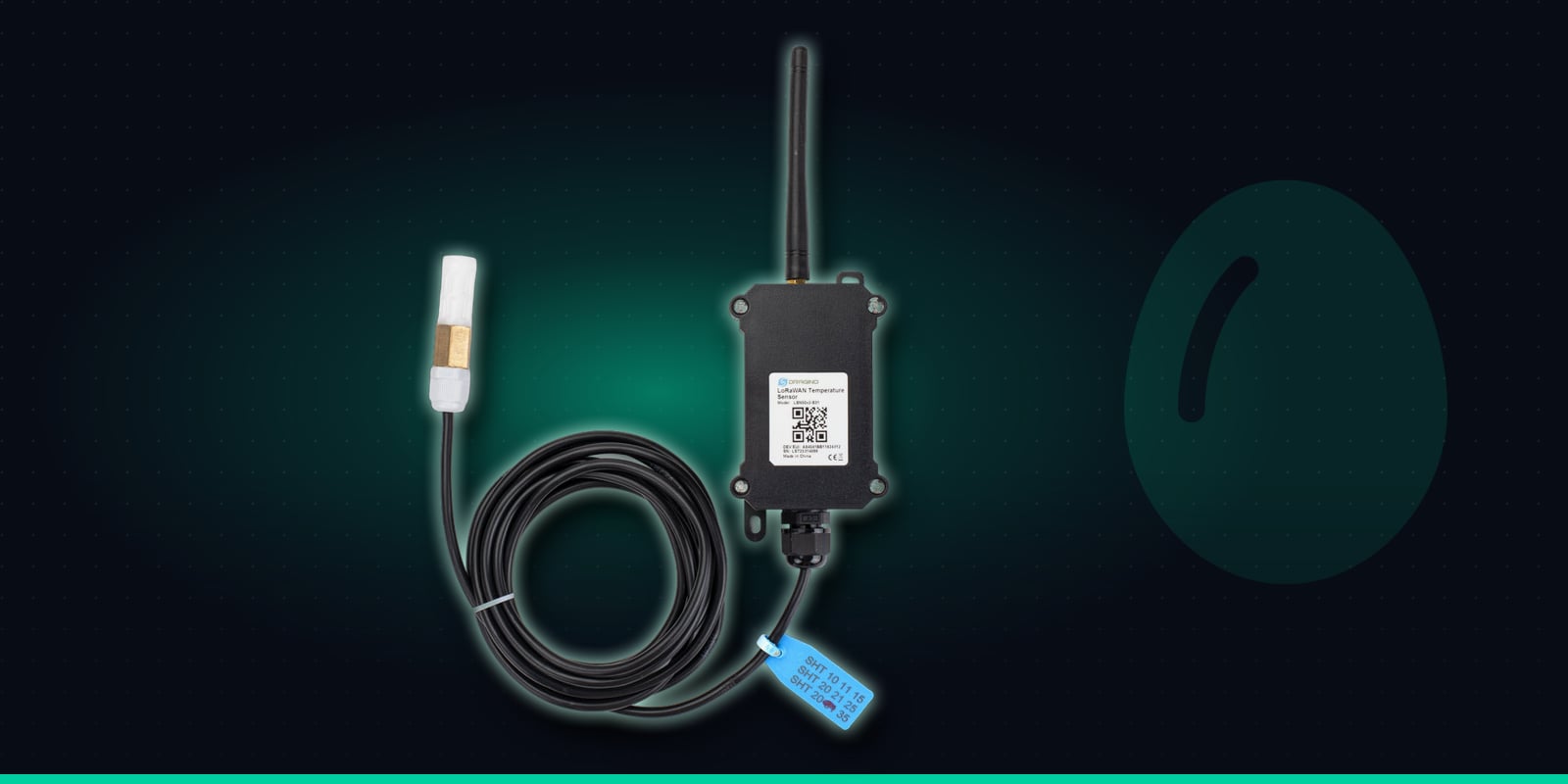
The LSN50v2-S31 puts a Sensirion SHT31 temperature and humidity probe on a 3 metre cable. The probe sits in a waterproof, anti-condensation casing with a vented cap and measures the air around it, so you can hang it in the headspace above a bulk pile, in the airflow, or between rows of boxes. The rugged main unit, with the battery, radio and external antenna, can be fixed up to 3 metres away: on a wall, a stanchion, or outside a cold store door.
It runs on a battery rated for up to 10 years depending on how often it reports, and it uses LoRaWAN, so there's no mains, no Wi-Fi and no SIM to arrange in a store at the far end of the yard. By default it reports every 20 minutes. If the network drops, it keeps readings and sends them when coverage returns, so the record of the store stays complete.
Temperature & humidity
Sensirion SHT31 probe: -40 to 80°C (±0.2°C) and 0 to 99.9% RH (±2% RH).
3m probe cable
The probe sits in a waterproof, anti-condensation casing on a 3 metre cable.
High/low alarms
Checks every minute and reports straight away when temperature or humidity goes outside the limits you set.
Datalog
Stores readings if coverage drops and sends them once it reconnects. Reports every 20 minutes by default.
8500mAh battery
Rated for up to 10 years, depending on how often it reports.
Outdoor enclosure
Rugged main unit rated -40 to 85°C, with the probe placed where the reading matters.
Specifications from Dragino's LSN50v2-S31 documentation.
Measure the Air and the Crop
The LSN50v2-S31 tells you about the air: what the fans are delivering, what the headspace is doing and how humid the store is. It isn't designed to be pushed into a pile. For the temperature inside the crop itself, the LSN50v2-D20 has a stainless-steel probe made for exactly that, described in our guide to grain and crop store temperature monitoring.
Used together, they give a fuller picture. If store air sits well above crop temperature on a damp day, that's the kind of situation where condensation can form. If the crop stays warm while the air is cold, airflow may not be reaching that part of the store. Trackpac doesn't calculate those differences for you, but the two lines on the history graph, or a CSV export, make them easy to compare.
Where to Use It
Each LSN50v2-S31 has one probe, so it reports one point in one store. Larger stores often use more than one, for example near the air inlet and at the far end, or at different heights in a box store.
Potato stores
Bulk and box stores, ambient or refrigerated. Probe in the headspace or in the return air, to watch humidity and spot condensation risk when ventilating.
Onion stores
Onions are usually kept drier than root crops. A humidity reading in the airflow shows whether drying and ventilation are holding the store where you want it.
Root vegetable stores
Carrots, parsnips, beetroot and other roots that tend to lose moisture quickly in dry air. Probe between boxes or pallets, away from the direct blast of the cooler.
Apple & pear cold stores
Probe inside the store on its 3 metre cable, main unit outside beside the door. Store temperature and humidity on the dashboard without opening the door to check.
Chillers & holding rooms
Short-term cold rooms for soft fruit, salads and vegetables waiting for dispatch, where a refrigeration fault overnight can cost a load.
Packhouses & grading areas
Where crop comes out of store into warmer air. A sensor here shows the conditions it meets, and helps explain condensation on cold produce during grading and packing.
Installing the LSN50v2-S31 in a Store
Fitting takes a few minutes per store, and it's worth doing before the store is loaded, while there's still easy access. The probe goes in the air you want to measure; the main unit stays within 3 metres of it.
1
Order pre-onboarded, scan and name it
Buy the LSN50v2-S31 from Hexaspot with the Pre-onboard to Trackpac option, scan its QR code in the Trackpac app and give it a clear name such as "Store 3 - headspace north end". Tag it with the farm and the store so it picks up the right alert rules.
2
Choose a representative spot for the probe
Hang it in the headspace above a bulk pile, in the return air, or between rows of boxes. Avoid placing it right in front of a cooler, heater or door, where the reading won't reflect the rest of the store.
3
Fix the main unit outside the store if needed
For an insulated cold store, run the cable through an existing cable entry and fix the main unit outside, within 3 metres of the probe. For an ambient store, a wall or stanchion inside works well.
4
Keep the cable clear of forklifts and boxes
Route the cable along walls and above loading height, away from doors, conveyors and anywhere boxes are stacked or moved. A damaged probe reports an obviously invalid reading, so a fault shows up quickly on the dashboard.
5
Watch the first few days, then set thresholds
Confirm readings are arriving, then watch how the store behaves through a few fan and refrigeration cycles before setting your alert limits around your target conditions.
Setting Store Alert Rules
The aim is to hear about a problem while there's still time to fix it: a cooler that has stopped, a fan left off, a door left open or a store drifting too dry or too damp. Trackpac rules can alert on temperature or humidity above or below a threshold, and on low battery, by email, SMS or push through the Trackpac mobile app. Each rule can target a tag, so every sensor in a store, or on a farm, shares the same limits and contacts, and new sensors inherit them.
Store warming up: check the kit
An above-threshold temperature rule set a little over your target, sent by SMS and push, is the early sign of a refrigeration or ventilation fault, especially overnight.
Too dry or too damp
A below-threshold humidity rule warns when the store is drying the crop; an above-threshold rule warns when it's getting damp enough to worry about condensation and rots.
Out of hours: right person, no flood
Time windows route nights and weekends to whoever is on call, and a trigger-lock interval stops every 20-minute report turning into another text while someone is already dealing with it.
Back in range: all clear
When the store returns to normal, a "resolved" message follows, so everyone knows the fix has worked without having to go and look.
Low battery: sort it between seasons
The battery is rated for years, and a low-battery alert gives you time to deal with it while the store is empty, not halfway through the season.
For a faster layer, the sensor itself can hold separate high and low limits for temperature and for humidity. It checks the probe every minute and sends an alarm straight away when a reading goes outside a limit, with a configurable minimum gap between alarms, which suits a chiller where a fault shows quickly. Those limits are configured on the device, and Hexaspot or Trackpac support can help you set them.
If your store engineer or a monitoring service works from another system, webhooks can forward alerts to it. Trackpac passes the alert on; it doesn't switch fans, refrigeration or humidification itself, and it doesn't measure gases such as CO2 or ethylene.
Many Stores, One Dashboard, a Full Record
Tag each sensor by farm, store and zone and the dashboard groups them for you: every store on one screen, with any that are drifting standing out. History graphs show how each store behaved through the season, which helps when you're deciding how to ventilate, judging whether a cooler is keeping up, or working out why one end of a store differs from the other.
CSV exports give you a record of store temperature and humidity for each batch, useful when a buyer or an assurance scheme asks how the crop was stored, or when you're looking back at a disappointing out-turn. A read-only dashboard link lets an agronomist, store engineer or customer see the live conditions without being able to change anything.
One LSN50v2-S31 per store or zone, with the probe in the store air and the main unit outside if you need it - temperature and humidity on your dashboard, and alerts when a store drifts out of range.
€57.02 ex VAT from Hexaspot, our sister company in the Connect IoT group. VAT is added at checkout based on your country.
Choose Pre-onboard to Trackpac and the sensor arrives registered on Trackpac - scan the QR code and it's live on your dashboard.
Trackpac covers connectivity, dashboard, alerts and data storage from £15 / €18 per sensor per year.
Why monitor humidity in a crop store, not just temperature?↓
Because stored produce responds to both. Air that is too dry tends to draw moisture out of the crop, so it loses weight and can shrivel or soften. Air that is too damp, or condensation forming on the crop, tends to encourage rots and can lead to sprouting or rooting problems in some crops. The right range depends on the crop, so many growers follow their own agronomist's or buyer's guidance and use the sensor to check the store is actually holding it.
Should I use the LSN50v2-S31 or the LSN50v2-D20 in a store?↓
They measure different things, and many stores benefit from both. The LSN50v2-S31 measures the air: temperature and humidity in the headspace, the airflow or the gaps between boxes. The LSN50v2-D20 has a stainless-steel probe that pushes into the crop itself and reads temperature only. Comparing the two on the Trackpac graphs shows whether the air and the crop are close together or drifting apart.
Can the sensor go inside a refrigerated store?↓
The probe can. It sits in a waterproof, anti-condensation casing on a 3 metre cable and reads from -40°C to 80°C, so it can hang inside the cold store while the main unit is fixed outside, beside the door, within reach of the cable. That keeps the radio and antenna out of the insulated box, which can help the signal reach the LoRaWAN network. The main unit itself is rated to operate from -40°C to 85°C.
Does Trackpac control the store fans, refrigeration or humidifiers?↓
No. Trackpac shows the readings, keeps the history and sends alerts by email, SMS or push, and can forward alerts to other systems by webhook, but it doesn't switch fans, refrigeration, ventilation or humidification. Your store controller or your staff still do that. The value is an independent check on the store and an early warning when conditions drift, especially overnight and at weekends.
Where can I buy the LSN50v2-S31 for use with Trackpac?↓
The Dragino LSN50v2-S31 is sold by Hexaspot, Trackpac's sister company in the Connect IoT group, for €57.02 ex VAT, with VAT added at checkout based on your country. Choose 'Pre-onboard to Trackpac' when ordering and Hexaspot registers the sensor on Trackpac before dispatch, so you only need to scan its QR code. A Trackpac subscription from £15 / €18 per sensor per year covers connectivity, the dashboard, alerts and data storage.