Self-Storage & Archive Humidity Monitoring with the LSN50v2-S31
22nd October 2026•By Neil Skoglund
LSN50v2-S31 Use Case
Stored goods are, by definition, left alone. A storage container sits locked for months, a records room is opened once a quarter, a customer visits their unit twice a year. If the air inside turns damp in the meantime, nobody sees it happening. The first sign is a musty smell, mould on a sofa, rust on tools or a box of files that has gone soft at the bottom.
This guide is for self-storage operators, container storage yards, records and document stores, business archives, stock rooms, collection stores and removals companies with storage. It shows how a Dragino LSN50v2-S31, with its probe inside the unit and the main body outside, reports temperature and humidity into Trackpac, flags rising damp and Mould Risk while there is still time to act, and gives you a record you can share with customers. For the wider case for temperature sensors, see our overview of real-time temperature monitoring.
Why Humidity Damages Stored Goods
Most of what people put into storage is sensitive to damp. Paper and card absorb moisture, cockle and stick together. Wooden furniture swells and warps, veneers lift and drawers jam. Upholstery, mattresses, clothing and leather pick up mould and odours. Tools, bikes, machinery parts and metal stock rust. None of this happens overnight, but once it has happened it is expensive or impossible to undo.
Steel shipping containers are a particular problem. On a clear night the steel walls and roof cool quickly, the air inside cools against them, and moisture can condense on the inside of the roof and drip onto whatever is below. The next day the sun warms the box again and the cycle repeats. Goods packed in damp, or a container opened on a wet day, add more moisture to the air with nowhere for it to go.
Indoor stores have their own version of the problem: units against an outside wall, ground-floor rooms with poor ventilation, basements and roof spaces, and buildings where the heating is off at night or over the weekend. In every case the question is the same. What was the humidity in that unit last week, and is it heading somewhere that will damage what's inside?
Why the LSN50v2-S31 Suits Storage Units & Containers
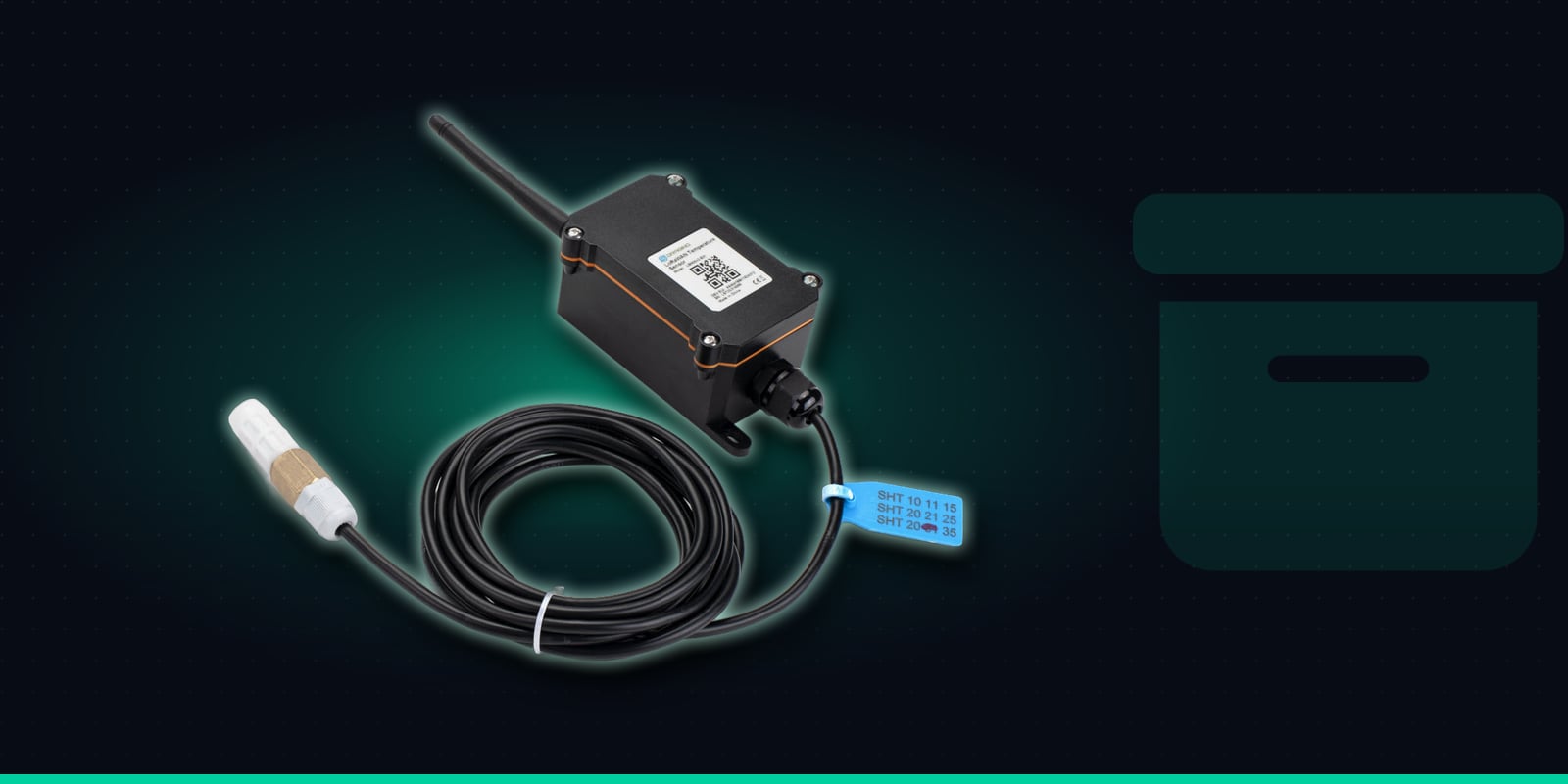
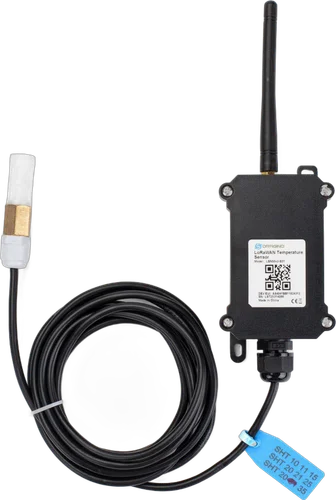
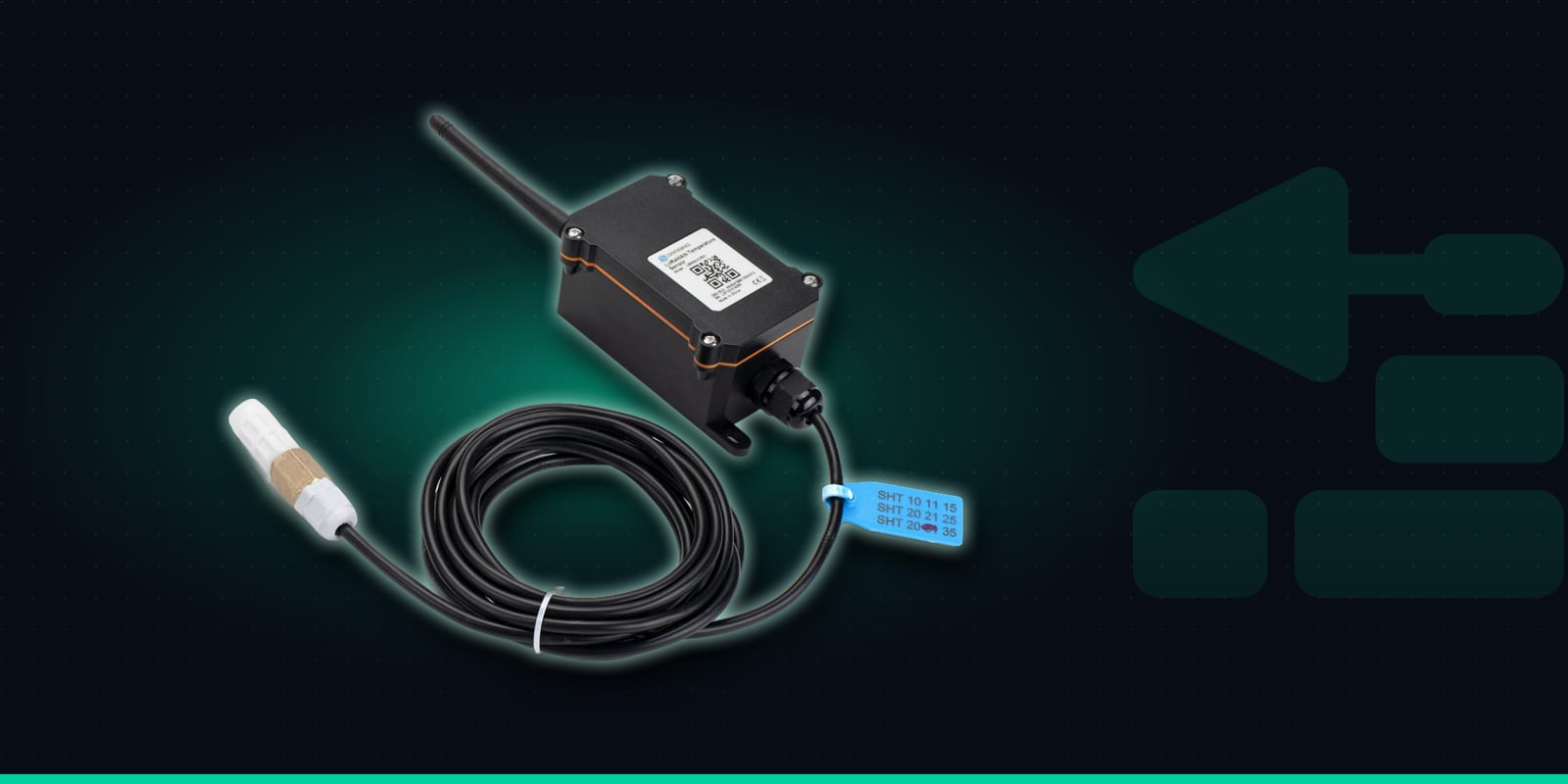
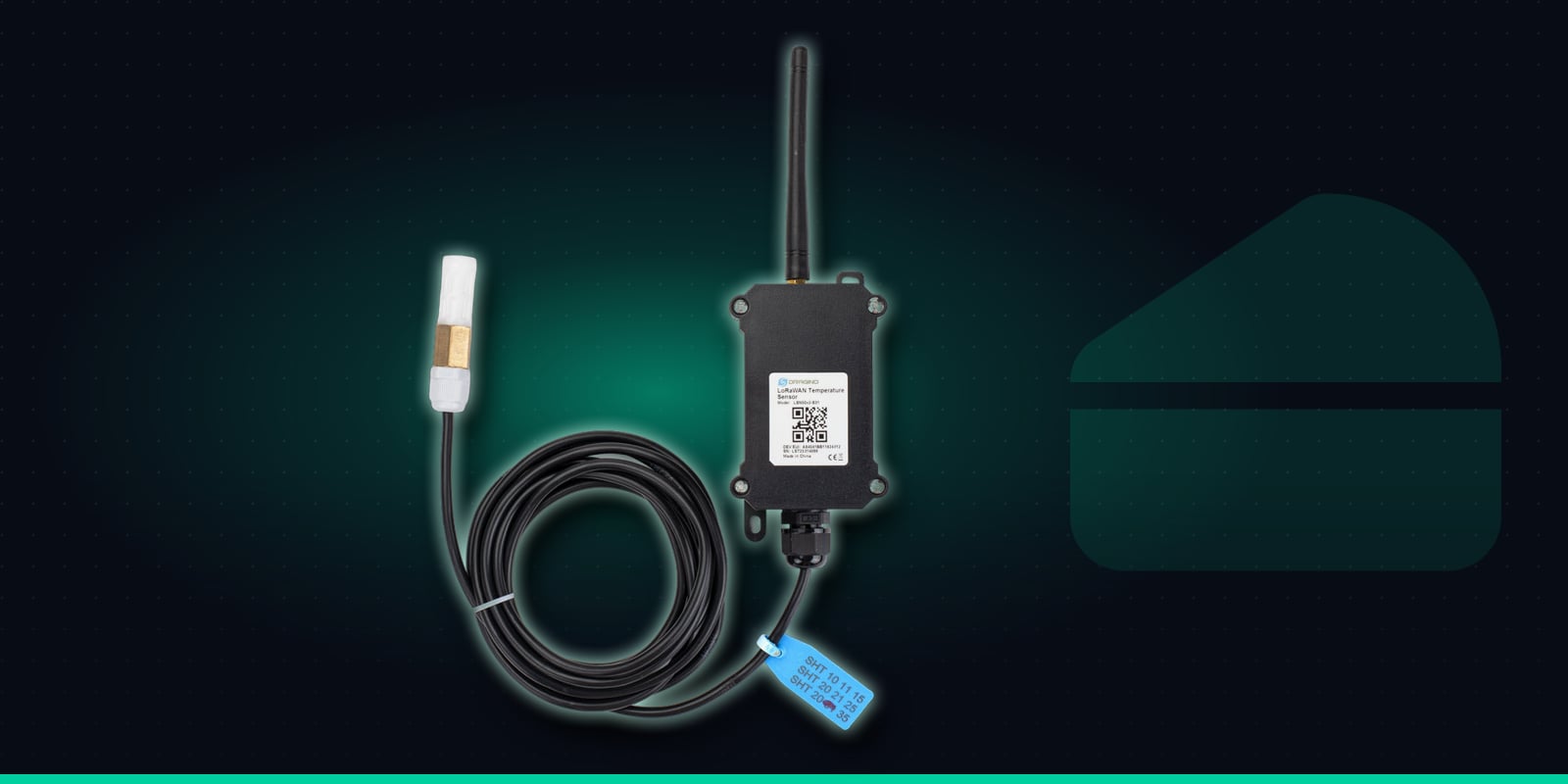
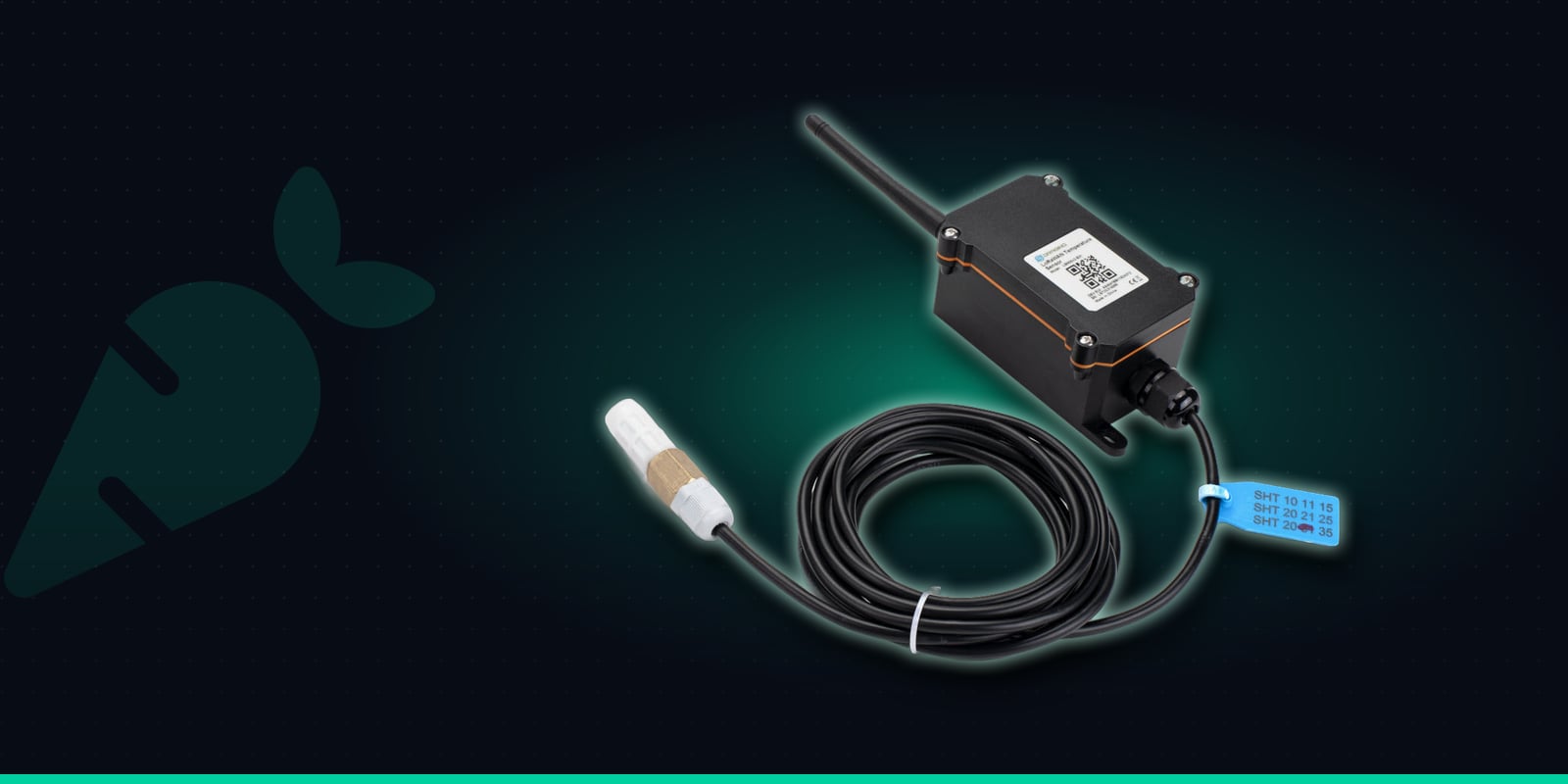
The LSN50v2-S31 is built around a split design. The rugged main unit, holding the battery, the radio and an external antenna, can be mounted outside the store, while a Sensirion SHT31 temperature and humidity probe on a 3 metre cable goes inside, through a vent or a cable gland. The probe sits in a waterproof, anti-condensation casing with a vented cap, so it measures the air in the unit rather than the surface it is mounted on.
That matters most with metal containers. A closed steel box makes it hard for a radio signal to get out, so a sensor sealed inside may struggle to reach the network. With the LSN50v2-S31, the part that needs to talk to the network is outside, and only the probe is in the box. It also means you don't need to open a customer's unit to check or service the sensor.
It is battery-powered LoRaWAN, so there's no mains, no Wi-Fi and no SIM to arrange in a container yard or a basement records store. The 8500mAh battery is rated for up to 10 years depending on how often it reports. By default it sends a reading every 20 minutes, and if coverage drops it stores readings and sends them once it reconnects, so the record for each unit stays complete.
Temperature & humidity
Sensirion SHT31 probe: -40 to 80°C (±0.2°C) and 0 to 99.9% RH (±2% RH).
3m probe cable
The probe sits in a waterproof, anti-condensation casing on a 3 metre cable.
High/low alarms
Checks every minute and reports straight away when temperature or humidity goes outside the limits you set.
Datalog
Stores readings if coverage drops and sends them once it reconnects. Reports every 20 minutes by default.
8500mAh battery
Rated for up to 10 years, depending on how often it reports.
Outdoor enclosure
Rugged main unit rated -40 to 85°C, with the probe placed where the reading matters.
Specifications from Dragino's LSN50v2-S31 documentation.
Where to Use It
Each LSN50v2-S31 has one probe, so it watches one unit, container or room. Start with the stores holding the most valuable or vulnerable goods, and the ones most exposed to the weather:
Container storage yards
Steel containers with big day-night temperature swings. Probe inside through a vent or gland, main unit fixed to the outside of the container.
Indoor self-storage units
Units on outside walls, ground floors and top floors, or a representative unit on each corridor. Ideal for units sold as climate-monitored.
Document & records stores
Boxed files, deeds and records kept for years in basements, back rooms and off-site stores, where paper slowly absorbs whatever moisture is in the air.
Stock rooms & collection stores
Packaged stock, spare parts, display items and collections that lose value if boxes soften, labels lift or metal starts to corrode.
Furniture storage
Wooden furniture, mattresses and upholstery are among the goods most likely to warp or pick up mould if a store stays damp for weeks.
Removals & household storage
Containerised household moves and long-term storage between homes, where the customer can't check their belongings and wants to know they're being looked after.
Installing the LSN50v2-S31 in a Unit or Container
Fitting takes a few minutes per unit, ideally while it is empty or between customers. The probe goes inside; the main unit stays outside, within reach of the 3 metre cable.
1
Order pre-onboarded, scan and name it
Buy the LSN50v2-S31 from Hexaspot with the Pre-onboard to Trackpac option, scan its QR code in the Trackpac app and give it a clear name such as "Yard B - container 14". Tag it with the site and block so it picks up the right alert rules.
2
Bring the probe in through a vent or gland
Feed the probe through an existing vent, or fit a cable gland so the opening stays sealed. Avoid running the cable through a door seal, where it can be crushed or cut when the door closes.
3
Place the probe in the air, not against the wall
Fix the probe so it hangs in free air a little way from the steel or brick, at roughly the height of the stored goods, and clear of anywhere it might get knocked or packed against when the unit is loaded.
4
Mount the main unit outside
Fix the enclosure to the outside of the container, the corridor wall or the doorframe, within reach of the cable, with the antenna clear of the steel where possible. Keep it out of the way of forklifts, trolleys and doors.
5
Watch a week or two before setting alerts
Confirm readings are arriving on the dashboard, then look at how humidity moves through a few days and nights. That baseline tells you where to set thresholds so alerts mean something.
Setting Humidity & Mould Risk Alerts
As a broad rule of thumb, many people aim to keep relative humidity below roughly 60 to 65% to discourage mould, and to avoid large, rapid swings that encourage condensation and movement in wood and paper. The right threshold depends on what is stored and how the space behaves, so treat that as a starting point and adjust it once you have seen the graphs.
Trackpac rules can alert on humidity or temperature above or below a threshold, on the Mould Risk indicator that Trackpac works out from temperature and humidity, and on low battery. Alerts go by email, SMS or push through the Trackpac mobile app, and each rule can target a tag, so every sensor in a block or on a site shares the same rules and new sensors pick them up automatically. A few rules cover most stores:
Mould Risk: act before it grows
A Mould Risk rule on each block tells site staff when conditions in a unit are heading the wrong way, so they can check ventilation or bring in a dehumidifier.
Humidity high: check the unit
An above-threshold humidity rule catches a leaking roof, a failed vent or goods packed in wet. Time windows can send it to the manager in working hours and an on-call contact out of hours.
Damp spell: no message flood
In a wet week a container may sit above the threshold for days. A trigger-lock interval stops every report becoming a text, while the graph keeps the full record.
Back to normal: all clear
When humidity drops back below the threshold, a "resolved" message follows, so everyone knows the ventilation or dehumidifier has done its job.
Low battery: plan the swap
The battery is rated for years, and a low-battery alert gives you time to plan a replacement on a routine visit rather than discovering a gap in a customer's record.
Humidity in a store usually changes over hours rather than minutes, so the regular 20-minute reports are normally plenty for Trackpac rules. For an extra layer, the LSN50v2-S31 also has its own high and low limits for temperature and humidity: it checks every minute and sends an alarm straight away when a reading goes outside them, with a minimum gap between alarms that you choose. Those limits are configured on the device itself, and Hexaspot or Trackpac support can help you set them.
If you run a facilities or helpdesk system, webhooks can forward alerts into it as jobs. Trackpac passes the alert on; it doesn't switch dehumidifiers, heaters or vents itself.
Proof of Conditions for Your Customers
For a storage business, monitoring isn't only about catching problems. It is something you can sell. A climate-monitored unit, with the customer able to see the temperature and humidity in their own unit whenever they like, is a clear step up from a padlock and a promise.
Trackpac makes that simple. Tag sensors by site, block and unit so the dashboard groups them the way you run the business. Share a read-only dashboard link with a customer so they can check their unit from their phone without seeing anyone else's or changing anything. Export readings as CSV for any period, so if a customer asks what conditions were like while their goods were stored, or a question comes up about a claim, you have the record to hand. If a probe is damaged or disconnected, the sensor reports an obviously invalid reading, so a fault shows up on the dashboard rather than hiding as a gap.
The same applies to archives and records stores run for clients or other departments: a shared dashboard and periodic exports show the conditions the records were kept in, without anyone having to visit. Before rolling out across a yard or several sites, check what to look for in LoRaWAN coverage, and see Trackpac pricing for the per-sensor subscription. For the wider range of sensors, see temperature & humidity monitoring with Trackpac.
Pair Humidity Monitoring with Leak & Door Alerts
Humidity monitoring catches slow problems: damp building up over days and weeks. Two faster risks are worth covering alongside it. Water on the floor from a burst pipe, a roof leak or a flooded drain can ruin boxed records in hours. Our guide to leak detection for museums, archives and libraries shows how the LWL02 covers that side.
In a container yard, it also helps to know when a door has been opened, both for security and because an open door on a wet day lets moist air straight in. See shipping container and site storage door alerts for how the LDS03A handles that, then compare door events against the humidity graph for the same container.
One LSN50v2-S31 per unit or container, with the probe inside and the battery-powered unit outside - no wiring or Wi-Fi needed, and a record of conditions you can share with every customer.
€57.02 ex VAT from Hexaspot, our sister company in the Connect IoT group. VAT is added at checkout based on your country.
Choose Pre-onboard to Trackpac and the sensor arrives registered on Trackpac - scan the QR code and it's live on your dashboard.
Trackpac covers connectivity, dashboard, alerts and data storage from £15 / €18 per sensor per year.
What humidity should a storage unit or archive be kept at?↓
There's no single figure for every store, and paper, wood, textiles and metal all behave differently. As a broad rule of thumb, many people aim to keep relative humidity below roughly 60 to 65% to discourage mould, and to avoid big, fast swings, which cause warping and condensation. A sensible approach is to watch a few weeks of readings on the Trackpac graph, see what normal looks like for that unit or room, then set humidity and Mould Risk alerts just above it.
Can it monitor the inside of a steel shipping container?↓
Yes. The LSN50v2-S31's probe is on a 3 metre cable, so it can go inside the container through a vent or a cable gland while the main unit, with its battery, radio and external antenna, is mounted outside. Steel walls make it hard for radio signals to get out of a closed container, so keeping the unit outside helps the readings reach the LoRaWAN network. You still need LoRaWAN coverage at the yard, so check that before you deploy.
Can I share the readings with my storage customers?↓
Yes. Trackpac can create a read-only dashboard link for a sensor or group of sensors, so a customer can see the temperature and humidity in their unit without being able to change anything. You can also export readings as CSV for a period, which is useful if a customer asks what conditions were like while their goods were in store. Many operators use this as part of a premium, climate-monitored storage offer.
Does Trackpac switch on a dehumidifier when humidity rises?↓
No. Trackpac sends alerts by email, SMS or push to the people you choose, and can forward them to other systems by webhook, but it doesn't control dehumidifiers, heaters or ventilation. Someone still needs to check the unit, ventilate it or move a dehumidifier in. The value is knowing early, while there's still time to act, rather than finding damp goods when the door is next opened.
Where can I buy the LSN50v2-S31 for use with Trackpac?↓
The Dragino LSN50v2-S31 is sold by Hexaspot, Trackpac's sister company in the Connect IoT group, for €57.02 ex VAT, with VAT added at checkout based on your country. Choose 'Pre-onboard to Trackpac' when ordering and Hexaspot registers the sensor on Trackpac before dispatch, so you only need to scan its QR code. A Trackpac subscription from £15 / €18 per sensor per year covers connectivity, the dashboard, alerts and data storage.