Poultry & Livestock Shed Monitoring with the LSN50v2-S31
22nd October 2026•By Neil Skoglund
LSN50v2-S31 Use Case
The conditions inside a shed change faster than most people expect. A hot, humid afternoon builds up under the roof, a fan trips at 2am, or a heater fails on the first cold night after a batch of chicks arrives. The animals feel it straight away. Often the first anyone else knows about it is at the morning check.
This guide is for poultry keepers running broiler, layer and free-range houses, and for pig, calf and other livestock farmers. It shows how a Dragino LSN50v2-S31 with its probe at animal height, reporting into Trackpac, keeps a record of temperature and humidity in every shed and texts you when conditions drift, day or night. For the wider case for temperature sensors, see our overview of real-time temperature monitoring.
Why Shed Climate Matters for Welfare & Performance
Housed animals depend on the shed to keep them comfortable. When it gets too hot, birds pant, pigs lie apart and stop eating as much, and growth and production can suffer. Heat on its own is one thing, but heat combined with high humidity is generally harder going, because animals that cool themselves through their breath struggle to shed heat into air that's already warm and moist. That's why it helps to watch both readings, not just the thermometer.
Humidity matters in cooler weather too. A shed full of animals produces a lot of moisture, and if ventilation isn't removing enough of it, litter and bedding tend to get damp and stay damp, which is bad for feet, legs and general condition. Young stock bring the opposite problem: chicks, piglets and calves need warmth, and a heater that fails overnight can leave them chilled before anyone notices. In every case the problem isn't that nobody cares. It's that nobody is in the shed when things change.
Why the LSN50v2-S31 Suits Livestock Housing
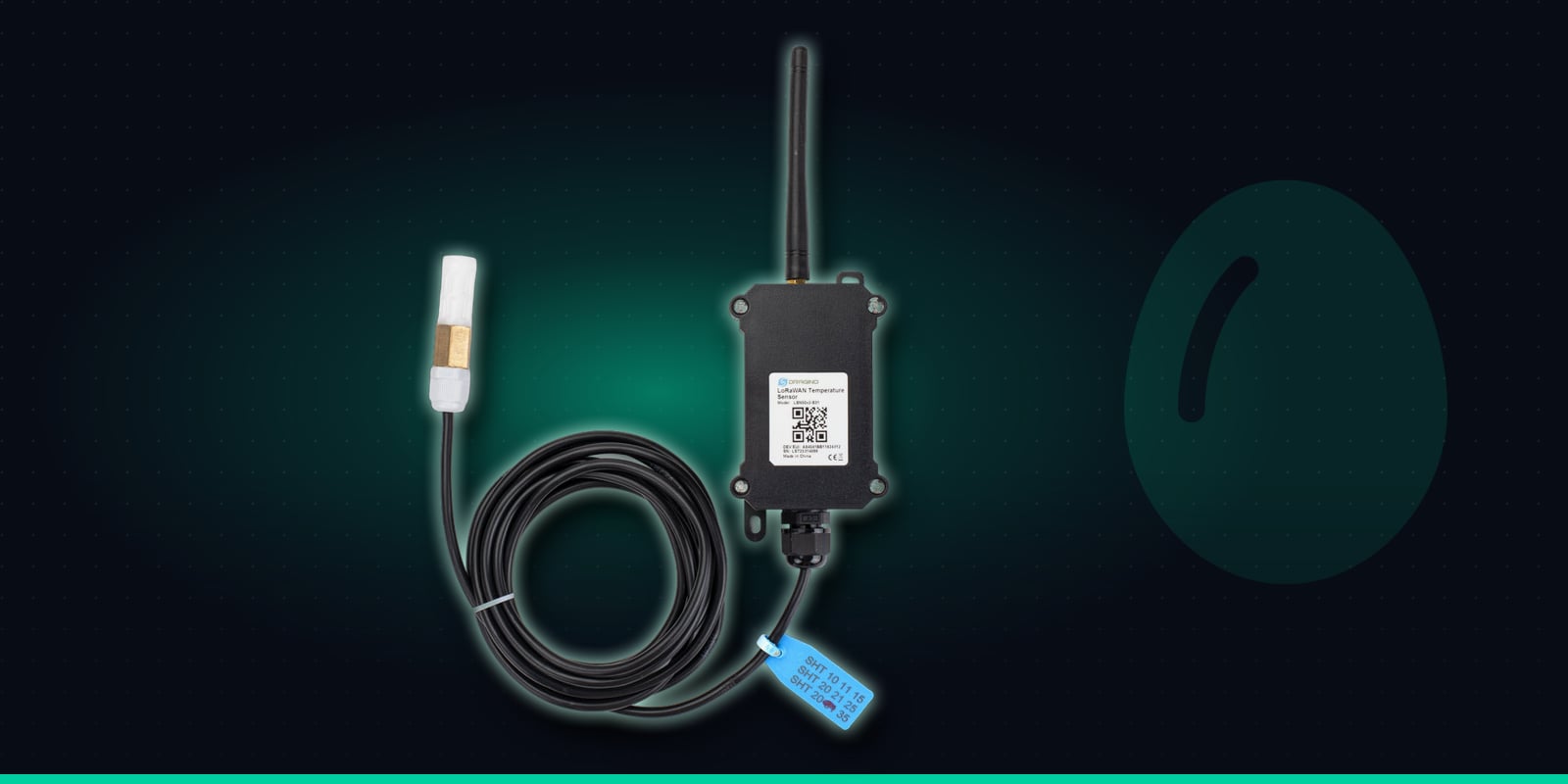
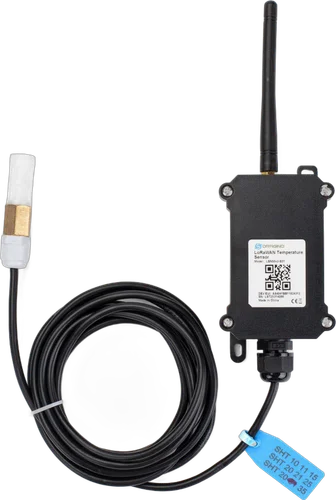
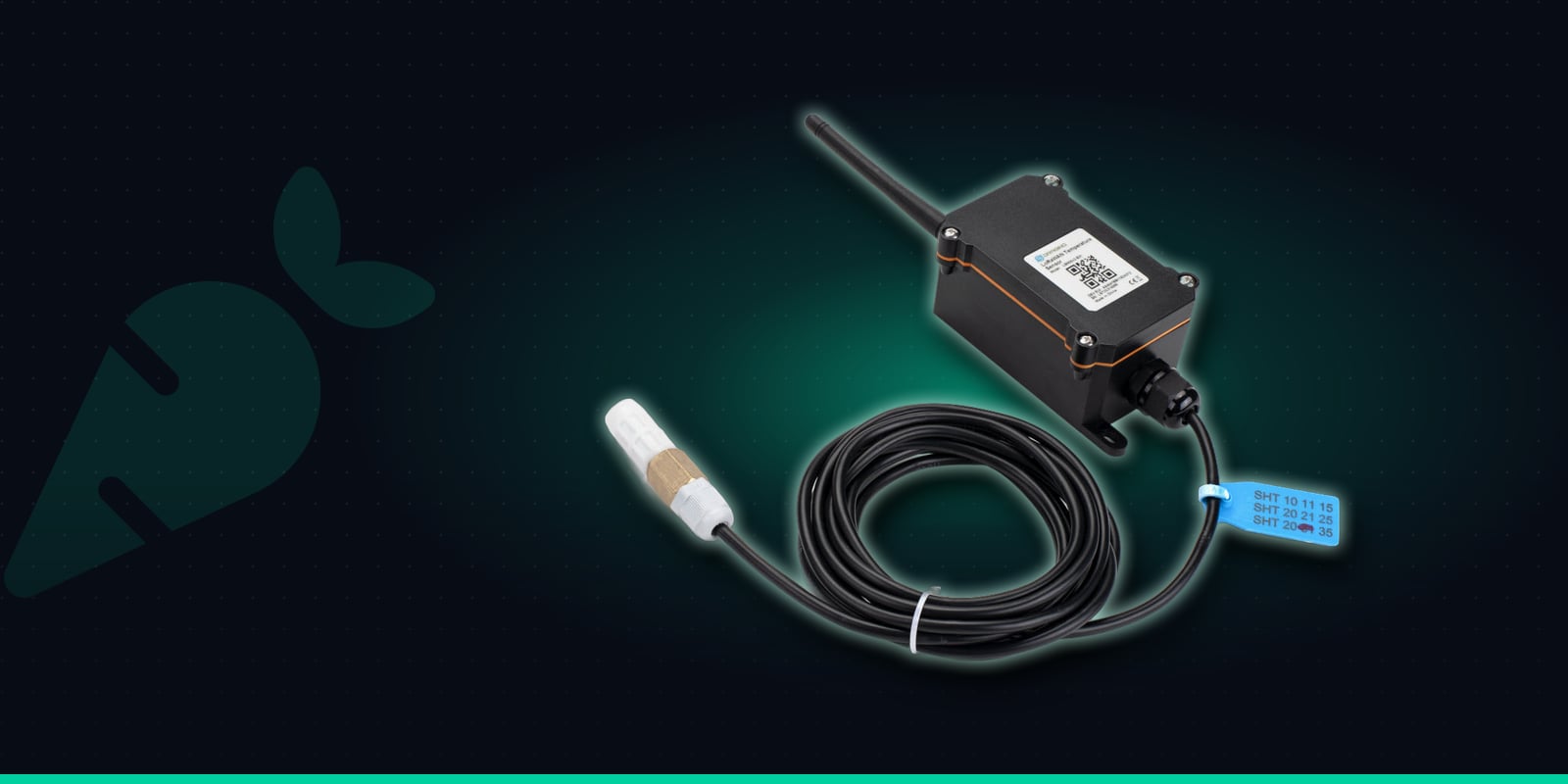
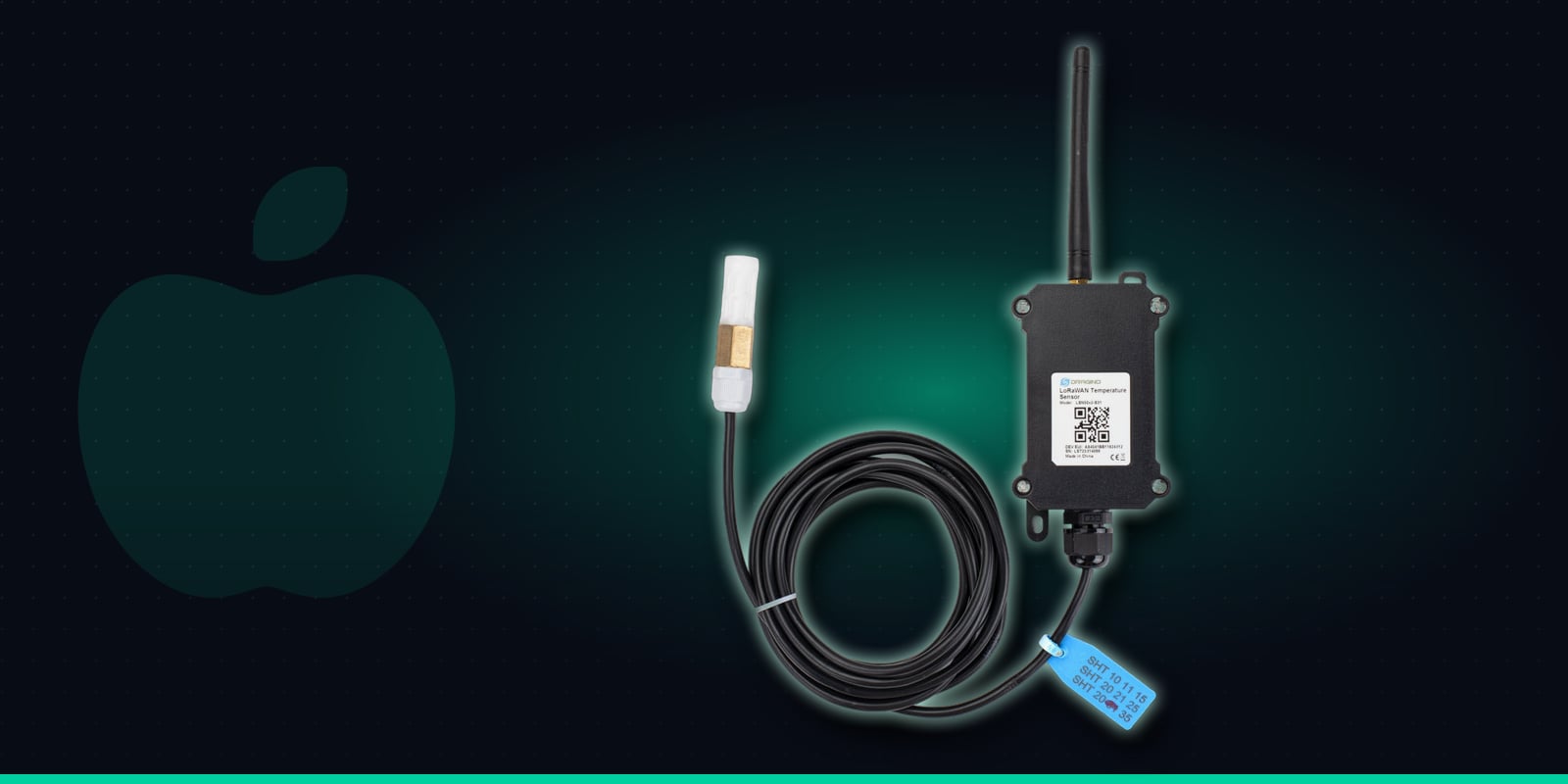
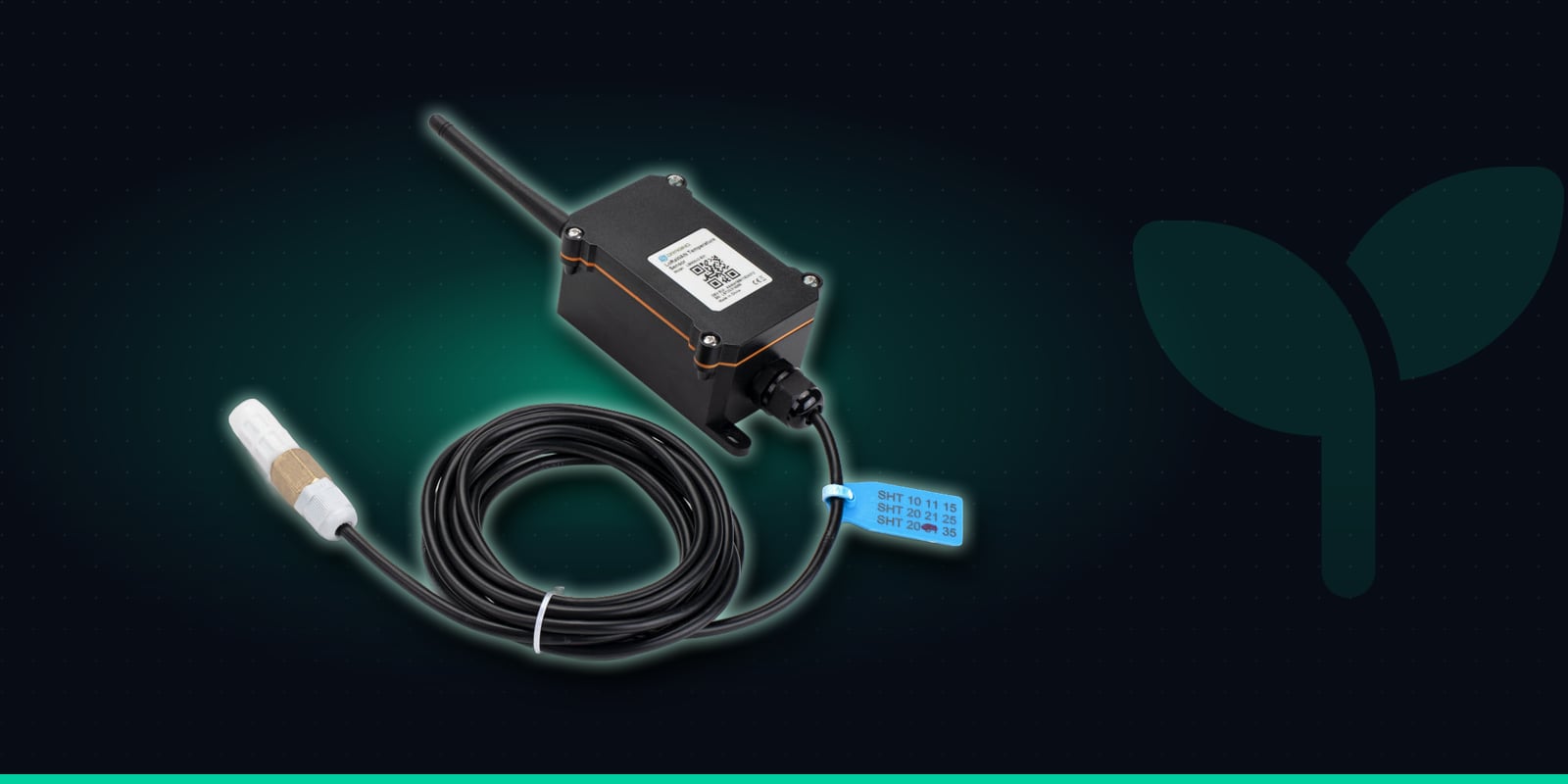
A sensor in a box on the office wall tells you nothing about the air at bird or pig height. The LSN50v2-S31 puts a Sensirion SHT31 temperature and humidity probe on a 3 metre cable, inside a waterproof, anti-condensation casing with a vented cap, so it reads the air around it. The probe goes where the animals are; the rugged main unit, with its battery, radio and external antenna, sits on the wall or outside the shed, out of the way of stock, feeders and cleaning.
There's nothing to wire in. It runs on a battery rated for up to 10 years depending on how often it reports, and it uses LoRaWAN, so it needs no mains, no Wi-Fi and no SIM, and LoRaWAN's long range suits sheds spread across a farm. By default it reports every 20 minutes. If the network drops, it stores readings and sends them once coverage returns, so your records don't have gaps.
Temperature & humidity
Sensirion SHT31 probe: -40 to 80°C (±0.2°C) and 0 to 99.9% RH (±2% RH).
3m probe cable
The probe sits in a waterproof, anti-condensation casing on a 3 metre cable.
High/low alarms
Checks every minute and reports straight away when temperature or humidity goes outside the limits you set.
Datalog
Stores readings if coverage drops and sends them once it reconnects. Reports every 20 minutes by default.
8500mAh battery
Rated for up to 10 years, depending on how often it reports.
Outdoor enclosure
Rugged main unit rated -40 to 85°C, with the probe placed where the reading matters.
Specifications from Dragino's LSN50v2-S31 documentation.
Which Sheds to Monitor
Each LSN50v2-S31 has one probe, so it watches one airspace. Start with one sensor per house or shed, and add a second in large buildings where one end tends to run warmer or damper than the other.
Broiler houses
Warmth matters at placement, and heat builds as the birds grow. A record across each crop shows how the house performed from day one to clear-out.
Layer & free-range houses
Flocks kept for many months, where steady conditions and dry litter help keep birds comfortable through summer heat and damp winters.
Pig sheds & farrowing rooms
Finishers that feel the heat and piglets that need warmth, often under the same roof. A probe at pen height shows what each group is actually getting.
Calf sheds & other housing
Calf pens, lambing sheds and other housed stock, where damp bedding and still, humid air are worth catching early, and cold snaps matter for young animals.
Installing the LSN50v2-S31 in a Shed
Fitting takes a few minutes per shed and is easiest between batches, when the house is empty. The probe goes in the animals' airspace; the main unit stays within 3 metres of it.
1
Order pre-onboarded, scan and name it
Buy the LSN50v2-S31 from Hexaspot with the Pre-onboard to Trackpac option, scan its QR code in the Trackpac app and give it a clear name such as "House 3 - middle". Tag it with the farm and the type of stock so it picks up the right alert rules.
2
Pick a representative spot at animal height
Choose a point roughly in the middle of the shed, at or near the height the animals live at, and away from heaters, fan outlets, inlets, doors and direct sun, which would all skew the reading.
3
Keep the probe out of reach
Birds peck and pigs and calves chew, so fix the probe just out of reach, or inside a simple mesh or slotted guard that keeps beaks and mouths off it while letting air move around the vented cap.
4
Fix the main unit on the wall or outside
Mount the enclosure on a wall or post within reach of the 3 metre cable, or run the cable through the wall and fix the unit outside. Keep the cable clipped up and clear of feeders, drinkers, scrapers and anywhere stock can get at it.
5
Check the first readings
Confirm readings are arriving on the dashboard, then watch a few days of graphs alongside your own observations before settling on alert thresholds. Before washing down, it's simplest to unclip the probe or keep it well clear of the hose.
Setting Shed Alert Rules
The right thresholds depend on the species, the age of the animals and your own management targets, so base them on the guidance you already follow from your breed company, integrator or vet rather than a single figure from a blog. The aim is an alert early enough that someone can get to the shed, check the fans, open up or fix a heater before the animals are under real strain.
Trackpac rules can alert on temperature or humidity above or below a threshold, and on low battery, by email, SMS or push through the Trackpac mobile app. Each rule can target a tag, so every broiler house, or every calf shed, shares the same limits and contacts, and a new sensor inherits them as soon as it's tagged. A few rules cover most farms:
Too hot: heat stress warning
An above-threshold temperature rule texts whoever is on duty when the shed gets warmer than your target. On muggy days, a high humidity rule alongside it flags the conditions animals find hardest.
Too cold: heater or brooding check
A below-threshold rule for houses with young stock catches a failed heater or a cold night before chicks, piglets or calves get chilled.
Too damp: ventilation check
Humidity that stays high suggests the shed isn't shifting enough moisture, which tends to mean damp litter and bedding. An email rule is often enough, so it lands in the morning rather than at 3am.
Out of hours: straight to the phone
Time windows send overnight and weekend alerts by SMS to whoever is on call, so a tripped fan or failed heater gets noticed while the farm is asleep.
Hot afternoon: no message flood
On a long hot day the shed may sit above the threshold for hours. A trigger-lock interval stops every report becoming a text, while the graph keeps the full picture.
Back in range: all clear
When conditions return to normal, a "resolved" message follows, so everyone knows the fans, the heater or the opened vents have done their job.
For situations that can turn quickly, such as a fan failing on a hot day, the sensor's on-device alarms add a faster layer. You can set separate high and low limits for temperature and for humidity; the sensor checks the probe every minute and reports straight away when a reading crosses a limit, with a minimum gap between alarms so it doesn't repeat itself. Those limits are configured on the device itself rather than in the Trackpac app, and Hexaspot or Trackpac support can help you set them.
Add a low-battery rule as well, so you can replace a battery between batches rather than mid-crop. If you already use another farm system, webhooks can forward alerts to it. Trackpac passes the alert on; it doesn't control fans, heaters, inlets or misting, so someone still needs to go and act on it.
Records for Welfare, Assurance & Your Vet
Tag each sensor by farm and shed and the dashboard groups them for you: every house on one screen, with any shed that's running hot or damp standing out. The history graphs show how each building behaved through a heatwave, a cold snap or a whole crop, which helps you spot a house that always runs warmer at one end, or a ventilation setting that isn't keeping humidity down.
Exports for your records
CSV exports give you a continuous record of temperature and humidity per shed, handy for welfare and assurance paperwork and for reviewing each batch.
Faults are easy to spot
If a probe is damaged or pulled loose, the sensor reports an obviously invalid reading, so it stands out on the dashboard rather than quietly sending wrong numbers.
When your vet, an assurance assessor, an integrator's field adviser or a farm manager needs to see conditions, a read-only dashboard link lets them view the sheds without being able to change anything. It's a quicker way to answer "what was the house like last week?" than digging out notes.
One LSN50v2-S31 per shed, with the probe at animal height and the unit on the wall or outside - texting you when it gets too hot, too cold or too damp, day or night.
€57.02 ex VAT from Hexaspot, our sister company in the Connect IoT group. VAT is added at checkout based on your country.
Choose Pre-onboard to Trackpac and the sensor arrives registered on Trackpac - scan the QR code and it's live on your dashboard.
Trackpac covers connectivity, dashboard, alerts and data storage from £15 / €18 per sensor per year.
Why monitor humidity as well as temperature in a livestock shed?↓
Because the two work together. Birds and pigs rely heavily on losing heat through their breath, and that becomes harder when the air is both hot and humid, so a warm, muggy afternoon can be more of a strain than the thermometer alone suggests. Humidity also tells you how well the shed is shifting moisture: if it stays high, litter and bedding tend to get damp. The LSN50v2-S31 measures both from one probe, so you see the full picture on one graph.
Where should the probe go in a poultry house or pig shed?↓
As close to animal height as you practically can, in a representative spot away from heaters, fan outlets, doors and direct sun, because that's the air the animals are actually living in. Birds peck and pigs and calves chew, so fit the probe just out of reach or inside a simple protective guard that still lets air move freely around it. The 3 metre cable lets the main unit sit on the wall or outside the shed.
Does the LSN50v2-S31 measure ammonia?↓
No. The LSN50v2-S31 measures temperature and relative humidity only. It doesn't measure ammonia, carbon dioxide or any other gas, so if you need those readings you'll need a different sensor. What it does well is show whether the shed is too hot, too cold or too humid, and alert you when that happens.
Can Trackpac switch the fans or heaters on?↓
No. Trackpac doesn't control ventilation, heaters, misting or any other shed equipment. It sends alerts by email, SMS or push to the people you choose, and can forward them to other systems by webhook. Its job is to make sure someone knows when conditions drift, for example because a fan or heater has failed overnight, so they can go and check.
Where can I buy the LSN50v2-S31 for use with Trackpac?↓
The Dragino LSN50v2-S31 is sold by Hexaspot, Trackpac's sister company in the Connect IoT group, for €57.02 ex VAT, with VAT added at checkout based on your country. Choose 'Pre-onboard to Trackpac' when ordering and Hexaspot registers the sensor on Trackpac before dispatch, so you only need to scan its QR code. A Trackpac subscription from £15 / €18 per sensor per year covers connectivity, the dashboard, alerts and data storage.