Vineyard & Orchard Microclimate Monitoring with the LSN50v2-S31
22nd October 2026•By Neil Skoglund
LSN50v2-S31 Use Case
On a clear, still spring night, the temperature at the bottom of one block can be several degrees colder than at the top of the next. The weather forecast gives you the general picture; it can't tell you what's happening at blossom height in the frost pocket by the stream, or how long the humid air hung in the sheltered corner after last week's rain.
This guide is for vineyard managers, fruit growers, soft fruit and nursery businesses. It shows how a Dragino LSN50v2-S31 on a post in each block, with its temperature and humidity probe at the height that matters, reports into Trackpac so you get frost warnings on the nights that count, a clear record of humid spells, and block-by-block comparisons across whole seasons. For the wider case for temperature sensors, see our overview of real-time temperature monitoring.
Why the Microclimate in Each Block Matters
Spring frost is one of the biggest risks to a year's crop. Buds, blossom and young fruit are at their most vulnerable just as the season gets going, and a single cold night at the wrong growth stage can cost a block much of its yield. Cold air is heavy, so on calm, clear nights it drains downhill and pools in hollows, at the foot of slopes and against hedges and walls. Two rows a hundred metres apart can have very different nights.
Humidity matters too. Many disease risk models used in fruit and vine growing associate long spells of high humidity and wet conditions with a higher risk of fungal disease, and sheltered, poorly ventilated spots tend to stay humid for longer. Without measurements in the block itself, decisions about frost protection, canopy management and spray timing rest on the nearest weather station, which may be miles away and on very different ground.
Why the LSN50v2-S31 Suits Field Monitoring
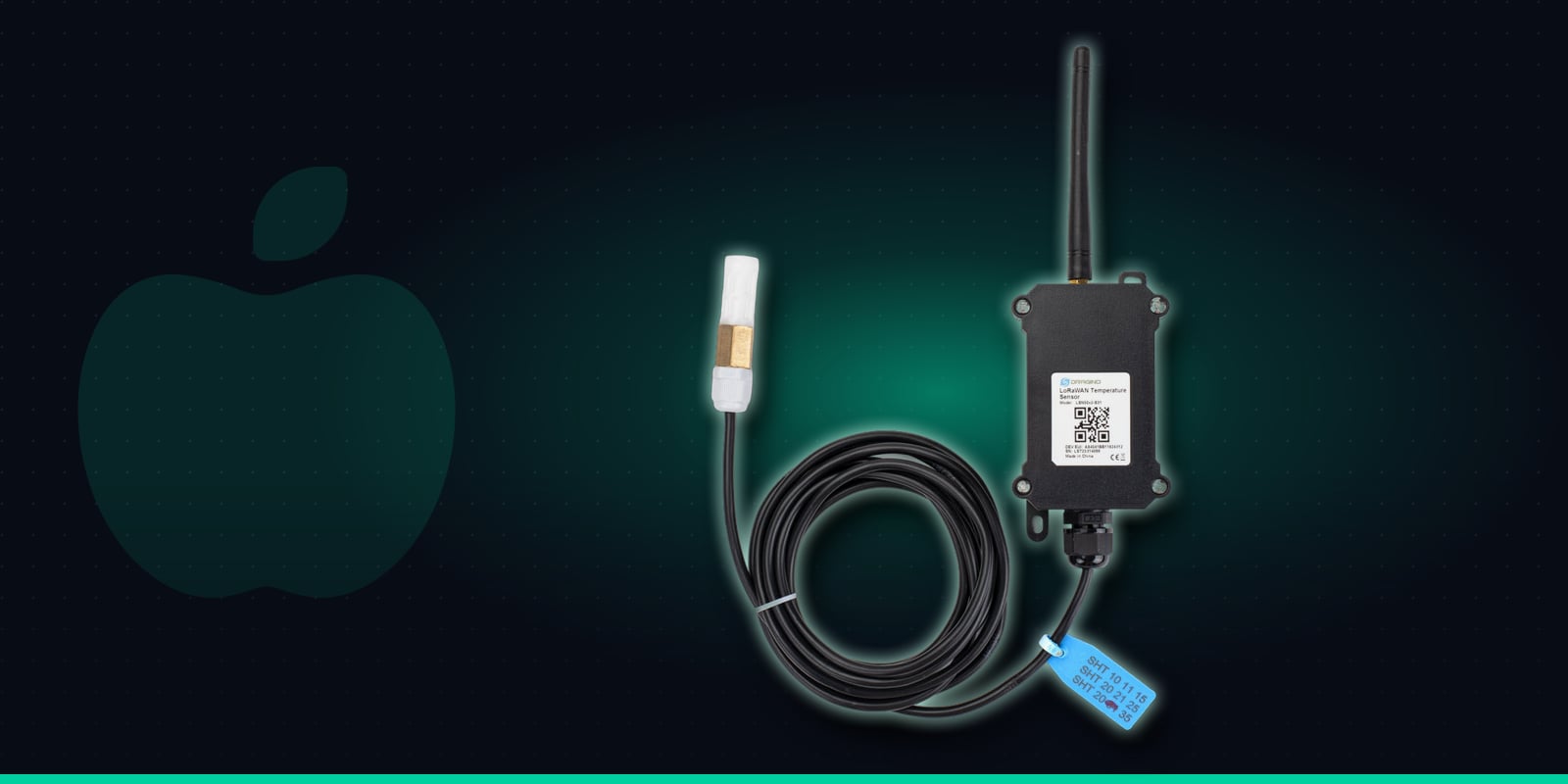
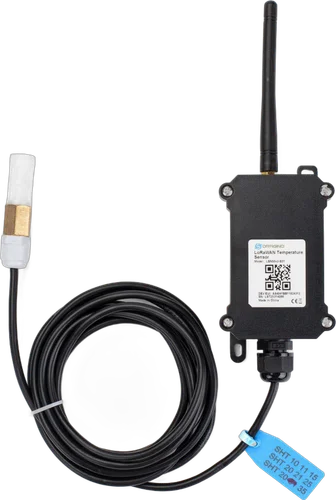
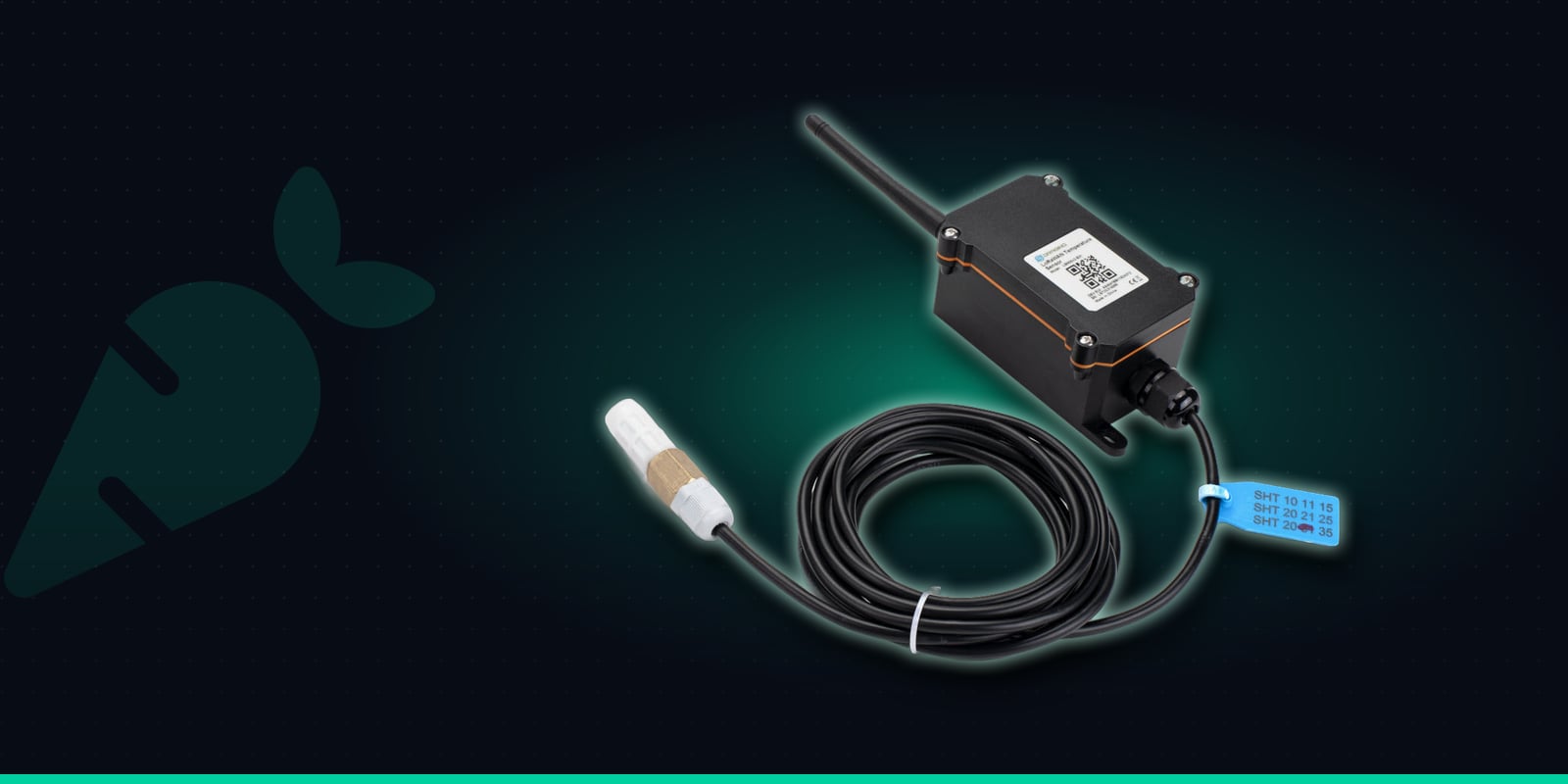
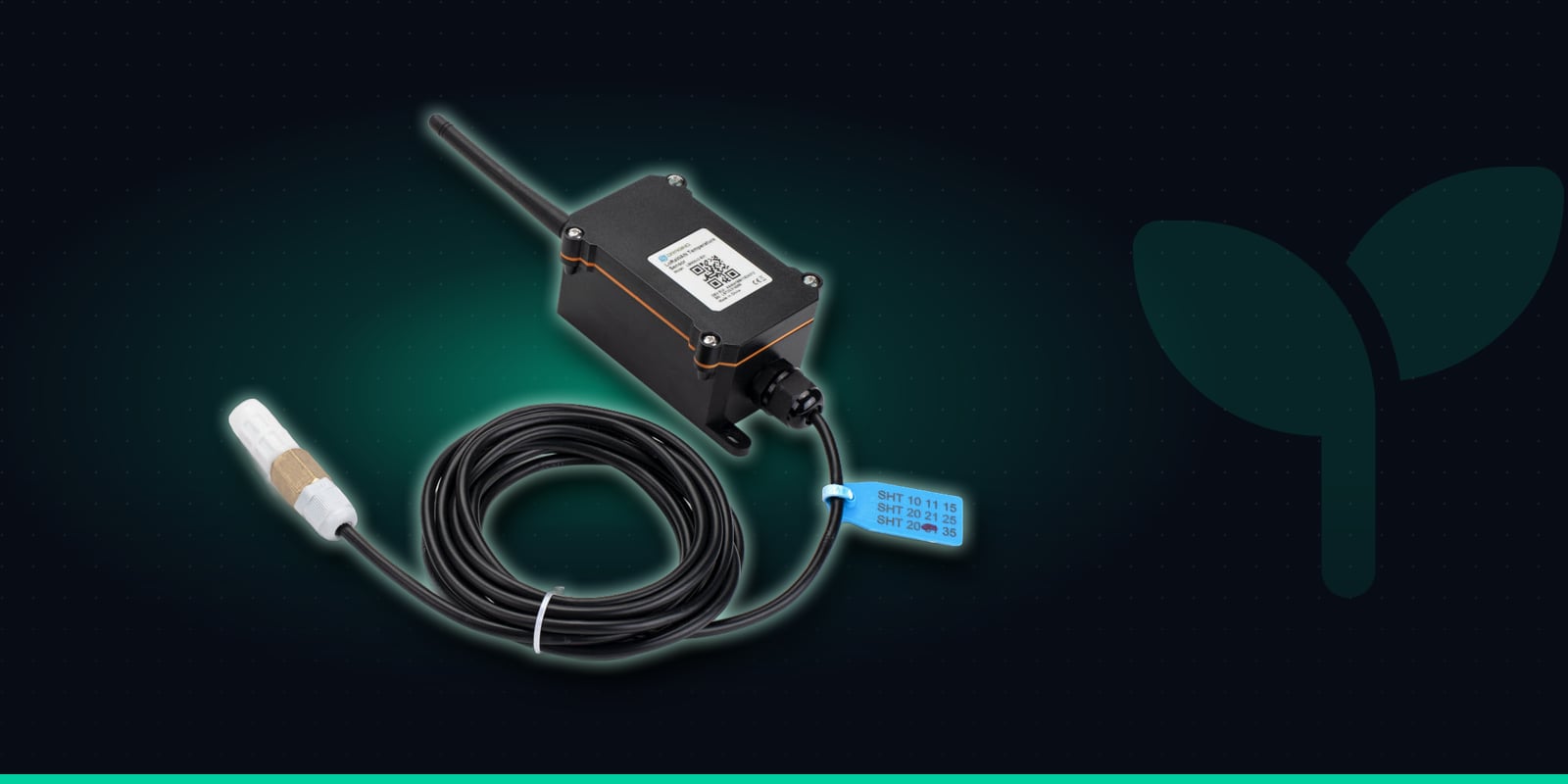
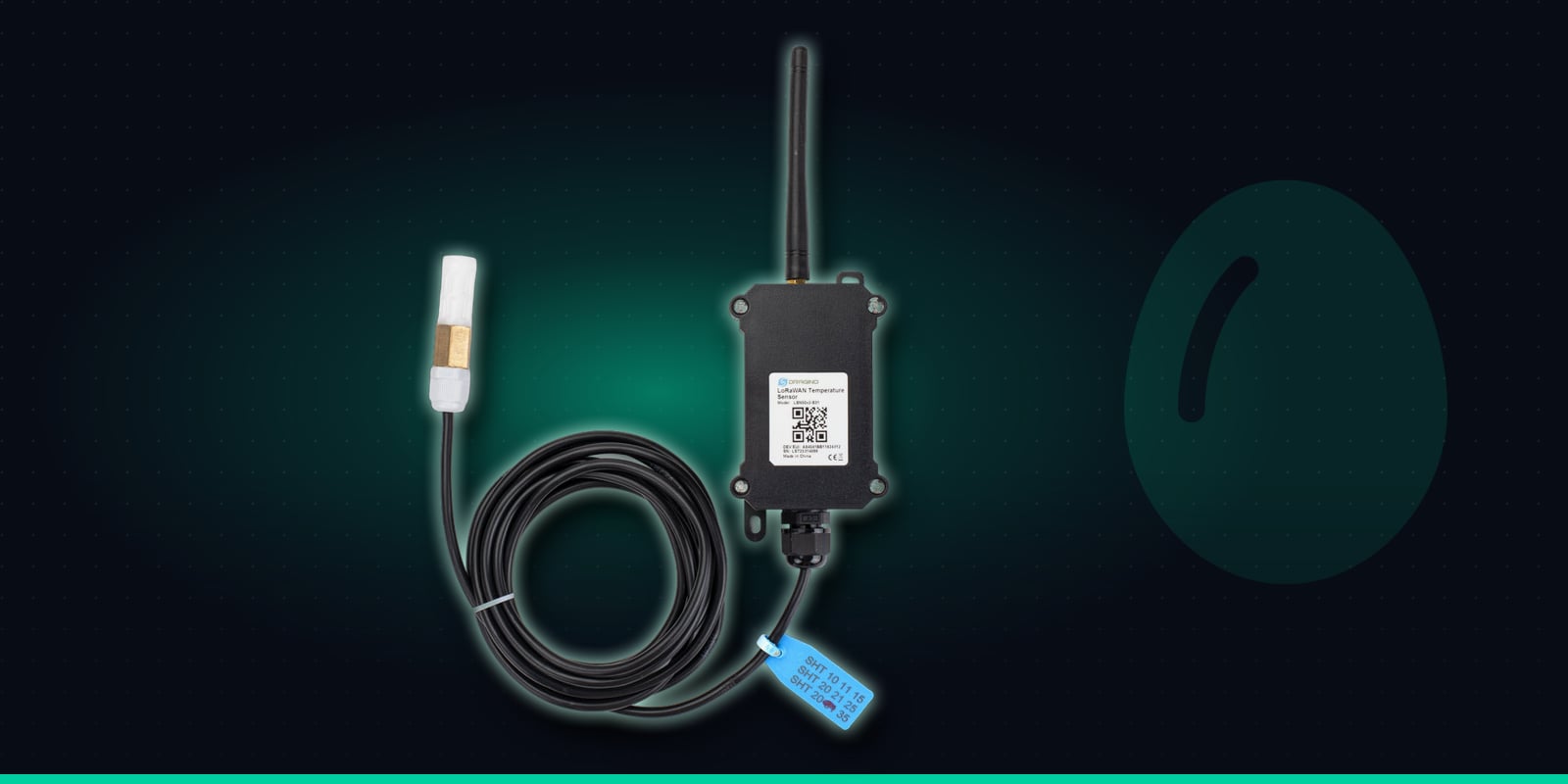
The LSN50v2-S31 separates the measurement from the electronics. A Sensirion SHT31 temperature and humidity probe sits in a waterproof, anti-condensation casing on a 3 metre cable, and the rugged main unit, with its battery, radio and external antenna, fixes to a post or trellis end. That means you can put the probe at exactly the height you care about, at blossom or fruiting wire height, without having to mount a box in the canopy. The probe measures the air around it, which is what you want for frost and humidity in a block.
In the field, power is the usual problem, and the LSN50v2-S31 avoids it. It runs on an 8500mAh battery rated for up to 10 years depending on how often it reports, with no solar panel, no mains, no Wi-Fi and no SIM. It uses long-range LoRaWAN, reports every 20 minutes by default, and if coverage drops for a while it stores readings and sends them once the connection returns, so the record of a frost night stays complete.
Temperature & humidity
Sensirion SHT31 probe: -40 to 80°C (±0.2°C) and 0 to 99.9% RH (±2% RH).
3m probe cable
The probe sits in a waterproof, anti-condensation casing on a 3 metre cable.
High/low alarms
Checks every minute and reports straight away when temperature or humidity goes outside the limits you set.
Datalog
Stores readings if coverage drops and sends them once it reconnects. Reports every 20 minutes by default.
8500mAh battery
Rated for up to 10 years, depending on how often it reports.
Outdoor enclosure
Rugged main unit rated -40 to 85°C, with the probe placed where the reading matters.
Specifications from Dragino's LSN50v2-S31 documentation.
Where to Put Sensors
Each LSN50v2-S31 measures one spot, so think about which spots tell you the most. Rather than spreading sensors evenly, put them where conditions differ and where the crop is most at risk:
Frost pockets & low ground
The foot of a slope, hollows and the downhill side of a hedge or wall, where cold air collects. Usually the first place to get cold and the place your frost alert should watch.
Higher, more exposed blocks
A sensor at the top of the slope gives you a comparison point, showing how much colder the low ground gets on still nights and how the site behaves as a whole.
Vineyard rows
Probe at fruiting wire height, where the buds and bunches are. Mount the main unit on an end post or a stake within reach of the 3 metre cable.
Orchard blocks
Probe in or just below the lower canopy, where blossom is closest to the cold air near the ground. Different varieties flowering at different times may each deserve their own sensor.
Soft fruit & nursery beds
Outdoor strawberry, cane fruit and nursery stock beds, with the probe at crop height. Low crops sit right in the coldest layer of air on a frost night.
Sheltered & slow-drying spots
Blocks enclosed by woodland, tall hedges or buildings, where air moves less and humidity tends to stay high after rain or heavy dew. Useful for comparing against more open ground.
Installing the LSN50v2-S31 in a Block
It's worth installing well before budburst or blossom, so you have a few weeks of readings to learn how each block behaves before the first risky night. The main unit goes on a post; the probe goes at the height that matters, within 3 metres of it.
1
Order pre-onboarded, scan and name it
Buy the LSN50v2-S31 from Hexaspot with the Pre-onboard to Trackpac option, scan its QR code in the Trackpac app and give it a clear name such as "Lower block - frost pocket". Tag it with the site or crop so it picks up the right alert rules.
2
Fix the main unit to a post
Use an end post, a trellis post or a dedicated stake. Keep it clear of the path of tractors, mowers and sprayers, and somewhere you can reach it without disturbing the crop.
3
Put the probe at crop height
Route the cable to blossom, bud or fruiting height and secure the probe so it hangs in free air rather than touching wood, wire or foliage. Fix the cable along the post or wire so it can't be snagged.
4
Shade it from sun and rain
Direct sun can push an air temperature reading up. A simple radiation shield, as commonly used for outdoor air sensors, or at least the shaded side of a post with some cover overhead, gives you more trustworthy readings.
5
Watch a few nights, then set thresholds
Confirm readings are arriving on the dashboard. Compare blocks over a few clear, still nights to see which ones get coldest first, then set your frost and humidity alert levels.
Setting Frost & Humidity Alert Rules
A frost alert is only useful if it arrives in time for someone to act, whether that means starting frost protection, getting a team out or simply knowing to check the crop at first light. Damaging temperatures vary with the crop, variety and growth stage, so most growers set their own levels, often with an early warning a couple of degrees above the point where they would act and a more urgent rule closer to it.
Trackpac rules can alert on temperature or humidity above or below a threshold, and on low battery, by email, SMS or push through the Trackpac mobile app. Each rule can target a tag, so every sensor in a block or on a site shares the same contacts. A few rules cover most of the season:
Frost warning: get ready
A below-threshold temperature rule on the frost pocket sensors sends SMS and push to whoever makes the call on frost protection. A second, lower rule can escalate to the wider team.
Humid spell: keep an eye on it
An above-threshold humidity rule flags when a block turns humid, and the graph shows how long it stayed that way. Many growers send this one by email rather than text.
Cold all night: no message flood
On a long frost night the temperature may sit below the threshold for hours. A trigger-lock interval stops every report becoming a text, while the graph keeps the full picture.
Warmed up: all clear
When the block climbs back above the threshold after sunrise, a "resolved" message follows, so the team knows the risk has passed.
Night-time rules for frost season
Time windows let frost alerts go to the on-call grower overnight, while daytime alerts go to the office or farm manager instead.
Low battery: fix it before spring
The battery is rated for years, and a low-battery alert gives you time to deal with it over winter rather than in the middle of frost season.
On a frost night, temperatures can fall quickly once the wind drops. The regular 20-minute reports are often enough for a Trackpac rule, but the LSN50v2-S31 also has its own high and low alarms for temperature and humidity: it checks the probe every minute and sends an alarm straight away when a reading crosses a limit, with a minimum gap between alarms that you choose. Those limits are configured on the device itself, and Hexaspot or Trackpac support can help you set them.
If you run frost protection or farm management systems that accept incoming alerts, webhooks can forward Trackpac alerts to them. Trackpac passes the alert on; it doesn't start fans, heaters or irrigation itself.
Comparing Blocks & Building Records Over Seasons
Tag each sensor by site, block or crop and the dashboard groups them for you, with the coldest and most humid spots standing out. Over a season, the history graphs show how much colder the frost pocket runs than the top of the slope, which blocks stay humid longest after rain, and how each one behaved on the nights that mattered. That helps when deciding where frost protection is worth the investment, where to plant later-flowering varieties, or which blocks need more attention to canopy and airflow.
CSV exports give you a season-by-season record of temperature and humidity in each block, which you can set alongside your own yield, spray and disease notes, or share with an agronomist or adviser. A read-only dashboard link lets a consultant, a contract manager or a landowner see conditions without being able to change anything. If a probe is damaged, for example by machinery, the sensor reports an obviously invalid reading, so the fault is easy to spot.
The LSN50v2-S31 tells you about the air around the crop. What's happening in the root zone is a different question, and through the summer it often matters just as much, especially for young vines and trees, and for deciding when and how much to irrigate.
One LSN50v2-S31 per block, with the probe at blossom or fruiting height and the unit on a post - no solar panel, mains or Wi-Fi needed, and alerts when temperatures fall or humidity climbs.
€57.02 ex VAT from Hexaspot, our sister company in the Connect IoT group. VAT is added at checkout based on your country.
Choose Pre-onboard to Trackpac and the sensor arrives registered on Trackpac - scan the QR code and it's live on your dashboard.
Trackpac covers connectivity, dashboard, alerts and data storage from £15 / €18 per sensor per year.
What temperature should a spring frost alert be set to?↓
There's no single right figure. The temperature at which buds, blossom or young fruit are damaged varies with the crop, the variety and the growth stage, and growers usually work from their own experience and advisers' guidance. A common approach is to set a warning a couple of degrees above the point where you would start frost protection, so there's time to get people out, and a second, more urgent rule closer to it. Watch the graphs over a few cold nights and adjust from there.
How high should the probe be mounted?↓
At the height of the part of the crop you care about: blossom or fruiting wire height in a vineyard, lower canopy in an orchard, or crop height for soft fruit and nursery stock. On a still frost night the coldest air settles close to the ground, so a reading taken a metre or two higher can look reassuringly warmer than conditions at the buds. The LSN50v2-S31's probe is on a 3 metre cable, so the main unit can sit on the post while the probe goes exactly where you want it.
Does the probe need shading from the sun?↓
It helps. Any air temperature sensor left in direct sun can read higher than the true air temperature, and humidity readings are affected too. A simple radiation shield, or at least mounting the probe on the shaded side of a post under some cover from direct sun and rain, is common practice for outdoor air measurements and gives you more trustworthy daytime readings. Night-time frost readings are less affected, but shading is still good practice.
Can Trackpac predict fungal disease or measure leaf wetness?↓
No. The LSN50v2-S31 measures air temperature and relative humidity at the probe; it doesn't measure leaf wetness or rainfall, and Trackpac doesn't run disease models or make spray recommendations. What it gives you is an accurate record of temperature and humidity in each block, with alerts when humidity rises above a level you choose. Many growers and advisers use that kind of data alongside their own disease risk tools and judgement.
Where can I buy the LSN50v2-S31 for use with Trackpac?↓
The Dragino LSN50v2-S31 is sold by Hexaspot, Trackpac's sister company in the Connect IoT group, for €57.02 ex VAT, with VAT added at checkout based on your country. Choose 'Pre-onboard to Trackpac' when ordering and Hexaspot registers the sensor on Trackpac before dispatch, so you only need to scan its QR code. A Trackpac subscription from £15 / €18 per sensor per year covers connectivity, the dashboard, alerts and data storage.