Wine Cellar Temperature & Humidity Monitoring with the LSN50v2-S31
22nd October 2026•By Neil Skoglund
LSN50v2-S31 Use Case
Wine is patient, but it isn't forgiving. A cooling unit that trips out over a long weekend, a summer that slowly warms a cellar, or air that turns too dry or too damp can all affect bottles that were bought to be kept for years. Most of the time, nobody notices until a cork weeps, a label spots with mould or a buyer asks how the wine was stored.
This guide is for private collectors, restaurants and hotels with their own cellars, wine merchants, and anyone running professional or bonded storage. It shows how a Dragino LSN50v2-S31, with its temperature and humidity probe among the racks and its main unit outside the cellar, reports into Trackpac, alerts you when conditions drift and builds a record of how the wine has been kept. For the wider case for temperature sensors, see our overview of real-time temperature monitoring.
What Wine Needs from a Cellar
Advice varies, but the general consensus for long-term storage is cool, dark and steady. A temperature of roughly 10 to 15°C is commonly quoted, and stability matters as much as the number itself: gentle seasonal movement is far less of a worry than a cellar that warms up and cools down again and again. Sustained warmth is generally thought to age wine faster than intended, and big swings can push wine past the cork as it expands and contracts.
Humidity is the other half. Around 60 to 70% relative humidity is a commonly recommended range. Air that stays very dry for long periods can dry out corks, while air that stays very damp damages labels and capsules and encourages mould on labels, cases and wooden racking. For anyone who may one day sell or insure a collection, a stained label or a low fill can matter as much as what's in the bottle.
Why the LSN50v2-S31 Suits Wine Storage
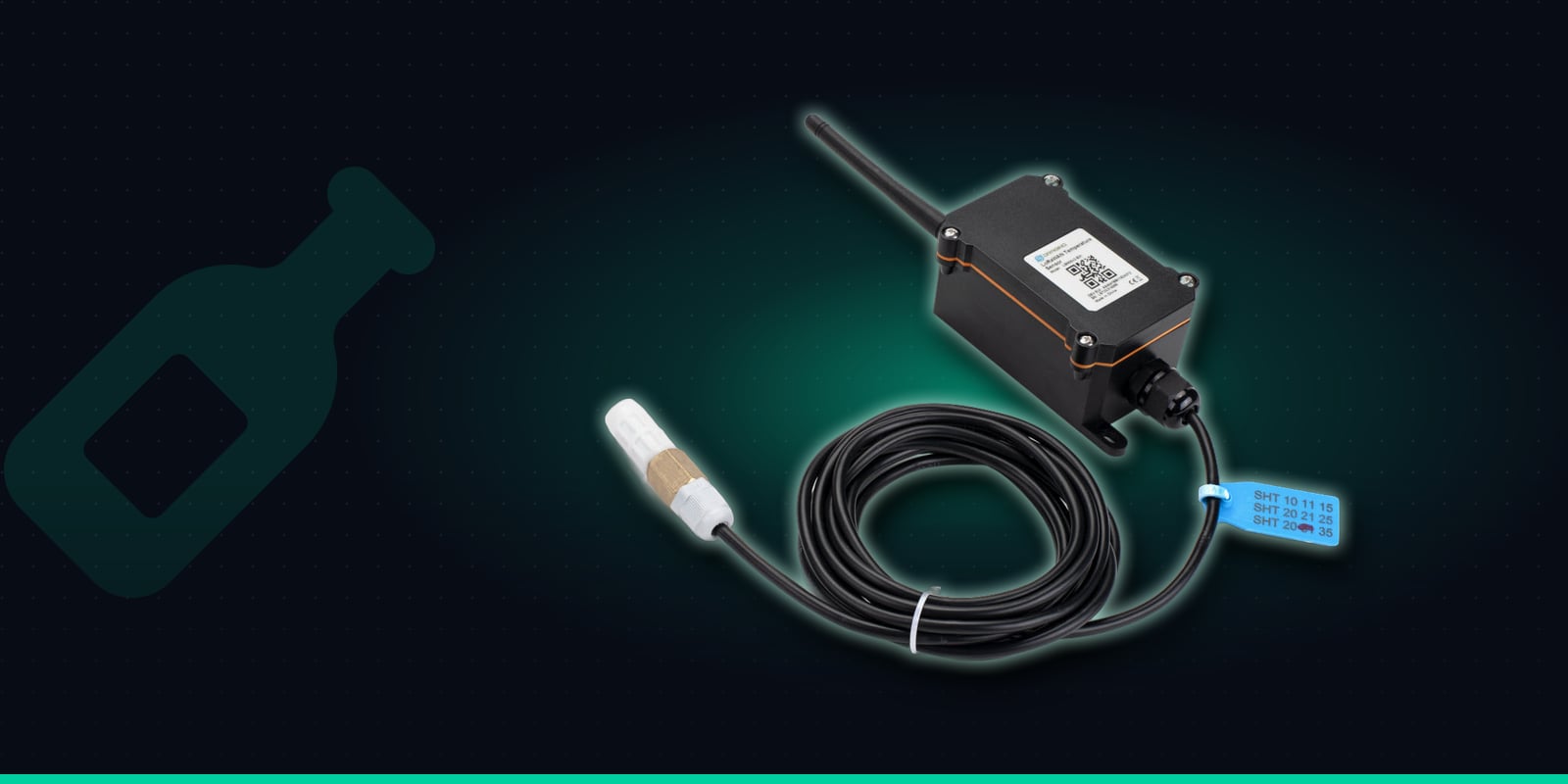
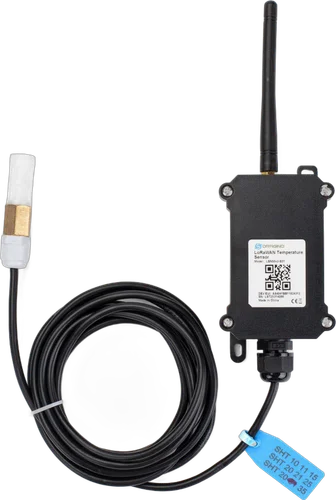
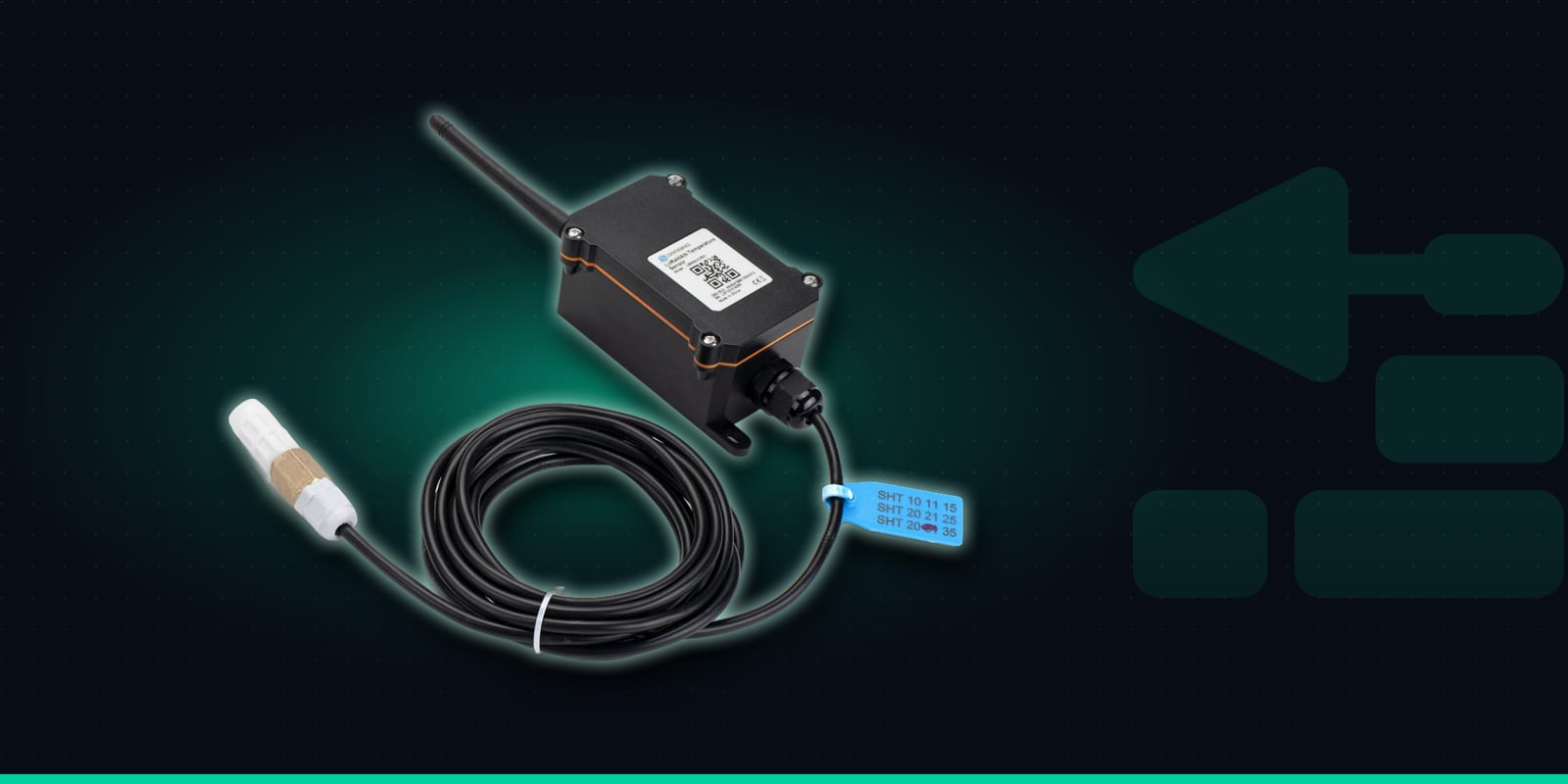
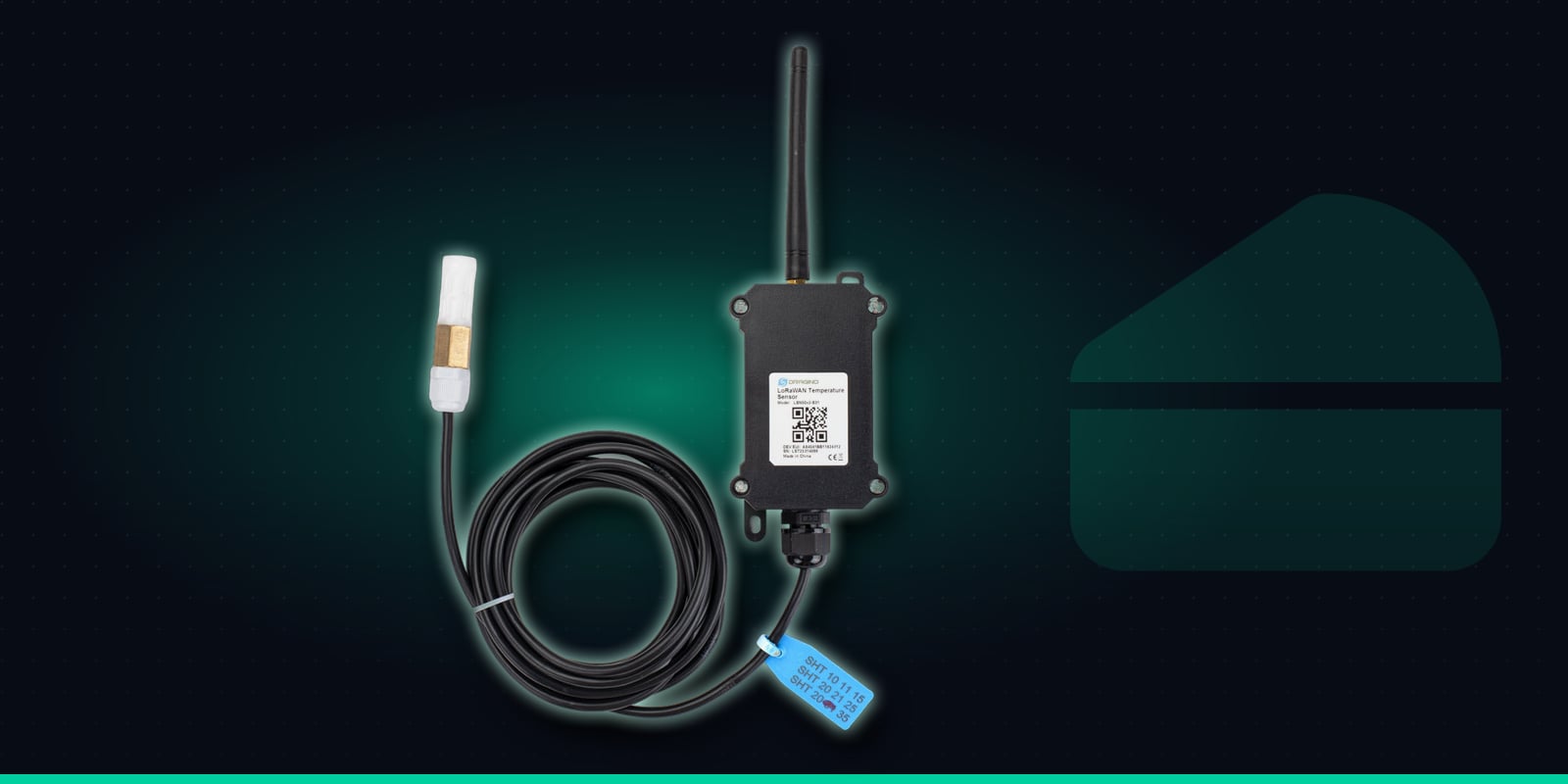
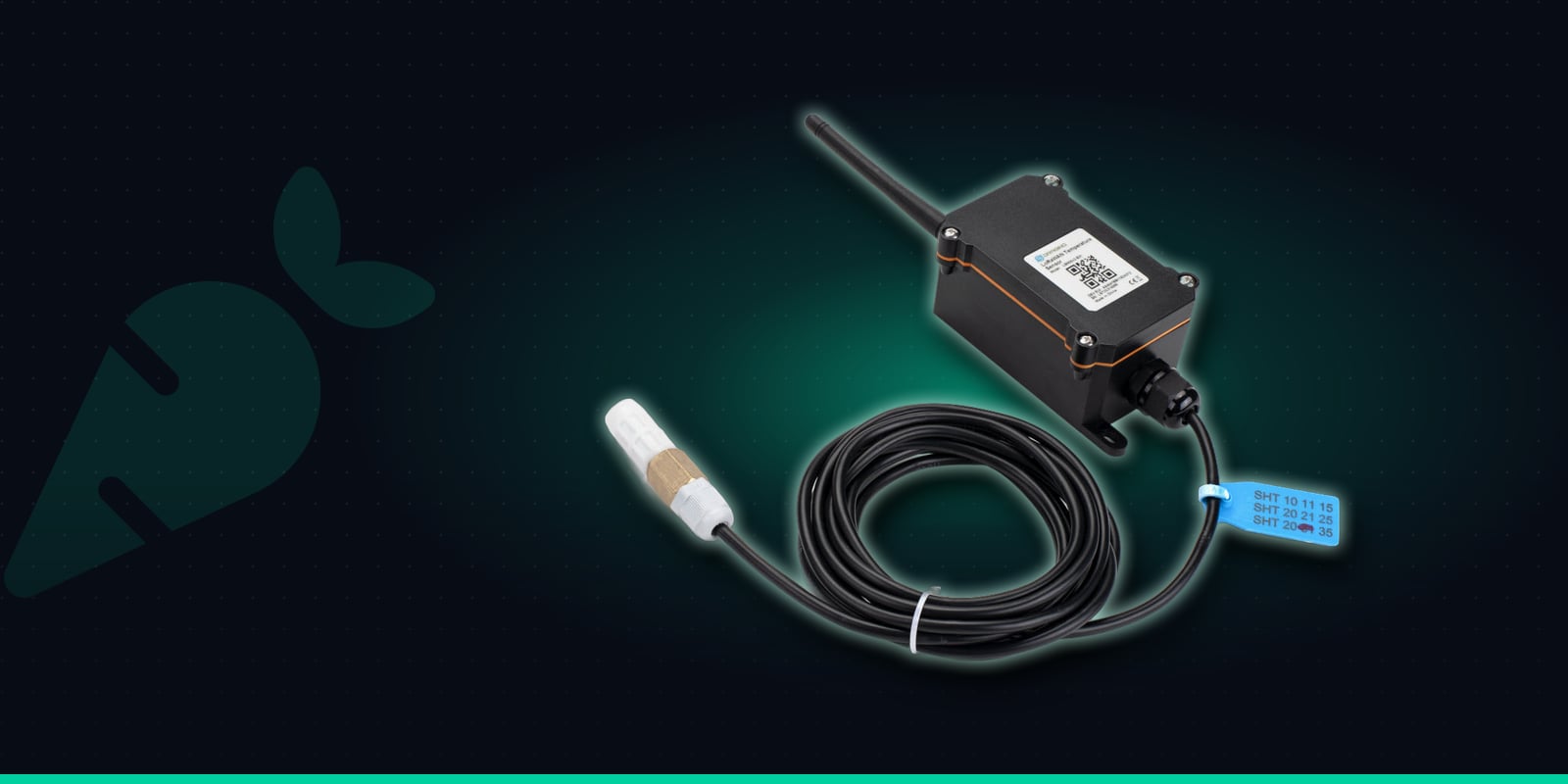
The LSN50v2-S31 measures both temperature and humidity with a Sensirion SHT31 probe, accurate to ±0.2°C and ±2% RH. The probe sits in a vented, anti-condensation casing on a 3 metre cable, which is what makes it useful underground. The probe goes among the racks, where the reading matters, while the main unit with its battery and antenna can sit outside the cellar door or up the stairwell, where radio signals travel far more easily than through stone, brick and earth.
It runs on a battery rated for up to 10 years depending on how often it reports, and it uses LoRaWAN, so there's no mains, no Wi-Fi and no SIM to arrange in a cellar. By default it reports every 20 minutes, which builds a detailed picture of how the cellar behaves day and night, season by season. If coverage drops, it stores readings and sends them once it reconnects, so the history doesn't have gaps.
Temperature & humidity
Sensirion SHT31 probe: -40 to 80°C (±0.2°C) and 0 to 99.9% RH (±2% RH).
3m probe cable
The probe sits in a waterproof, anti-condensation casing on a 3 metre cable.
High/low alarms
Checks every minute and reports straight away when temperature or humidity goes outside the limits you set.
Datalog
Stores readings if coverage drops and sends them once it reconnects. Reports every 20 minutes by default.
8500mAh battery
Rated for up to 10 years, depending on how often it reports.
Outdoor enclosure
Rugged main unit rated -40 to 85°C, with the probe placed where the reading matters.
Specifications from Dragino's LSN50v2-S31 documentation.
Where Wine Monitoring Earns Its Keep
Each LSN50v2-S31 has one probe, so it watches one space. Larger cellars or rooms with separate zones may need one sensor per zone. These are the places where a sensor tends to pay for itself:
Private cellars
Traditional cellars under houses and converted basements, where a collection may sit for decades and the owner isn't always home to notice a change.
Restaurant & hotel cellars
Cellars holding valuable stock that is checked during service but left alone overnight and on closed days, often next to kitchens and plant rooms that give off heat.
Wine merchants
Shop cellars and back rooms holding fine wine for sale or for customers, where how the stock has been kept is part of what the customer is paying for.
Professional & bonded storage
Warehouses and storage rooms holding wine for many clients, where a sensor per zone and a shareable record of conditions helps answer customers' questions.
Wine cabinet rooms
Rooms and stores housing wine fridges and cabinets, where a hot room makes the units work harder and a failing unit can go unnoticed for days.
Second homes & estates
Cellars in properties that sit empty for weeks at a time, where the first sign of a problem would otherwise be the next visit.
Installing the LSN50v2-S31 in a Cellar
Fitting takes a few minutes. The probe goes in the cellar air; the main enclosure stays within 3 metres of it, ideally somewhere the radio signal can get out.
1
Order pre-onboarded, scan and name it
Buy the LSN50v2-S31 from Hexaspot with the Pre-onboard to Trackpac option, scan its QR code in the Trackpac app and give it a clear name such as "Cellar - reds racking". Tag it with the site or cellar so it picks up the right alert rules.
2
Place the probe among the racks
Hang or clip the probe in open air at roughly the height where most bottles sit, away from the door, the cooling unit's outlet and any lights. Don't box it in or tuck it inside a case: it measures the air around it.
3
Mount the main unit where the signal is better
In a shallow cellar the enclosure can go on a wall inside. In a deep or stone-walled cellar, route the cable past the door seal or through a small gland and fix the main unit outside the door or up the stairwell, within reach of the 3 metre cable.
4
Check the first readings arrive
Confirm readings are reaching the dashboard. If they're patchy, try moving the main unit higher or closer to ground level before drilling anything permanent.
5
Learn the cellar, then set thresholds
Watch the graph for a few weeks. You'll see the cooling unit's cycles, how the cellar responds to hot spells and how humidity moves with the weather. Set alert limits around that normal pattern rather than a textbook figure alone.
Setting Cellar Alert Rules
The goal isn't an alert every time the cooling unit cycles. It's a message when the cellar leaves its normal band and stays there: a cooling fault, a door left open, humidity creeping up after wet weather or dropping as a summer goes on. A cellar has a lot of thermal mass, so changes are usually slow, which gives you time to act if you hear about them.
Trackpac rules can alert on temperature or humidity above or below a threshold, on the Mould Risk indicator Trackpac derives from temperature and humidity, and on low battery, by email, SMS or push through the Trackpac mobile app. Rules can target a tag, so every sensor in a cellar or building shares the same contacts. A few rules cover most situations:
Too warm: check the cooling
An above-threshold rule a couple of degrees over your normal range catches a failed cooling unit or a warm spell early. A low rule can catch a cellar getting unusually cold in winter.
Too damp: protect labels & racking
A high-humidity rule, or an alert on Trackpac's Mould Risk indicator, flags conditions that favour mould on labels, cases and wooden racks before it shows.
Too dry: watch the corks
A low-humidity rule tells you when the air has been dry for a while, often in cellars with active cooling or heated rooms nearby, so you can look at humidifying the space.
Slow drift: no message flood
Humidity can sit just outside a limit for days. A trigger-lock interval stops every report becoming a text, while the graph keeps the full picture.
Back in range: all clear
When conditions return to normal, a "resolved" message follows, so everyone knows the repair or adjustment has worked.
Low battery: keep the record unbroken
The battery is rated for years, and a low-battery alert gives you plenty of notice, so the history of your cellar doesn't stop without warning.
Because cellar conditions usually change slowly, the regular 20-minute reports are normally enough for Trackpac rules. The sensor also has its own high and low alarms for temperature and humidity: it checks every minute and sends a message straight away when a reading goes outside a limit. Those limits are configured on the device itself, and Hexaspot or Trackpac support can help you set them.
Time windows let you route alerts differently out of hours, for example to a cellar manager during service and a keyholder overnight. If you log faults in a facilities or helpdesk system, webhooks can forward alerts to it. Trackpac passes the alert on; it doesn't control the cooling unit, humidifier or dehumidifier itself.
A Record of How the Wine Was Kept
For collectors and the trade, how a wine has been stored is part of its story. A continuous history of temperature and humidity, every 20 minutes for years, is a much stronger answer to "how was this kept?" than a thermometer on the wall. CSV exports give you a file you can attach to a sale, a handover or an insurance conversation, and a read-only dashboard link lets a buyer, client or partner see the cellar's conditions without being able to change anything.
For merchants and storage operators with several rooms or sites, tag each sensor by site, cellar or zone and the dashboard groups them, with any zone running warm or damp standing out. Comparing graphs across zones and seasons shows where insulation, door seals or cooling capacity are worth investing in. If a probe is damaged or disconnected, the sensor reports an obviously invalid reading, so a fault is easy to spot rather than quietly leaving a gap.
One LSN50v2-S31 per cellar or zone, with the probe among the racks and the main unit outside the door - alerting you when temperature or humidity drifts, and keeping a long-term record of how your wine has been stored.
€57.02 ex VAT from Hexaspot, our sister company in the Connect IoT group. VAT is added at checkout based on your country.
Choose Pre-onboard to Trackpac and the sensor arrives registered on Trackpac - scan the QR code and it's live on your dashboard.
Trackpac covers connectivity, dashboard, alerts and data storage from £15 / €18 per sensor per year.
What temperature and humidity should a wine cellar be kept at?↓
There's no single official figure, but for long-term storage a cool, steady temperature of roughly 10 to 15°C and relative humidity of around 60 to 70% are commonly recommended. Stability matters as much as the exact number: slow seasonal movement is far less of a concern than repeated swings. Too dry and corks can dry out; too damp and labels suffer and mould can grow on labels and racking. Watch your own cellar's graph for a few weeks before settling on alert thresholds.
Where should the probe go in a wine cellar?↓
In the air among the racks, at around the height where most of the bottles are stored, away from the door, the cooling unit's outlet and any lights or equipment that give off heat. The probe measures the air around it in a vented, anti-condensation casing, so it shouldn't be wrapped, boxed in or placed inside a case. The main unit can sit up to 3 metres away on the 3 metre cable.
Will the sensor get a signal from a deep or stone-walled cellar?↓
Thick walls, earth and doors all weaken radio signals, so a deep cellar can be harder to reach than a room above ground. Because the probe is on a 3 metre cable, you can often run it through the door frame or a cable gland and mount the main unit, with its antenna, outside the cellar door or up the stairwell where the signal is better. If coverage does drop for a while, the sensor stores its readings and sends them when it reconnects.
Can I use the temperature and humidity history as a record of storage conditions?↓
Yes. Trackpac keeps the full history of each sensor, and you can export it as CSV or share a read-only dashboard link. Collectors, merchants and storage operators use this kind of record to show how a cellar has been kept over time, for example when selling bottles, handing over a collection or answering a customer's question about how their wine has been stored.
Where can I buy the LSN50v2-S31 for use with Trackpac?↓
The Dragino LSN50v2-S31 is sold by Hexaspot, Trackpac's sister company in the Connect IoT group, for €57.02 ex VAT, with VAT added at checkout based on your country. Choose 'Pre-onboard to Trackpac' when ordering and Hexaspot registers the sensor on Trackpac before dispatch, so you only need to scan its QR code. A Trackpac subscription from £15 / €18 per sensor per year covers connectivity, the dashboard, alerts and data storage.